
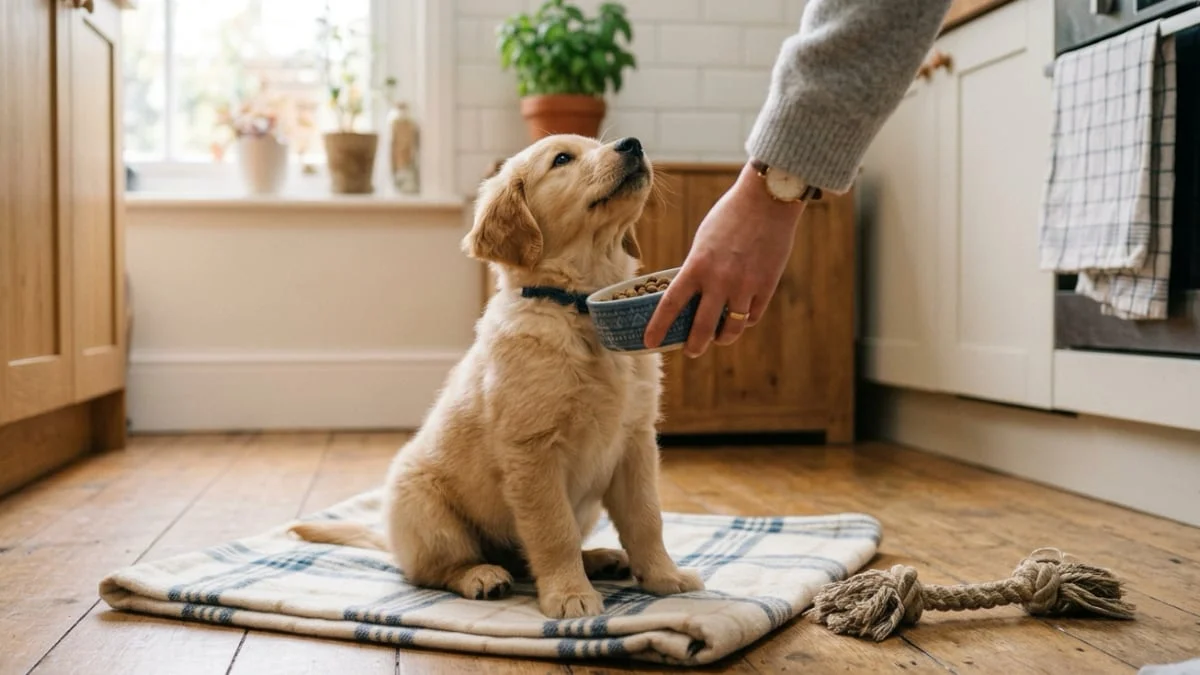

The best puppy food for a sensitive stomach is a highly digestible puppy formula with one named protein, like salmon or lamb, and a label that says it is complete and balanced for growth. Puppies need more calories, protein, and minerals than adult dogs, so an adult sensitive-stomach food is not the right fix. As a certified professional dog trainer, I also see a second culprit behind many upset puppy tummies that has nothing to do with the bowl, and I will show you what it is.
This guide covers the signs of a sensitive stomach, what to look for on a puppy food label, my five picks for 2026, and how to switch foods without making things worse. It pairs with my complete puppy training guide and my guide to the best dog foods for sensitive stomachs for adult dogs.
Smarter Paws Academy is reader-supported. When you buy through links on our site, we may earn an affiliate commission at no extra cost to you. As an Amazon Associate, I earn from qualifying purchases. Thank you for your support!
Last Updated: September 2026. This guide is regularly reviewed for accuracy by Sandie Calloway, CPDT-KA.
Important Health Note
Puppies can become dehydrated quickly. Call your veterinarian right away if your puppy has diarrhea with blood, vomiting, lethargy, or refuses food, or if loose stool lasts more than a day. Unvaccinated puppies with diarrhea need urgent care because of the risk of parvovirus. This guide is educational and does not replace veterinary advice.
Key Takeaways: Feeding a Puppy With a Sensitive Stomach
- Choose a growth formula. Look for an AAFCO statement for growth or all life stages, not an adult food.
- Keep the protein simple. One named protein, like salmon or lamb, makes it easier to find what agrees with your puppy.
- Switch slowly. Change foods over 7 to 10 days, and keep treats under about 10% of daily calories.
- Check the treats first. Rich training treats and chews cause many upset puppy tummies blamed on the food.
Prefer to Listen? An Audio Overview
For a quick guide to feeding a puppy with a sensitive stomach, press play below.
Runtime: 1:04
View Full Audio Transcript
Narrator: Welcome to the Smarter Paws Academy audio overview. Sandie, lots of new puppy owners deal with loose stools. What’s going on?
Sandie Calloway: Puppies have young, still-developing guts, and they go through a lot of change: a new home, new food, new stress. Some loose stool in the first days is common. But if it keeps happening, we look at two things: the food, and everything else going in their mouth.
Narrator: What do you mean, everything else?
Sandie Calloway: Treats. In puppy training we reward a lot, sometimes a hundred small rewards a day. If those treats are rich, that alone can upset a sensitive stomach. I always check the treat pouch before I blame the food.
Narrator: And when it is the food?
Sandie Calloway: Pick a puppy formula labeled for growth, with one clear protein like salmon or lamb, and switch over seven to ten days. And for large-breed puppies, choose a large-breed puppy food, because their bones need the right calcium balance.
Narrator: Growth formula, simple protein, slow switch, and watch the treats.
Sandie Calloway: Exactly. Get that right and most puppies settle beautifully.
Table of Contents
What Are the Signs of a Sensitive Stomach in Puppies?
The most common signs of a sensitive stomach in puppies are loose or inconsistent stools, gas, occasional vomiting, and a picky or fluctuating appetite. These signs often show up after a food change, a stressful event, or a day of too many treats. One soft stool is normal for a puppy, but a pattern over several days is worth addressing.
- Soft or mucus-covered stools that come and go.
- Frequent gas or a gurgling belly after meals.
- Occasional vomiting, especially after eating fast.
- Eating eagerly one day and refusing food the next.
- Scooting or straining during potty breaks.
Keep a simple log for a week: what your puppy ate, including treats, and what the stool looked like. Your vet will find it useful, and it often reveals the pattern on its own. A steady puppy schedule with consistent meal times also makes digestion more predictable.
What Should You Look For in Puppy Food for a Sensitive Stomach?
The right puppy food for a sensitive stomach is complete and balanced for growth, highly digestible, and built on one clear protein. Growth formulas carry the extra protein, fat, DHA, and minerals that developing puppies need. Check the nutritional adequacy statement on the back of the bag before anything else.
- An AAFCO statement for growth or all life stages. The Association of American Feed Control Officials (AAFCO) label tells you the food is complete for puppies.
- One named protein first. Salmon, lamb, or turkey are common gentle choices.
- Easy carbohydrates. Rice and oatmeal are gentle on most young stomachs.
- Prebiotic fiber and probiotics to support healthy gut bacteria.
- A large-breed puppy formula if your puppy will weigh 70 pounds or more as an adult.
The large-breed point matters. Large-breed puppies need carefully controlled calcium and calories so their bones grow at a healthy pace, and AAFCO labels these foods for growth including large size dogs. For more on reading any label, see my complete dog nutrition guide.
What Is the Best Puppy Food for a Sensitive Stomach in 2026?
My top picks balance gentle digestion with complete growth nutrition. Each one is a puppy formula with a simple protein and ingredients chosen for sensitive tummies. Start with the one that fits your puppy’s size and your budget.
Best Overall: Purina Pro Plan Puppy Sensitive Skin & Stomach (Salmon & Rice)
This is my first recommendation for most puppies with sensitive stomachs. Salmon is the first ingredient, rice keeps it gentle, and it includes live probiotics plus DHA for brain and vision development. It is easy to find and priced for everyday feeding.

Best for Large-Breed Puppies: Purina Pro Plan Large Breed Puppy Sensitive Skin & Stomach
Large-breed puppies need a formula built for controlled growth, and this one keeps the same gentle salmon-and-rice recipe with calcium balanced for big frames. It is the easiest way to protect both the stomach and the joints.

Best Vet-Clinic Favorite: Hill’s Science Diet Puppy Sensitive Stomach & Skin
Hill’s puppy formula uses prebiotic fiber to support healthy gut bacteria and comes from a brand many vet clinics stock. It is a steady, reliable choice when you want a well-known, widely available option.
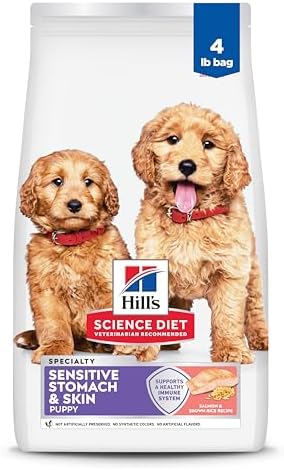
Best Limited-Ingredient: Blue Buffalo Basics Puppy (Turkey & Potato)
For puppies who react to common proteins, a limited-ingredient recipe with a single animal protein makes it easier to spot triggers. It is made without common triggers like chicken, beef, dairy, and eggs, which helps when you suspect a food sensitivity.
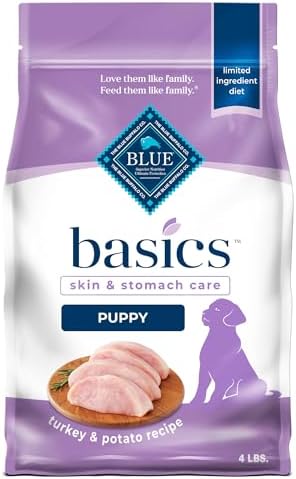
Best Wet Food: Hill’s Science Diet Puppy Sensitive Stomach & Skin (Canned)
Wet food is a great option for picky puppies or as a topper to make dry food more appealing. The added moisture also helps a puppy recovering from a bout of loose stools.

| Food | Main protein | Best for |
|---|---|---|
| Purina Pro Plan Puppy Sensitive | Salmon | Most puppies |
| Pro Plan Large Breed Puppy Sensitive | Salmon | Large breeds |
| Hill’s Science Diet Puppy Sensitive | See label | Vet-clinic favorite |
| Blue Buffalo Basics Puppy | Turkey | Suspected sensitivities |
| Hill’s Puppy Sensitive (wet) | See label | Picky eaters, toppers |
Could the Treats Be Upsetting Your Puppy’s Stomach?
Training treats are one of the most common hidden causes of an upset puppy stomach. Puppies learn fast with frequent rewards, so a busy training day can add up to a surprising number of rich, fatty treats on top of meals. Treats should stay under about 10% of your puppy’s daily calories.
In my training work, I see this all the time. An owner switches foods twice, then discovers the real issue was a bag of rich jerky treats used for potty training. Once we swapped to tiny, simple treats and used part of the puppy’s daily kibble as rewards, the loose stools stopped.
My fix: measure the day’s kibble in the morning and use a handful of it for training rewards. For higher-value moments, use tiny, soft, single-ingredient treats. My guide to the best training treats lists gentle options.

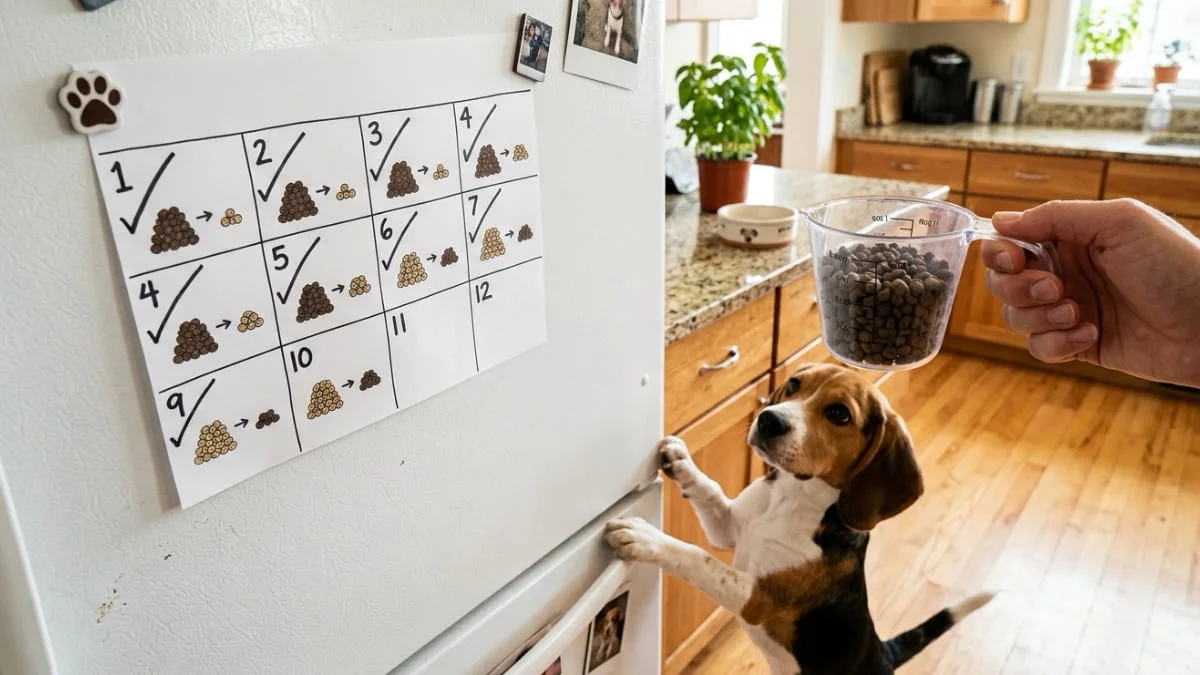
How Do You Switch a Puppy to a New Food?
Switch a puppy to a new food gradually over 7 to 10 days by mixing increasing amounts of the new food into the old. Puppies’ digestive systems are sensitive to sudden change, and a slow switch prevents most upsets. If you do not know what the breeder fed, ask, and start from that food.
| Days | Old food | New food |
|---|---|---|
| Days 1 to 3 | 75% | 25% |
| Days 4 to 6 | 50% | 50% |
| Days 7 to 9 | 25% | 75% |
| Day 10 onward | 0% | 100% |
Feed most puppies three to four small meals a day until about six months old, then move to two. Smaller meals are easier on a sensitive stomach. If loose stool appears during the switch, slow down and stay at the current ratio for a few extra days. If diarrhea is severe or persistent, see my guide on the best dog food for diarrhea and call your vet.
Frequently Asked Questions About Puppy Food for Sensitive Stomachs
Can a puppy eat adult sensitive stomach dog food?
A puppy should eat a food labeled complete and balanced for growth or all life stages, not an adult maintenance formula. Adult foods can fall short on the protein, fat, calcium, and DHA that growing puppies need. Choose a puppy version of a sensitive-stomach formula instead.
Is it normal for a puppy to have soft stool?
Occasional soft stool is common in puppies, especially after a food change, a new home, or a busy day of treats. Repeated loose stool, diarrhea, blood, or vomiting is not normal and needs a vet check. Unvaccinated puppies with diarrhea need urgent care.
Is grain-free puppy food better for sensitive stomachs?
Grain-free is not automatically better for sensitive stomachs, and many puppies digest rice and oatmeal well. The U.S. FDA has investigated a possible link between some grain-free diets and heart disease in dogs, so talk to your vet before choosing grain-free.
How long should a puppy stay on puppy food?
Most puppies eat puppy food until about 12 months old, while large and giant breeds often stay on a large-breed puppy formula until 12 to 18 months. Your vet can confirm the right timing based on your puppy’s expected adult size.
How many times a day should I feed a puppy with a sensitive stomach?
Feed three to four small meals a day until about six months old, then two meals a day. Smaller, regular meals are gentler on a sensitive stomach than one or two large ones, and consistent timing also makes potty training easier.
A Settled Tummy Makes Training Easier
A puppy with a comfortable stomach sleeps better, learns faster, and is easier to house train. Choose a gentle growth formula with one clear protein, switch slowly, and keep an eye on the treat pouch.
Most puppies settle within a couple of weeks once the food and treats agree with them. If they do not, your vet is your best partner for ruling out anything more serious.