
The best dog food for diarrhea is a bland, highly digestible diet for a few days, followed by a gentle, limited-ingredient food once the stool firms up. Most mild cases of loose stool settle within 24 to 48 hours when you simplify what goes into the bowl. As a certified professional dog trainer, I have walked many worried owners through that first messy night, and my own French Bulldog, Gus, taught me the routine the hard way.
This guide covers when diarrhea needs a vet, exactly how I feed a dog through a bout of loose stools, and the foods I trust for the recovery weeks. For the bigger picture on digestion, see my guide to the best dog foods for sensitive stomachs.
Smarter Paws Academy is reader-supported. When you buy through links on our site, we may earn an affiliate commission at no extra cost to you. As an Amazon Associate, I earn from qualifying purchases. Thank you for your support!
Last Updated: September 2026. This guide is regularly reviewed for accuracy by Sandie Calloway, CPDT-KA.
Important Health Note
Diarrhea can be a sign of illness that needs medical care. Call your veterinarian right away if you see blood or black, tarry stool, vomiting, lethargy, a painful belly, signs of dehydration, or diarrhea lasting more than 24 to 48 hours. Puppies, senior dogs, and small breeds can dehydrate quickly, so contact your vet sooner for them. This guide is educational and does not replace veterinary advice.
Key Takeaways: Feeding a Dog With Diarrhea
- Know when to call the vet. Blood, vomiting, lethargy, or diarrhea past 48 hours means a vet visit, not a food change.
- Go bland for a few days. Plain cooked chicken or lean turkey with white rice is the classic short-term reset.
- Reintroduce slowly. Mix the regular food back in over 3 to 5 days so the gut can adjust.
- Fix the long-term food. If loose stools keep coming back, a limited-ingredient, highly digestible food usually solves it.
Prefer to Listen? An Audio Overview
For a calm walkthrough of what to feed a dog with diarrhea, press play below.
Runtime: 1:03
View Full Audio Transcript
Narrator: Welcome to the Smarter Paws Academy audio overview. Sandie, a dog with diarrhea is every owner’s nightmare. Where do you start?
Sandie Calloway: You start by deciding whether it’s a food problem or a vet problem. If there’s blood, vomiting, a dog who seems flat and tired, or it’s a young puppy, you call the vet first. For an otherwise happy adult dog with a loose stool or two, we can usually manage it with food.
Narrator: So what goes in the bowl?
Sandie Calloway: Simple and bland. Plain boiled chicken with white rice, small meals, several times a day. When my Frenchie Gus had a rough night, that is exactly what he got. No treats, no chews, no table scraps while the gut settles.
Narrator: And when things firm up?
Sandie Calloway: You go back to the regular food slowly, over three to five days. And if the diarrhea keeps coming back, that’s the food telling you something. A gentler, limited-ingredient formula usually fixes it.
Narrator: Vet first when in doubt, bland to settle, slow to switch back.
Sandie Calloway: That’s the whole plan. Most dogs feel better within a day or two.
Table of Contents
When Is Dog Diarrhea an Emergency?
Dog diarrhea is an emergency when it comes with blood, vomiting, weakness, or signs of dehydration. These signs can point to infection, parasites, a swallowed object, or diseases like parvovirus in unvaccinated puppies, which need fast medical treatment. Food changes cannot fix those problems, and waiting can make them worse.
- Blood or black, tarry stool. Red streaks or dark, sticky stool need a same-day vet call.
- Vomiting along with diarrhea. Fluid loss from both ends dehydrates a dog fast.
- Lethargy or a painful belly. A dog who hides, refuses food, or flinches when touched needs a vet.
- Puppies and small breeds. Their small bodies lose fluid quickly, so call sooner.
- Diarrhea past 24 to 48 hours. Anything that does not improve in two days deserves a checkup.
A quick gum check helps you judge dehydration at home. Healthy gums are moist and pink, and pressed gums return to color in about two seconds. The Merck Veterinary Manual advises prompt veterinary care when diarrhea comes with these warning signs, while many mild, short-lived cases resolve with simple supportive care.
What Should You Feed a Dog With Diarrhea?
Feed a dog with mild diarrhea a bland diet of plain cooked lean protein and white rice for two to three days. This combination is easy to digest, gentle on an irritated gut, and firm enough to help bind loose stool. Serve small portions three or four times a day instead of one or two big meals.
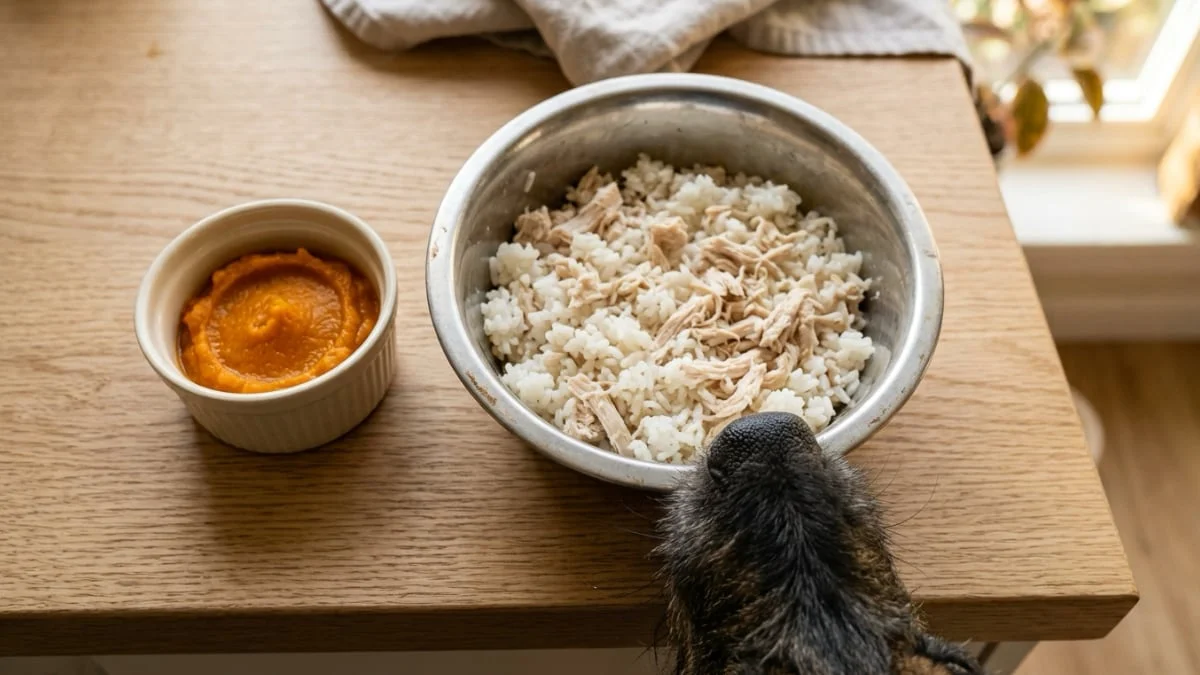
My simple bland-diet recipe: boil boneless, skinless chicken breast or lean ground turkey with no oil, salt, or seasoning, then drain the fat. Mix one part meat with two parts plain cooked white rice. Let it cool and offer a small amount to start.
Plain canned pumpkin can help too. Choose 100% pumpkin, never pie filling, and start with about one teaspoon per 10 pounds of body weight mixed into the meal. Its soluble fiber helps absorb extra water in the gut.
When cooking is not practical, a ready-made bland diet saves the day. I keep one in the pantry for exactly these nights.

Keep fresh water available at all times, and skip treats, chews, and table scraps until the stool is normal. Many owners forget that training treats count as food, which I cover in my guide to the best training treats.
How Do You Switch Back to Regular Food After Diarrhea?
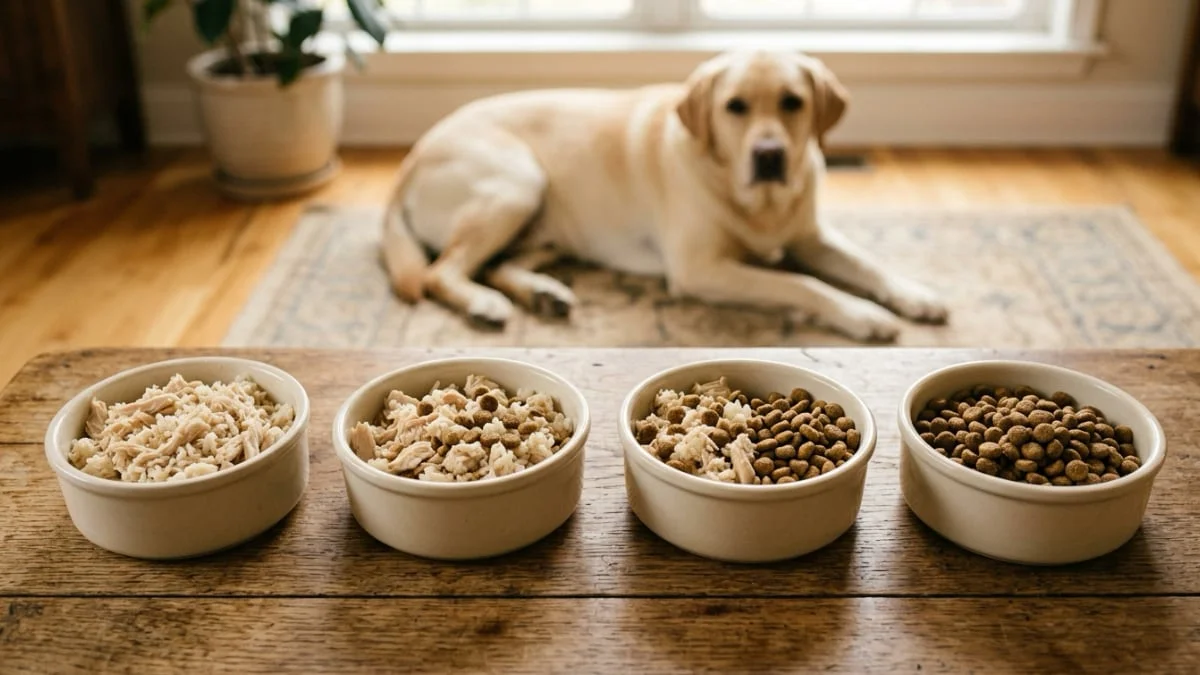
Switch back to regular food gradually over three to five days once the stool is firm again. A sudden change can upset a recovering gut and start the diarrhea all over again. I use a simple mixing schedule that gives the digestive system time to adjust.
| Day | Bland diet | Regular food |
|---|---|---|
| Day 1 | 75% | 25% |
| Day 2 | 50% | 50% |
| Day 3 | 25% | 75% |
| Day 4 onward | 0% | 100% |
If the stool loosens at any step, go back one step and hold there for another day. A dog who relapses every time you return to the old food is sending a clear signal: the regular food itself may be the problem, which brings us to the long-term fix.
What Is the Best Long-Term Dog Food for Dogs Prone to Diarrhea?
The best long-term food for a dog prone to diarrhea is a highly digestible, limited-ingredient formula with one named protein. Fewer ingredients mean fewer possible triggers, and gentle proteins like lamb or salmon are easier on many sensitive guts than rich or mixed formulas. These are the foods I recommend most often for recurring loose stools.
Best Overall: Purina Pro Plan Sensitive Skin & Stomach
This is my first pick for dogs with recurring diarrhea because it pairs a single named protein with oatmeal and rice for easy digestion. It also adds live probiotics to support healthy gut bacteria. It is widely available and reasonably priced, which matters for a food you will feed every day.

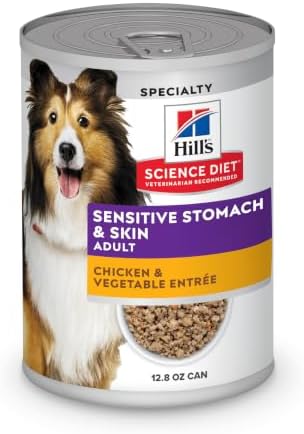
Best Wet Food: Hill’s Science Diet Sensitive Stomach & Skin
Wet food is a smart choice for a recovering dog because the extra moisture supports hydration after fluid loss. This formula is gentle, highly palatable for picky eaters, and easy to mix with a bland diet during the transition.
Best Gut Support Add-On: A Daily Probiotic
A probiotic can help rebuild healthy gut bacteria after a bout of diarrhea. Many vets suggest Purina FortiFlora, a probiotic powder you sprinkle on food, and it is worth asking your vet whether it suits your dog.

For natural ways to keep digestion steady, see my guide on how to improve your dog’s gut health naturally.
Why Does My Dog Keep Getting Diarrhea?
Recurring diarrhea usually comes from a food that does not agree with your dog, sudden diet changes, or eating something they should not. Stress, parasites, and underlying health conditions can also cause repeat episodes, which is why a vet check matters when it keeps happening. Tracking what your dog ate before each episode often reveals the pattern.
In my training work, the most overlooked cause is treats. An owner switches to a gentle food, then feeds a pocketful of rich treats during training, and the loose stools continue. Treats should stay under about 10% of your dog’s daily calories, and for a sensitive dog, the treats need to be as gentle as the food.
Stress is another real trigger. Boarding, travel, a new baby, or separation anxiety can all upset the gut. When diarrhea follows a stressful change, supporting your dog emotionally is part of the fix.
If the pattern points to the food, my complete guide to choosing dog food walks you through reading a label and picking a formula that suits your dog.
Frequently Asked Questions About Dog Diarrhea
How long does diarrhea last in dogs?
Most mild dog diarrhea improves within 24 to 48 hours with a bland diet and plenty of water. If it lasts longer than two days, comes back repeatedly, or appears with vomiting, blood, or lethargy, see your veterinarian. Puppies and small dogs need a vet sooner because they dehydrate quickly.
Is rice or pumpkin better for dog diarrhea?
Both can help, and many owners use them together. Plain white rice is a bland, easy-to-digest base, while plain canned pumpkin adds soluble fiber that absorbs excess water. Start with about one teaspoon of pumpkin per 10 pounds of body weight, and never use spiced pie filling.
Should I stop feeding my dog if they have diarrhea?
Do not withhold food from a puppy, a small breed, or a dog with a health condition. For a healthy adult dog, some vets suggest a short food break before starting a bland diet, so ask your vet first. Always keep fresh water available.
Can dog food cause diarrhea?
Yes, a food that does not suit your dog, a sudden switch, or overly rich treats can all cause diarrhea. Changing foods gradually over 7 to 10 days prevents most diet-related upsets. Recurring loose stools often improve on a limited-ingredient, highly digestible formula.
When should I take my dog to the vet for diarrhea?
Take your dog to the vet for diarrhea with blood, black stool, vomiting, lethargy, pain, or signs of dehydration, or for diarrhea lasting over 48 hours. Unvaccinated puppies with diarrhea need urgent care because of the risk of parvovirus.
A Calm Gut Starts With a Simple Bowl
Diarrhea is stressful, but most mild cases settle quickly when you keep things simple. Rule out an emergency, feed a bland diet for a few days, and bring the regular food back slowly.
If loose stools keep returning, look at the whole bowl, including treats, and move to a gentle, limited-ingredient food. Your dog will feel better, and so will your carpets.