

Choosing the best dog food comes down to matching a complete, quality diet to your individual dog’s needs. Good nutrition is not just about health, it directly affects your dog’s energy, focus, and ability to learn. As a certified professional dog trainer, I see it every day: a well-fed dog trains better, settles easier, and feels good in their own body. This guide gives you a practical, no-hype way to choose.
We will cover how to read a dog food label, what a balanced diet really needs, and how to pick food for your dog’s life stage and any special needs. I am a trainer, not a veterinarian, so this is a framework for smart choices to make with your vet. Let us cut through the marketing and feed your dog well.
Smarter Paws Academy is reader-supported. When you buy through links on our site, we may earn an affiliate commission at no extra cost to you. As an Amazon Associate, I earn from qualifying purchases. Thank you for your support!
Last Updated: September 2026. This guide is regularly reviewed for accuracy by Sandie Calloway, CPDT-KA.
Important Health Disclaimer
The information in this article is for educational purposes and reflects my experience as a certified dog trainer, not a veterinarian or veterinary nutritionist. Your dog’s ideal diet depends on their age, health, and individual needs. Please consult your veterinarian before making significant changes to your dog’s food, especially for medical conditions.
Key Takeaways: Choosing the Best Dog Food
- Look for the AAFCO statement. It confirms the food is complete and balanced for your dog’s life stage.
- A named protein should lead. Look for a specific meat like chicken or salmon as the first ingredient.
- Match food to life stage. Puppies, adults, and seniors have different needs, so feed for the stage your dog is in.
- Nutrition affects training. A well-fed dog has the steady energy and focus that make positive training work.
Prefer to Listen? An Audio Overview
For a clear, practical guide to choosing dog food, press play below.
Runtime: 1:10
View Full Audio Transcript
Narrator: Welcome to the Smarter Paws Academy audio overview. Sandie, the dog food aisle is chaos. How does an owner cut through it?
Sandie Calloway: Start with one line on the bag, the AAFCO statement. It tells you the food is complete and balanced for your dog’s life stage. That single sentence matters more than any fancy marketing on the front of the bag. If it is not there, put it back.
Narrator: What about the ingredient list?
Sandie Calloway: Look for a named protein first, real chicken, salmon, lamb, not something vague like “meat by-product.” After that, you want recognizable whole ingredients. But honestly, the biggest factor is matching the food to your specific dog, their age, their size, any sensitivities.
Narrator: You are a trainer. Why do you care so much about food?
Sandie Calloway: Because it shows up in training. A dog on the wrong food can be itchy, sluggish, or have blood-sugar swings that make focus impossible. Feed them well and you get a dog with steady energy who can actually learn. Nutrition and training are connected.
Narrator: Check the AAFCO line, look for a named protein, and match it to your dog.
Sandie Calloway: That is the framework. Then partner with your vet for the fine-tuning.
Table of Contents
What Makes a Dog Food Complete and Balanced?
A complete and balanced dog food provides all the nutrients your dog needs in the right proportions. The clearest way to confirm this is the AAFCO statement on the label, which says the food meets the nutritional standards set by the Association of American Feed Control Officials for a specific life stage. Without that statement, you cannot be sure the food is nutritionally adequate. This one line is your baseline filter for any food.
Balanced nutrition means the right mix of protein, fat, carbohydrates, vitamins, and minerals. Protein supports muscles and repair, healthy fats fuel energy and coat health, and carbohydrates and fiber aid digestion. A quality food gets these proportions right for your dog’s stage of life. The goal is a diet that covers every need without excess.
Quality and digestibility matter as much as the numbers on the label. A food with recognizable, digestible ingredients delivers more usable nutrition than one padded with cheap fillers. If your dog struggles to digest their food, my guide to the best dog food for a sensitive stomach can help. Complete, balanced, and digestible together define a genuinely good food.
How Do You Read a Dog Food Label?
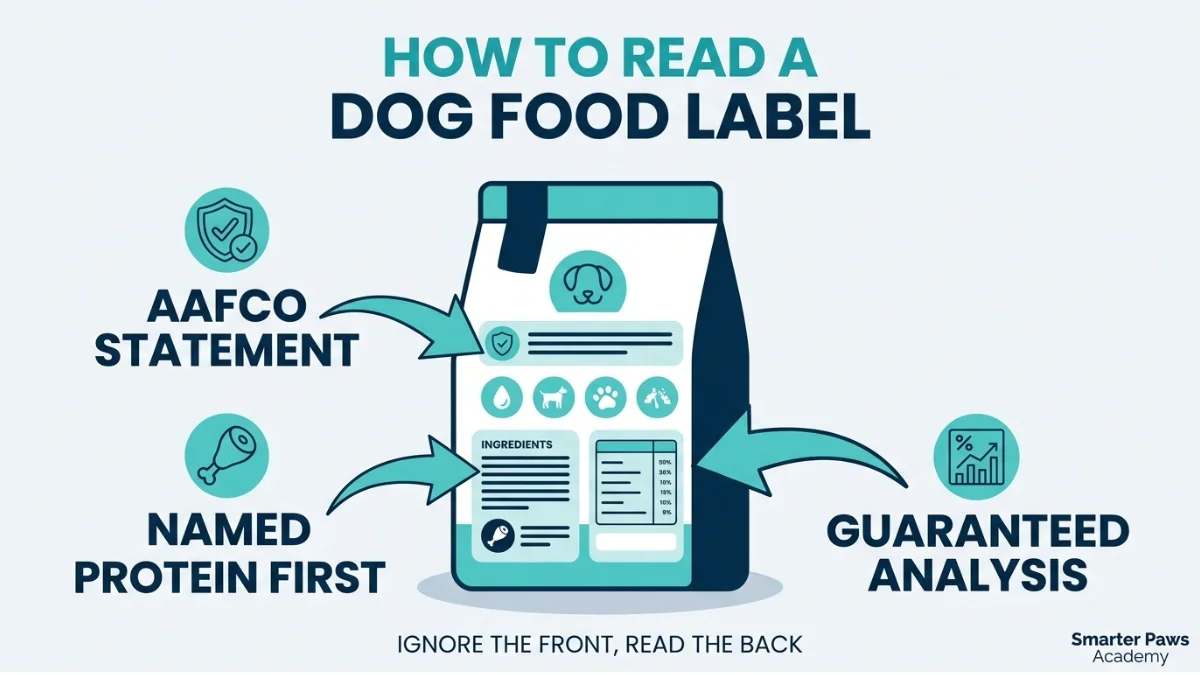
You read a dog food label by checking the AAFCO statement, the ingredient list, and the guaranteed analysis. The AAFCO statement confirms the food is complete for a life stage, while the ingredient list shows what is actually in it, listed by weight. The guaranteed analysis gives the minimum and maximum percentages of key nutrients. Together these three sections tell you what marketing cannot.
Focus on the first few ingredients, since they make up most of the food by weight. A named animal protein like chicken, beef, or salmon at the top is a good sign, while vague terms like “meat by-product” or a list led by fillers are less reassuring. Recognizable whole ingredients generally beat a long list of unfamiliar ones. The start of the list tells you the most about quality.
Do not be swayed by front-of-bag marketing claims that have no legal definition. Words like “premium,” “natural,” and “holistic” are largely unregulated and do not guarantee quality. The real information lives on the back of the bag in the label details. Reading past the marketing is how you make an informed choice.
What Dog Food Is Best for Each Life Stage?
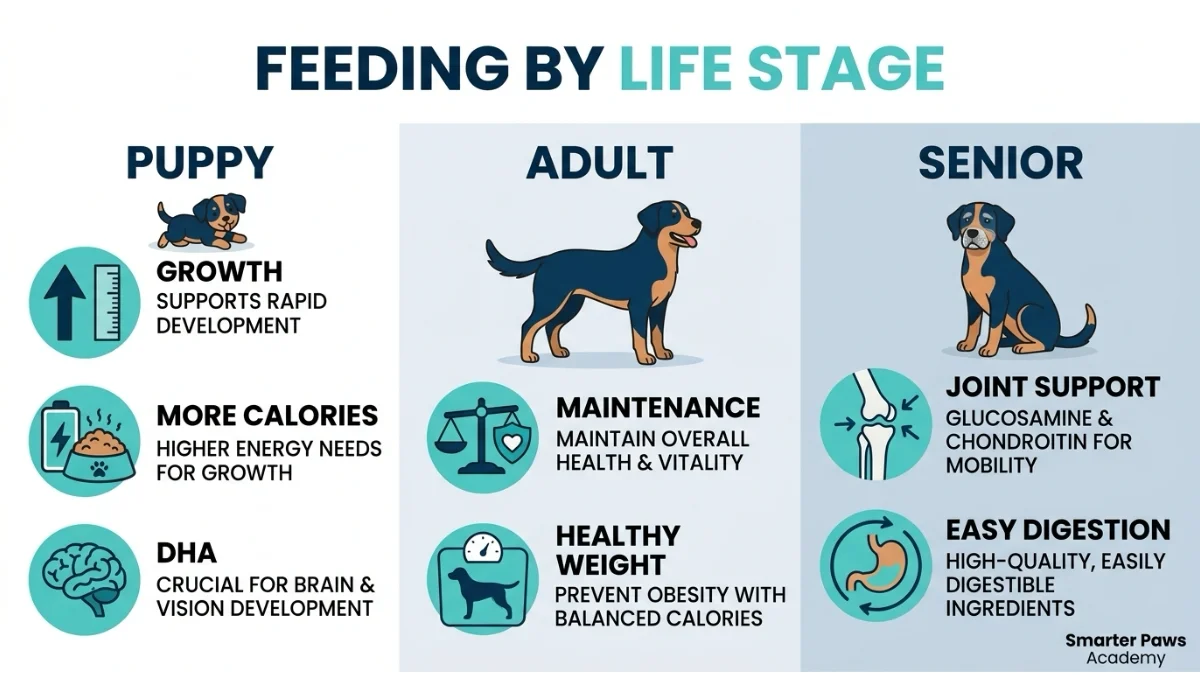
The best food for your dog depends heavily on their life stage, because needs change with age. Puppies need more calories, protein, and specific nutrients for growth, adults need maintenance nutrition, and seniors often need adjusted calories and joint support. Feeding a food formulated for the wrong stage can shortchange or overload your dog. Always match the food to where your dog is in life.
Puppies have the most specialized needs of any stage. Growing puppies require a food labeled for growth, and large-breed puppies need formulas designed to support controlled, steady growth. Feeding, portioning, and timing all matter in these early months, which ties into my complete puppy guide. Getting puppy nutrition right sets up a lifetime of health.
Adult and senior dogs benefit from foods tuned to their activity and age. An active adult needs enough calories to fuel their lifestyle without gaining weight, while many seniors do better with slightly fewer calories and added joint or digestive support. Your vet can help you time the switch between stages. Adjusting the diet as your dog ages keeps them feeling their best.
How Do You Feed a Dog With Special Dietary Needs?
Dogs with special needs, like allergies or a sensitive stomach, need a diet targeted to their specific issue. For food allergies, a limited-ingredient or novel-protein diet often helps, while sensitive stomachs do better with gentle, digestible ingredients. Identifying the real problem, ideally with your vet, is the first step. The right targeted diet can transform a struggling dog’s comfort.
Skin and coat problems are often linked to diet and gut health. Foods rich in omega-3 fatty acids support the skin barrier, and a healthy gut microbiome influences everything from immunity to coat quality. My guides to the best dry dog food for skin allergies and improving dog gut health naturally go deep on these connections. Feeding for the skin and gut often solves problems owners chase for months.
Any diet change should be gradual and, for medical issues, vet-guided. Transition to a new food over 7 to 10 days by slowly mixing it with the old to avoid digestive upset. For diagnosed conditions, your veterinarian may recommend a therapeutic diet. A careful, guided approach protects your dog through any dietary shift.
Why Does Nutrition Matter for Training?
Nutrition matters for training because a well-fed dog has the steady energy and focus that learning requires. Blood-sugar swings from a poor diet can make a dog restless or unable to concentrate, while balanced nutrition supports calm, consistent attention. A comfortable, healthy dog is simply a better learner. This is why I treat food as part of the training picture.
Food also fuels the reward system that positive training depends on. High-value treats work best when they fit into a healthy overall diet, and my guide to the best training treats shows how to reward without overfeeding. Good nutrition and smart treat use go hand in hand. Together they keep your dog motivated and trim.
Finally, physical comfort shapes behavior more than most owners realize. An itchy, gassy, or sluggish dog cannot focus or feel their best, which shows up as frustration in training. Solving nutritional issues often improves behavior as a side effect. Feed the body well and the mind follows.
Frequently Asked Questions About Choosing Dog Food
Is grain-free dog food better for dogs?
Grain-free food is not automatically better and is only needed for dogs with a diagnosed grain allergy, which is uncommon. Most dogs digest grains well, and grains provide useful nutrients and fiber. There has also been veterinary attention on possible links between some grain-free diets and heart concerns. Talk to your vet before choosing grain-free, rather than assuming it is healthier.
How much should I feed my dog?
Feed according to your dog’s ideal weight, age, and activity, using the food’s guidelines as a starting point. The amounts on the bag are estimates, so adjust based on your dog’s body condition, keeping them lean rather than overweight. Treats should stay under 10% of daily calories. Your vet can help you set the right portion for your individual dog.
Is wet or dry dog food better?
Neither wet nor dry food is universally better, since quality matters more than format. Dry food is convenient and supports dental health, while wet food adds moisture and is often more palatable. Many owners mix the two for the benefits of both. Choose a complete, balanced option in whichever format suits your dog and routine.
How do I switch my dog to a new food?
Switch foods gradually over 7 to 10 days by slowly increasing the new food while decreasing the old. This slow transition lets your dog’s digestive system adjust and helps you spot any sensitivity. A sudden change often causes stomach upset. If your dog reacts, slow the transition down further or consult your vet.
Are expensive dog foods worth it?
Price does not guarantee quality, and some mid-range foods are excellent while some premium ones rely on marketing. What matters is a complete and balanced formula with quality, digestible ingredients suited to your dog. Read the label rather than the price tag. A thoughtfully chosen mid-priced food often serves a dog very well.
Good Food Is the Foundation of a Healthy, Trainable Dog
Choosing the right dog food is one of the most impactful things you do for your dog’s health and happiness. When you feed a complete, quality diet matched to your dog’s life stage and needs, you support their energy, comfort, and ability to learn. Good nutrition quietly makes everything else, including training, work better.
Start by checking the AAFCO statement, looking for a named protein, and matching the food to your dog’s stage of life. Lean on my nutrition guides for sensitive stomachs, skin, and gut health, and partner with your vet for anything medical. Feed your dog well, and you give them the foundation for a longer, happier, more trainable life.