
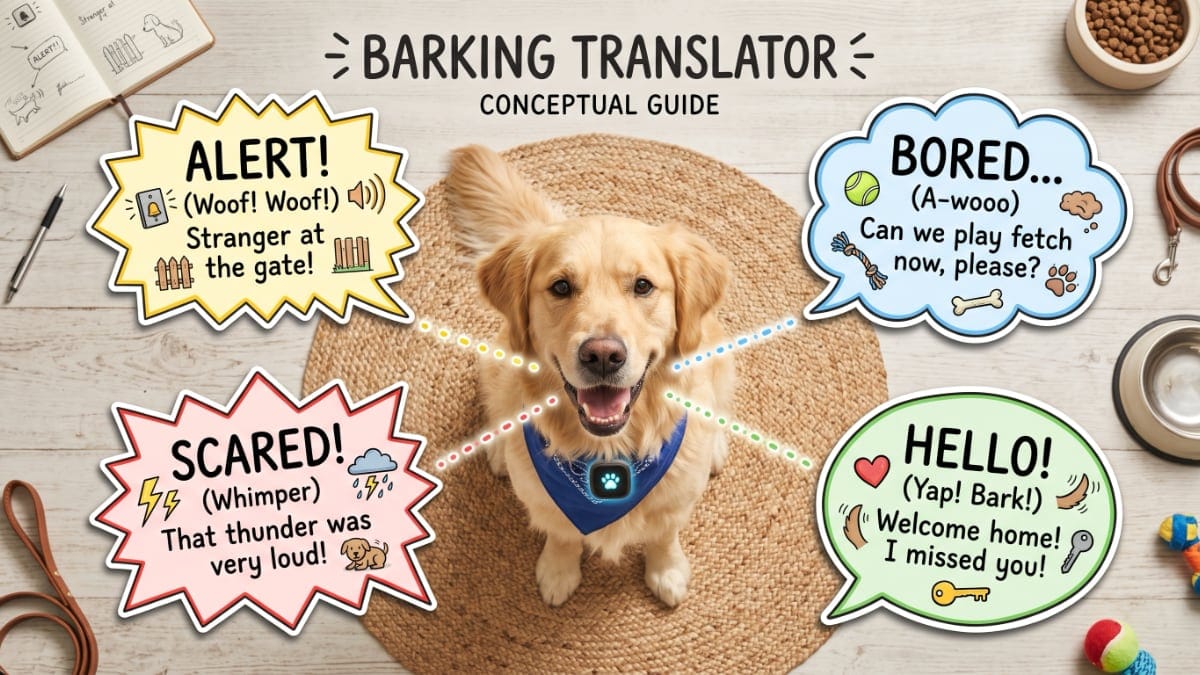

Dogs bark because it is their primary way of talking to us. Barking is normal, healthy communication, not a defect to be silenced. As a certified professional dog trainer, I have spent years helping owners decode what the barking actually means, because the message behind the noise is the thing you have to solve. Once you understand the “why,” the “how to stop dog barking” part becomes far simpler and a lot kinder.
This is your complete guide to why dogs bark and how to bring calm to your home without punishment. We will cover the real reasons behind every kind of bark, why shouting and shock devices backfire, and the positive reinforcement plan that works. Along the way I will point you to my detailed guides for each specific barking situation, so you can go deeper wherever you need to.
Smarter Paws Academy is reader-supported. When you buy through links on our site, we may earn an affiliate commission at no extra cost to you. As an Amazon Associate, I earn from qualifying purchases. Thank you for your support!
Last Updated: July 2026. This guide is regularly reviewed for accuracy by Sandie Calloway, CPDT-KA.
Important Behavior Disclaimer
The information in this article is for educational purposes for managing common nuisance barking. If your dog’s barking comes with aggression, extreme fear, or other serious behaviors, please work with a qualified veterinary behaviorist or a certified professional dog trainer in your area.
Key Takeaways: Why Dogs Bark and How to Stop It
- ✓ Barking is communication, not misbehavior. The ASPCA identifies distinct barking types, and each one needs a different solution.
- ✓ Find the cause first. Boredom, fear, alerting, and attention-seeking all sound similar but need opposite responses.
- ✓ Punishment makes barking worse. The AVSAB found no evidence aversive tools work better, and they damage your dog’s trust.
- ✓ Manage, then train. Remove the trigger for a fast win, then teach a calm alternative behavior for the lasting fix.
- ✓ The goal is a quieter home, not a silent dog. A dog that can alert you and then settle is a well-trained dog.
Prefer to Listen? An Audio Overview
For a conversational deep dive into why dogs bark and how to help them, press play below.
Runtime: 1 Minute 17 Seconds
View Full Audio Transcript
Narrator: Welcome to the Smarter Paws Academy audio overview. Today Sandie is tackling the question behind almost every barking problem: why do dogs bark in the first place? Sandie, where do we start?
Sandie Calloway: We start by dropping the idea that barking is bad behavior. Barking is talking. A dog barks to alert you, to ask for something, because they are bored, or because they are scared. Each of those is a different message. If you treat them all the same way, nothing works.
Narrator: So the first job is figuring out which message it is.
Sandie Calloway: Exactly. Once you know the cause, the solution is usually obvious. A bored dog needs a job. A scared dog needs distance and safety. A dog barking at the window needs the window blocked. You match the fix to the reason, not to the noise.
Narrator: And what about the quick-fix gadgets people buy?
Sandie Calloway: The shock and spray collars punish the sound without touching the cause, so the fear or boredom is still there. The top veterinary behavior group says there is no evidence they work better than kind methods, and they hurt the bond you have with your dog. We can do so much better.
Narrator: That is the heart of it. Understand the why, then help with kindness.
Sandie Calloway: That is the whole game. A quieter home always starts with a better-understood dog.
Table of Contents
Why Do Dogs Bark in the First Place?
Dogs bark to communicate a need or an emotion, and it is a normal part of being a dog. The bark is the visible tip of something happening underneath: excitement, fear, boredom, or a request. According to the ASPCA, the first real step to solving any barking problem is identifying the type of bark you are hearing. Get the cause right and the solution almost picks itself.
Barking is also self-reinforcing, which is why it can spiral. When a dog barks at the mail carrier and the mail carrier leaves, the dog “wins,” so the behavior gets stronger. My French Bulldog, Gus, taught me this the hard way at our old apartment, where every delivery convinced him his barking had scared off an intruder. The behavior was rehearsing and rewarding itself dozens of times a day.
Understanding this loop changes everything about how you respond. You are not fighting a stubborn dog, you are interrupting a cycle of practice and reward. That reframe is the foundation of every solution in this guide.
What Are the Main Types of Dog Barking?
There are several distinct types of barking, and each has its own trigger and its own fix. The ASPCA groups most nuisance barking into recognizable categories based on the dog’s motivation and body language. Learning to tell them apart is the single most useful skill for any owner, because it tells you which of my detailed guides to follow next.
The clue is almost always in the context and the body. A relaxed, wiggly dog barking at the door is greeting. A stiff dog pouncing forward with each bark is alarmed or guarding. Same sound, completely different emotional state, completely different plan.
If you are not sure which type you are dealing with, watch your dog’s body and the setting for a day. That observation is worth more than any gadget you can buy.
Why Doesn’t Punishment Stop Barking?
Punishment fails because it attacks the sound while leaving the cause untouched. A shock, spray, or ultrasonic collar might interrupt a bark, but the fear, boredom, or alarm that caused it is still sitting there. The American Veterinary Society of Animal Behavior (AVSAB) stated in its 2021 position statement that there is no evidence aversive methods work better than reward-based ones, and that they damage both animal welfare and the human-animal bond.
Worse, punishment often teaches your dog to fear the very things you want them to feel calm about. If a dog gets shocked while barking at another dog, they can start associating other dogs with pain, which can turn simple alarm barking into real reactivity or aggression. I have met dogs whose window-barking became a genuine bite risk after a bark collar, and untangling that takes months.
The kinder path is also the more effective one, which is rare and worth repeating. When you address the cause with positive reinforcement, you fix the barking and strengthen your relationship at the same time. If you are weighing a specific device, read my honest breakdowns of why I do not recommend bark collars, whether barking deterrents actually work, and what to use instead of a stop-dog-barking device.
How Do You Stop Nuisance Barking with Positive Reinforcement?
You stop nuisance barking with a simple two-part formula: manage the environment, then train an alternative behavior. Management gives you an immediate drop in barking today, and training builds the lasting change over the following weeks. I walk clients through the same four steps every single time, and they work across nearly every type of barking.
The reason this order matters is that you cannot train a dog who is busy rehearsing the problem all day. First you reduce the practice, then you teach the new skill. Think of it as lowering the volume before you start the lesson.
Step 1: Manage the trigger. Remove or block whatever sets your dog off, whether that is a window view, a sound, or access to the front room. This is not giving up, it is smart prevention that stops the barking from rehearsing itself.
Step 2: Meet the underlying need. A bored dog needs a real job in the form of daily mental and physical enrichment. A tired, satisfied dog simply has far less fuel for nuisance barking.
Step 3: Teach an incompatible behavior. Reward your dog for doing something they cannot do while barking, like going to a mat or holding a toy. You are giving them a better answer to the same trigger.
Step 4: Reward the quiet. Mark and reward the silence with a clear “yes” and a treat the instant it happens. Dogs repeat what gets rewarded, so make calm the most profitable choice in the room.
For the fast, in-the-moment version of this plan, my guide on how to stop dog barking breaks down all five humane steps with the exact tools I use.
How Do You Stop Specific Kinds of Barking?
Every barking situation shares the same foundation, but the details change with the trigger. Below is your routing map to the exact guide for your situation, each one built on the same positive reinforcement plan above. Start with the cause that matches your dog and go deep there.
These situation-specific guides exist because the small differences matter. Nighttime barking, for instance, needs a different setup than barking at strangers on a walk, even though both use reward-based training at the core.
- Barking at night: If your dog wakes the house after dark, my 4-step plan to stop dog barking at night covers the causes and the calm-down routine that brings back quiet sleep.
- Barking at people: For barking at strangers on walks or through the window, my humane plan to stop barking at people shows how to build calm, confident associations instead of tension.
- Puppy barking in the crate: New puppy crying at night? My plan for puppy barking in the crate builds a positive crate association so everyone sleeps.
- Fast general relief: When you need calm today, these 5 humane steps manage the noise while the training takes hold.
What Tools Actually Help Reduce Barking?
The right tools support your training, they never replace it. A few well-chosen items make management easier and give your dog a productive outlet, which reduces barking at the source. None of these punish your dog, and that is the whole point. Every one of them works by preventing the trigger or meeting a need.
Think of these as helpers for the four-step plan, not shortcuts around it. In my experience the biggest wins come from just two categories: blocking the visual trigger and adding daily mental enrichment.
- Privacy window film: The fastest fix for “watchdog” barking. If your dog cannot see the sidewalk, there is nothing to bark at, and calm becomes the default.
- Enrichment and puzzle feeders: A snuffle mat or puzzle toy turns mealtime into a brain workout that drains the mental energy behind boredom barking.
- Calming pheromone diffusers: For anxiety-driven barking, a dog-appeasing pheromone diffuser can lower the baseline stress that fuels the noise.
- A quality treat pouch: Fast access to rewards is what makes positive reinforcement work, because good timing is everything.
I review the specific products I trust inside the situation guides linked above, so you can see exactly which snuffle mat, diffuser, or window film I reach for and why.
What Mistakes Make Dog Barking Worse?
The most common mistake is accidentally rewarding the very barking you want to stop. When your dog barks for attention and you look at them, talk to them, or even scold them, you have just paid them with your attention. Dogs do not distinguish “good” attention from “bad” attention nearly as well as we assume.
Another frequent misstep is inconsistency between family members. If one person enforces the calm routine and another tosses a treat to quiet the dog, the barking becomes a slot machine that occasionally pays out. Intermittent rewards create the most persistent behaviors of all, so everyone in the home has to follow the same plan.
The last big mistake is expecting silence instead of teaching settling. Your goal is a dog who can alert you, hear “thank you,” and then relax. A dog that never barks is not the target, a dog that stops on cue is.
Frequently Asked Questions About Dog Barking
Why is my dog suddenly barking at everything?
A sudden increase in barking usually signals a change in your dog’s environment, routine, or health. New neighbors, a shifted work schedule, fading eyesight or hearing in an older dog, or a recent scare can all trigger it. Rule out pain or a medical issue with your veterinarian first, then look for the new trigger. A vet check is always the smart first move when behavior changes fast.
Can you train a dog to stop barking completely?
No, and you would not want to, because barking is normal and important canine communication. The realistic goal is to reduce excessive or nuisance barking so you and your dog live comfortably together. A dog that alerts you once or twice and then settles on cue is a well-trained dog. Elimination is neither humane nor achievable, but management is very doable.
Do anti-bark collars work?
Anti-bark collars may interrupt a bark, but they do not solve the cause and can create fear or aggression. The AVSAB found no evidence that aversive tools outperform reward-based training, and they warn these devices harm the human-animal bond. Positive reinforcement paired with smart management is both kinder and more reliable. I explain the full case against them in my bark collar guide.
How long does it take to stop nuisance barking?
Management can reduce barking the same day, while training a new habit typically takes two to four weeks of consistent practice. The timeline depends on how long the barking has been rehearsed and how consistent every family member is. Older, deeply practiced habits take longer to shift. Consistency matters far more than intensity here.
Why does my dog bark at night?
Nighttime barking is usually caused by outdoor sounds, boredom, a need to toilet, or anxiety about being alone. The fix depends on the cause, from blocking sounds with white noise to adding evening enrichment. Puppies often bark at night simply because their needs are not yet on a schedule. My full nighttime guide walks through each cause and its calm-down routine.
Is it too late to stop my adult dog from barking?
It is never too late, because dogs learn new associations at any age. Adult and senior dogs respond very well to positive reinforcement, though a long-practiced habit may take a little more patience. The methods in this guide work regardless of your dog’s age. What matters is consistency, not how old your dog is.
Should I ignore my dog when they bark?
Ignoring works only for attention-seeking barking, not for fear, alarm, or boredom barking. For attention barks, remove all eye contact and interaction, then reward the instant your dog goes quiet. For other types, ignoring does nothing because the trigger is still present. Always match your response to the specific cause of the bark.
Building a Quieter Home Through a Stronger Bond
A quieter home starts with understanding, not silence. When you learn to read what your dog is telling you, the barking stops being a battle and becomes a conversation you can guide. Every solution in this guide comes back to the same idea: find the cause, meet the need, and reward the calm.
You do not have to choose between a peaceful house and a happy dog, because the kind path delivers both. Pick the specific guide that matches your dog’s situation, start with the management step today, and give the training a few consistent weeks. The calm you are looking for is closer than it sounds, and you will build a deeper bond getting there.