Smarter Paws Academy

You’re looking for a dog barking deterrent because you’ve reached a breaking point. You need peace, and you need it now. That desperation is completely understandable. The constant noise can be incredibly stressful.
So, do they work? The short answer is: sometimes, but often at a cost to your dog’s well-being and your relationship. Before you buy a device, let me show you what actually works to solve the root of the problem, not just silence the symptom.
Smarter Paws Academy is reader-supported. When you buy through links on our site, we may earn an affiliate commission at no extra cost to you. As an Amazon Associate I earn from qualifying purchases. Thank you for your support!
Last Updated: July 2026. The sources for this guide are linked on this page.
For the science behind barking and the humane alternatives that actually work, read my complete guide to why dogs bark and how to stop it.
Important Behavior Disclaimer
This guide is for common nuisance barking. If your dog’s barking is accompanied by aggression, extreme fear, or other serious behaviors, please consult a qualified veterinary behaviorist or a certified professional dog trainer.
Quick Tips for a Quieter Home
- Identify the Cause First: Barking is communication. The solution for boredom barking is different from the solution for anxiety barking.
- Aversive Tools Have Fallout: Punishment-based devices like ultrasonic or spray collars can increase fear and anxiety, potentially making behavior problems worse.
- Positive Alternatives Work Better: Focusing on management, enrichment, and training provides a kinder and more effective long-term solution.
Table of Contents
First, Let’s Play Detective: Why is Your Dog Really Barking?
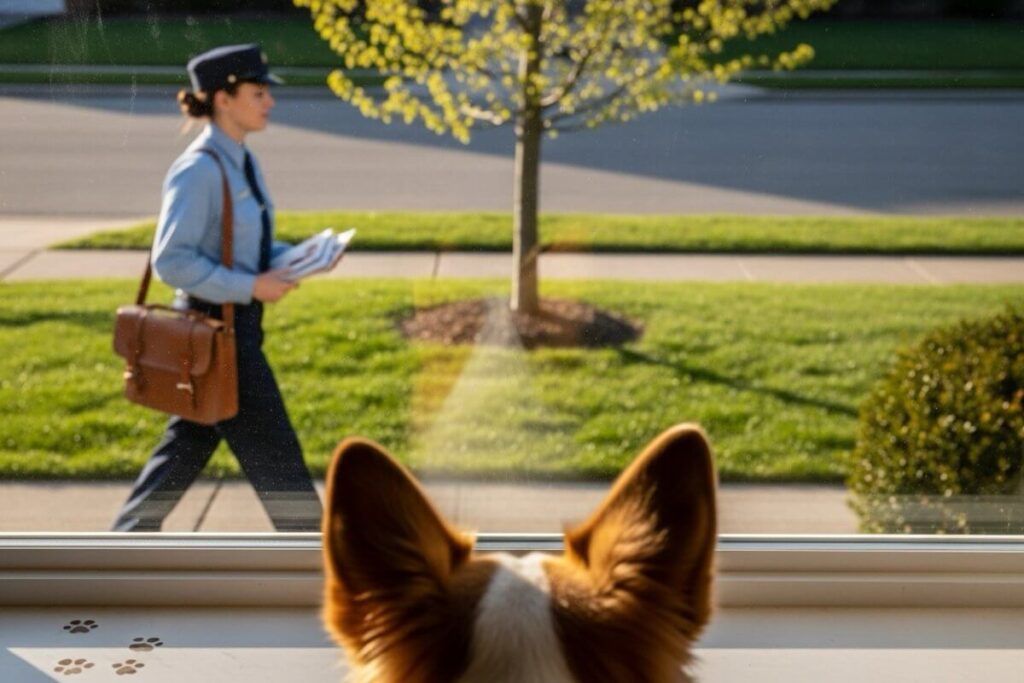
Before you can find the right solution, you have to identify the cause. A bark is not just a bark; it’s a specific communication. The most common reasons for nuisance barking are:
- Boredom/Frustration: “I have nothing to do and all this pent-up energy!”
- Anxiety/Fear: “I’m scared of that noise!” or “I’m terrified of being alone!” (a common cause of puppy barking in the crate).
- Territorial/Alarm: “Someone is near our house! I must alert my family!”
- Attention-Seeking: “Hey! Look at me! Play with me! Pet me!”
The solution for boredom barking is very different from the solution for anxiety barking. Let’s explore why punishment-based tools often fail to address these root causes.
Do Vets Recommend Anti-Barking Devices?
No. The American Veterinary Society of Animal Behavior says aversive tools should not be used, and recommends only reward-based training. Their statement says tools which rely on “force, pain, or emotional or physical discomfort” carry significant risks to welfare and to the human-animal bond, and the Merck Veterinary Manual warns that punishment can increase the chance of fear or aggression.
The Problem with Ultrasonic & Sound-Based Deterrents
Ultrasonic devices work by emitting a high-frequency sound that is unpleasant for dogs. The idea is to create a negative association with barking. However, this approach is flawed. The dog often doesn’t connect the unpleasant sound with their own barking. Instead, they may associate the punishment with whatever they were barking at like the mail carrier or another dog. This can turn a simple alarm bark into a fearful or aggressive reaction. You haven’t solved the barking; you’ve just added fear to the equation.
This is especially dangerous for dogs who are already prone to barking at people on walks, as the deterrent can escalate the behavior from a simple alert to a fear-based aggressive display.
When an Anti-Bark Device Backfires
Anti-bark devices can quiet a dog for a moment, but the fallout can be serious. Picture a dog whose ultrasonic anti-bark device goes off whenever the mail carrier comes, which is also when the owner walks into the room. The dog can learn that the owner’s arrival predicts a painful sound, and start growling at the people it lives with. Rebuilding that trust takes time and positive reinforcement.
Ultrasonic devices are still aversive tools, even though they leave no mark. They work through positive punishment, adding an unpleasant high-frequency sound to stop a behavior. As the University of Illinois College of Veterinary Medicine explains, a dog may link that sound to whatever it was barking at, or to you, rather than to its own bark.
Do Ultrasonic Bark Devices Work Through Walls?
No, ultrasonic bark devices do not work through walls, fences, or thick glass. High-frequency sound cannot pass through solid objects, so these devices only reach a dog in a clear line of sight. That rules them out for a neighbor’s dog, and it is one more reason to solve the cause of the barking instead.
Block the View for Window Barkers
The simplest humane “device” for a dog who barks at people and dogs walking past is a frosted window film. It hides the trigger while still letting in the light, so there is nothing to bark at. Pair it with a calm quiet cue and the barking at the window fades fast.

A Better Way: The LIMA Philosophy
Our guides follow an ethical principle called LIMA, or “Least Intrusive, Minimally Aversive.” As the Certification Council for Professional Dog Trainers (CCPDT) explains, this is an ethical roadmap that requires trainers to use the kindest, most positive methods first. We must always start with management and positive reinforcement before ever considering punishment. The rest of this guide will show you exactly how to apply these positive, effective LIMA principles to solve barking.
4 Humane “Deterrents” That Actually Solve the Problem
Instead of a device that punishes the bark, let’s use tools that deter the reason for the bark.
1. The Boredom Deterrent: Mental Enrichment
A huge amount of nuisance barking comes from simple boredom. A dog with nothing to do will invent their own job, and that job is often “Chief Neighborhood Barker.” Providing a daily outlet for their brain is the most effective way to deter this kind of barking.

Why it’s my top pick: This durable lick mat is a boredom-busting powerhouse. Spreading a soft treat like peanut butter or yogurt on its textured surface encourages licking, which is a naturally calming behavior for dogs. It provides a long-lasting, self-soothing job that effectively deters boredom barking.
2. The “Spooky Noises” Deterrent: Auditory Blocking
If your dog barks at every little sound from outside, you can humanely block those triggers. A white noise machine creates a consistent, calming auditory environment that can muffle the sounds of distant dogs, car doors, or neighbors, removing the trigger for the alarm bark.

Why it’s a humane solution: This machine is a kind alternative to sound-based deterrents. Instead of startling your dog, it creates a consistent, calming “wall of sound” that muffles the outside noises that trigger alarm barking. If they can’t hear the mail carrier, they can’t bark at them.
3. The Anxiety Deterrent: Calming Pressure
For dogs who bark due to anxiety from thunderstorms, fireworks, or being left alone, a calming wrap may help some dogs feel more settled. These jackets apply gentle, constant pressure to the dog’s torso, much like swaddling an infant.

Why we picked it: It applies gentle, constant pressure to the dog’s torso. If your dog’s anxiety is strong or new, talk to your vet.
4. The “Bad Habit” Deterrent: Positive Training
The single most powerful tool for changing a barking habit is to teach a new, better one. To do this effectively, you need to be ready to reward the quiet moments. A treat pouch allows you to keep high-value rewards on you at all times, so you can instantly reinforce your dog for choosing a quiet behavior over barking.

Why it’s an essential tool: The best way to stop a bad habit is to build a good one. This treat pouch allows you to keep high-value rewards on you at all times, making it easy to instantly reinforce your dog for being quiet or performing a better behavior instead of barking.
What is the Best Thing to Stop a Dog From Barking?
The single best thing to stop a dog from barking is a combination of management (preventing the barking from happening) and training (teaching a better behavior). This is the core of Canine Enrichment. As experts at Cornell University explain, providing dogs with opportunities to express natural behaviors like sniffing, foraging, and chewing is crucial to their welfare and helps prevent problem behaviors like nuisance barking.
Instead of a deterrent, teach your dog a calm quiet cue, and if the barking is driven by stress, see my guide to the best calming products for dogs.
Frequently Asked Questions
What sound silences a barking dog?
While a sudden, loud, or high-pitched sound can interrupt a bark, it doesn’t solve the underlying problem and can create fear. A much better “sound” is a consistent white noise machine, which doesn’t startle the dog but instead muffles the outside noises that trigger them to bark in the first place.
How can I silence a neighbor’s barking dog?
This is a tough situation. The most humane approach is to first talk to your neighbor calmly and kindly. If that’s not possible, using a white noise machine in your own home can help block the sound. Using an ultrasonic device aimed at their dog is not recommended, as it is aversive and can create unintended behavioral problems.
Do citronella bark collars work?
Citronella collars are aversive tools that work by punishing the dog with an unpleasant spray of citronella scent. As the AVSAB position statement on aversive methods explains, these tools can create negative associations and increase anxiety, and are not recommended as part of a humane training plan.
What is the 3 bark rule?
The “3 Bark Rule” is a positive training technique. You allow your dog two or three barks to alert you, then you say, “Thank you, I see it!” to acknowledge them. You then cue an alternative behavior, like “Quiet” or “Go to your mat,” and reward them for complying. It’s a way of working *with* your dog’s instinct to alert you.
Is it best to ignore barking?
It depends entirely on the reason for the bark. Ignoring attention-seeking barking can be a very effective way to extinguish the behavior. However, ignoring barking that is caused by genuine fear, anxiety, or a need to go potty is ineffective and unkind to the dog.
Solving the Problem, Not Just Silencing the Symptom
The desire for a quick fix for barking is completely understandable, but the most effective solutions are always the ones rooted in understanding and compassion. By shifting your focus from punishing the bark to solving the reason for the bark whether it’s boredom, anxiety, or territorial instinct you do more than just quiet the noise. You build a deeper, more trusting relationship with your dog and create a lasting sense of peace in your home. That is a result no device can ever replicate.
Sandie Calloway is the pen name of the Smarter Paws Academy team. How we write