
The best long line lets you practice recall with real freedom and total safety at the same time. A long training line gives your dog room to roam and choose to come back, while keeping a safety connection if they get distracted. As a certified professional dog trainer, I consider a good long line the single most useful tool for building a reliable recall. This guide covers the lines I trust and how to use them.
We will cover why a long line beats an off-leash gamble, what length and material to pick, and my top picks for 2026. Every recommendation supports positive, force-free recall training, where coming back is always the best choice your dog can make. Let us build a recall you can actually count on.
Smarter Paws Academy is reader-supported. When you buy through links on our site, we may earn an affiliate commission at no extra cost to you. As an Amazon Associate, I earn from qualifying purchases. Thank you for your support!
Last Updated: September 2026. This guide is regularly reviewed for accuracy by Sandie Calloway, CPDT-KA.
Important Safety Note
The information in this article is for educational purposes and reflects my experience as a certified dog trainer. Always attach a long line to a well-fitted harness, never a collar, to avoid neck injury from a sudden stop. Wear gloves to prevent rope burn, keep the line from tangling around legs, and only use a long line in safe, open, low-traffic areas.
Key Takeaways: Best Long Line for Recall
- Freedom with a safety net. A long line lets your dog practice recall at distance while you keep a backup connection.
- Biothane is the pro choice. Waterproof and grime-proof, it stays light and clean where fabric lines get heavy and smelly.
- Length fits the setting. A 15-foot line suits parks and basics, while 30 feet is the sweet spot for real recall practice.
- Clip to a harness, never a collar. A sudden stop on a long line can hurt a dog’s neck, so always use a harness.
Prefer to Listen? An Audio Overview
For a quick guide to long lines and recall, press play below.
Runtime: 1:10
View Full Audio Transcript
Narrator: Welcome to the Smarter Paws Academy audio overview. Sandie, why is a long line your favorite recall tool?
Sandie Calloway: Because it solves the biggest recall problem, which is practice. You cannot build a reliable recall if you are too scared to let your dog have any distance. A long line gives your dog real freedom to wander and come back, but you still have that safety connection if a squirrel shows up.
Narrator: What should people look for in one?
Sandie Calloway: Biothane material, hands down. It is waterproof, it wipes clean, and it does not soak up water and mud like a fabric line. A wet rope line gets heavy, smelly, and moldy fast. Biothane stays light and clean season after season. And check the hardware, you want solid brass or stainless, not cheap snaps.
Narrator: And a safety must-do?
Sandie Calloway: Always clip a long line to a harness, never a collar. If your dog hits the end of a thirty-foot line at a sprint, a collar can really hurt their neck. A harness spreads that force safely. And wear gloves, rope burn is real.
Narrator: Biothane, good hardware, and clip to a harness.
Sandie Calloway: That is it. Give your dog safe distance to practice and recall gets reliable fast.
Table of Contents
Why Use a Long Line for Recall Training?
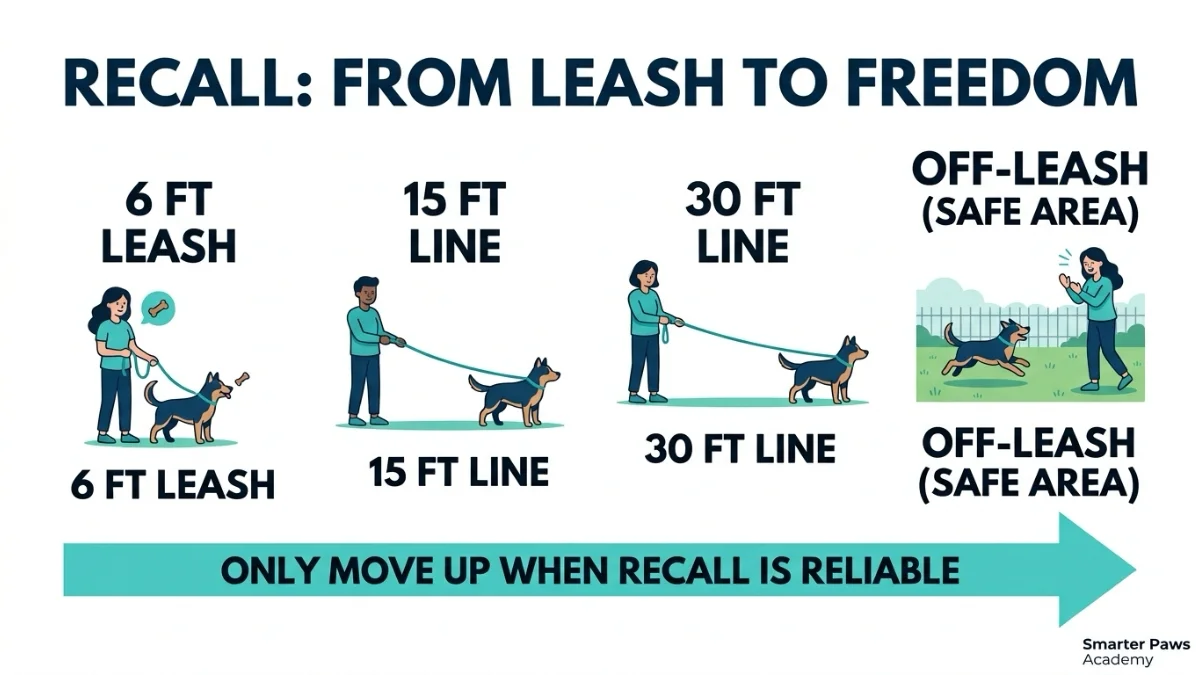
A long line lets your dog practice coming back from a real distance without the risk of losing them. Recall only becomes reliable through repetition at distance, and a long line gives you that practice safely. Your dog gets to feel free while you keep a physical backup for when instinct pulls them toward a squirrel. It bridges the gap between the six-foot leash and true off-leash freedom.
The long line also prevents the single biggest recall mistake: failed off-leash attempts. Every time a dog ignores a recall and runs off, that disobedience gets rehearsed and reinforced. A long line means your dog never gets to practice ignoring you, so the recall habit only ever strengthens. Prevention of failure is half the training.
This tool pairs naturally with your other leash skills. A long line for open-space recall works alongside the polite walking you build in my loose leash walking guide, and the marker training in my clicker guide. Together they build a dog who walks nicely and comes back reliably. The long line is the piece that unlocks safe distance.
What Length and Material Should a Long Line Be?
Choose your length based on the space and skill you are training, and choose biothane for the material. A 15-foot line suits smaller parks and early recall work, while a 30-foot line is the sweet spot for building real distance recall. Very long lines give more freedom but take more skill to manage without tangles. Match the length to your environment and your handling comfort.
Biothane is the material serious trainers prefer for good reason. It is a coated webbing that is waterproof, dirt-proof, and incredibly strong, so it wipes clean and stays light even after a muddy session. Fabric lines, by contrast, soak up water and become heavy, smelly, and prone to mildew. For a tool you will use in all weather, biothane is worth it.
Hardware quality matters as much as the line itself. Look for solid brass or stainless steel snaps, because cheap zinc-alloy clips can shatter under the sudden force of a sprinting dog. A strong snap is a safety feature, not a luxury. Check the hardware before you trust a line with your dog’s freedom.
What Are the Best Long Lines for 2026?
My picks below cover every setting and budget, from premium training lines to accessible everyday options. I chose them for material quality, hardware strength, and how well they hold up to real recall work. Each supports safe, positive recall practice.
Best Budget Option: Mendota Check Cord
The Mendota check cord is my budget-friendly pick for getting started with recall training. Mendota is a staple in the training community, and this braided line pairs a soft, easy-to-grip feel with a solid brass snap that stands up to a sprinting dog. Because it is fabric rather than biothane, it soaks up water on wet grass, so it suits dry-weather sessions best. If you want an affordable first line before upgrading, this is a solid choice.

- TRAINING LINES: These trainers and super cords are the professional’s choice for training to come on command and retriev…
- MATERIAL: These check cords are constructed of the same multi-filament polypropylene roping used in all of Mendota’s pro…
- PROFESSIONAL CHOICE: Professionals choice for training to come on command.
Best Overall: Viper Biothane Working Lead
The Viper biothane working lead is my top pick for serious recall training. Built for working K9 and tracking handlers, it is waterproof, wipes clean, and uses sturdy hardware that holds up to large, powerful dogs. It stays light and flexible even after muddy sessions, which is exactly what you want from a line you use in all weather. For a line you will rely on for years, this is the one I recommend first.

- Lead with Purpose with the Viper Biothane Dog Leash. This robust webbed dog lead is specially coated to emerge from even…
- Excellent Performance. Biothane dog leash boasts a flexible substrate core bonded with a waterproof coating, perfect for…
- More Durable than leather dog leashes, the Biothane dog leash boasts a flexible substrate core bonded with a waterproof …
Best 15-Foot for Beginners: Waterproof Biothane 15 ft
A 15-foot biothane line is the ideal starting length for early recall and smaller spaces. It gives your dog meaningful freedom while staying easy to manage without tangles, which matters when you are learning to handle a long line. The waterproof coating wipes clean after grassy sessions. For urban parks and basic obedience, 15 feet is the sweet spot.

- Lead with Purpose with the Viper Biothane Dog Leash. This robust webbed dog lead is specially coated to emerge from even…
- Excellent Performance. Biothane dog leash boasts a flexible substrate core bonded with a waterproof coating, perfect for…
- More Durable than leather dog leashes, the Biothane dog leash boasts a flexible substrate core bonded with a waterproof …
Best 30-Foot for Distance: Waterproof Biothane 30 ft
A 30-foot biothane line is my go-to length for building genuine distance recall. It gives suburban parks and open fields enough room to practice a real come-when-called while keeping your safety connection intact. The extra length asks for a bit more handling skill, so wear gloves and keep it from tangling. For serious recall progress, 30 feet is the workhorse.
- Lead with Purpose with the Viper Biothane Dog Leash. This robust webbed dog lead is specially coated to emerge from even…
- Excellent Performance. Biothane dog leash boasts a flexible substrate core bonded with a waterproof coating, perfect for…
- More Durable than leather dog leashes, the Biothane dog leash boasts a flexible substrate core bonded with a waterproof …
Must-Have Helper: Treat Pouch and Whistle
A treat pouch and a recall whistle make long-line training far more effective. Fast access to high-value rewards lets you pay your dog the instant they turn back to you, and a whistle gives a consistent recall cue that carries across distance. Together they sharpen your timing and clarity. These small tools turn a long line into a real recall system.

- 【Train Like a Pro】Heouvo dog treat pouch and clicker kit are designed to help you train your dog like professionals. Wit…
- 【Compact Body, Large Capacity】Compared to other bulky treat bags, our treat pouch is very compact (5*4*2inch), but can h…
- 【Food-Grade Silicone Material】Heouvo training bag is made of safe and harmless food-grade silicone that is free from bis…
How Do the Top Long Lines Compare?
The table below matches each line to the setting and dog it suits best. Use it to pick a starting length, then adjust as your recall improves. Match the line to your space and your handling comfort.
| Long Line | Length | Best For |
|---|---|---|
| Mendota Check Cord | Multiple lengths | Budget, dry-weather starts |
| Viper Biothane | Various | All-around serious recall |
| Biothane 15 ft | 15 ft | Beginners, smaller parks |
| Biothane 30 ft | 30 ft | Distance recall practice |
| Treat pouch + whistle | N/A | Reward timing and cue clarity |
How Do You Use a Long Line to Build Recall?
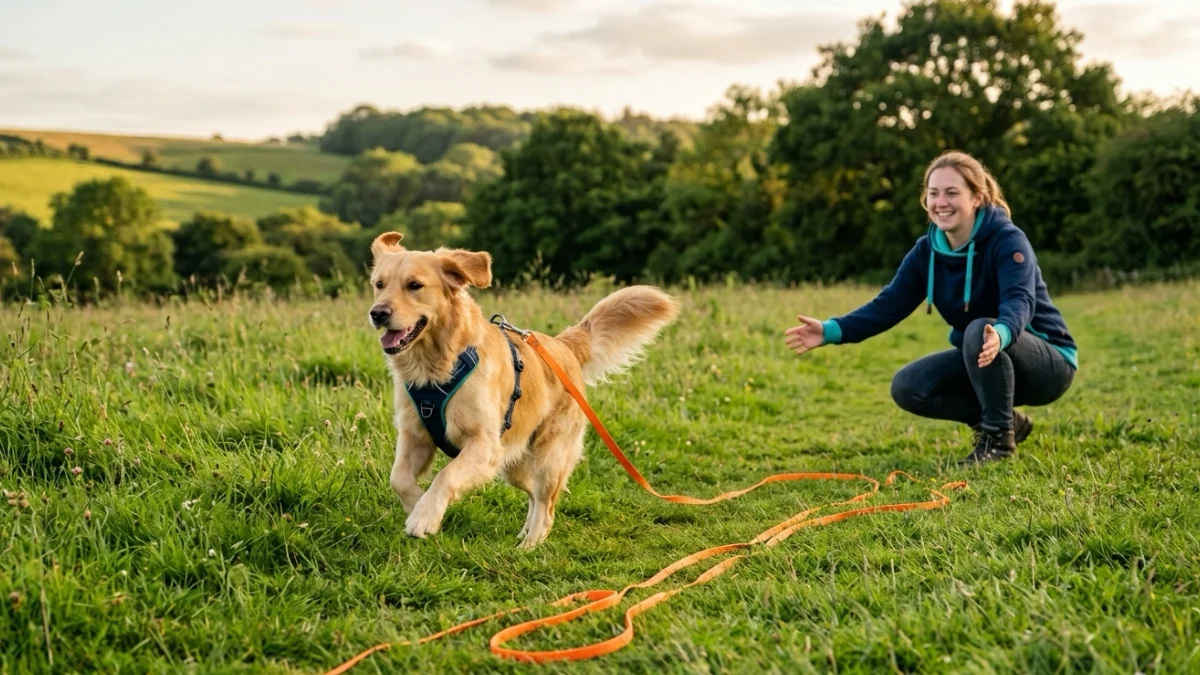
Use a long line to let your dog explore, then reward heavily every time they choose to come back. Clip the line to a harness, let your dog wander, and use your recall cue in a happy voice. When they turn toward you, throw a party with high-value treats and praise so coming back is always the best deal. The line is your safety net, not a tool for yanking.
Keep the line loose and let it drag or feed through your hands, never using it to reel your dog in. Jerking the line teaches your dog that recall means an unpleasant pull, which poisons the cue. Instead, make yourself irresistible with treats, toys, and enthusiasm. Your dog should come back because it pays, not because they are dragged.
Build difficulty gradually as your recall gets stronger. Start in quiet spaces, then practice near mild distractions, raising your treat value as the environment gets harder. Only consider off-leash freedom once your recall is rock solid on the long line. Patience here is what creates a recall you can truly trust.
Frequently Asked Questions About Long Lines
What length long line is best for recall training?
A 30-foot long line is the best all-around length for building distance recall, while 15 feet suits beginners and smaller spaces. Longer lines give more freedom but require more skill to manage without tangles. Start shorter while you learn to handle the line, then extend as your recall improves. Match the length to your space and comfort.
Should I attach a long line to a collar or harness?
Always attach a long line to a well-fitted harness, never a collar. A dog hitting the end of a long line at speed can suffer neck injury if the force lands on a collar. A harness spreads that pressure safely across the body. This one safety rule protects your dog during every session.
Is biothane better than a rope long line?
Biothane is generally better than rope for long lines because it is waterproof and does not absorb dirt or odor. Rope and fabric lines soak up water and become heavy, smelly, and prone to mildew after wet sessions. Biothane wipes clean and stays light in any weather. For durability and hygiene, biothane is the stronger choice.
Can I use a retractable leash instead of a long line?
No, a retractable leash is not a good substitute for a long line in recall training. Retractables keep constant tension, which teaches pulling and prevents the loose freedom recall practice needs. A fixed-length long line lets your dog move naturally and choose to return. Save retractables for other uses and train recall on a proper long line.
How do I stop a long line from tangling?
Reduce tangles by keeping the line moving through your hands and staying aware of your dog’s path around obstacles and legs. Wearing gloves lets you manage the line smoothly and prevents rope burn. Practice handling in open space before adding distractions. A little technique keeps the line an asset rather than a hazard.
A Reliable Recall Starts With Safe Freedom
A long line is the bridge between a nervous six-foot walk and the joy of a dog who comes back every time. It gives your dog the freedom to practice and gives you the safety to relax while they learn. That combination is exactly what builds a recall you can genuinely trust.
Pick a biothane line in the right length, clip it to a harness, and load your treat pouch for your next session. Reward every return like it is the best thing your dog has ever done, and build distance slowly. Safe freedom today is what earns you a rock-solid recall tomorrow.