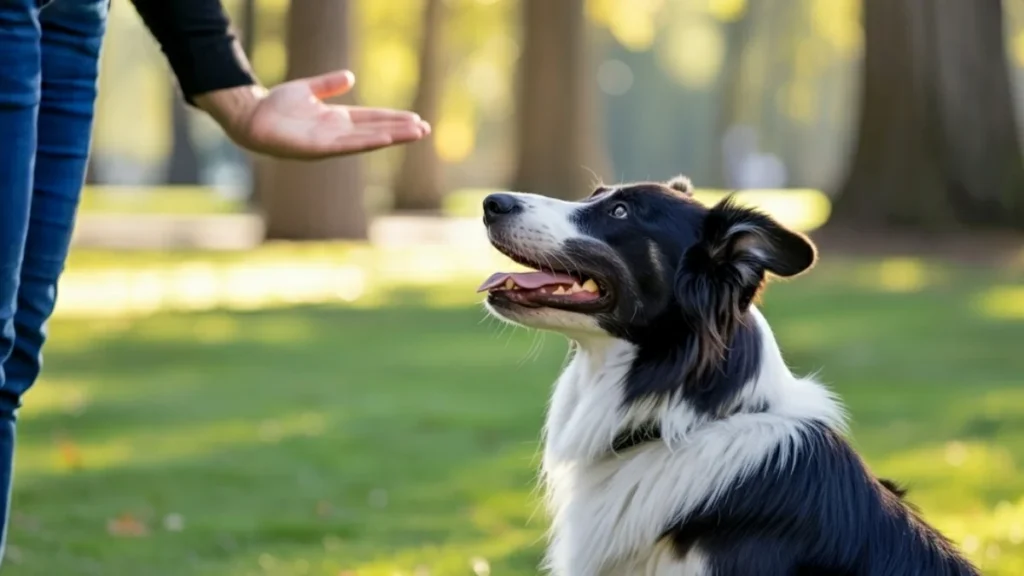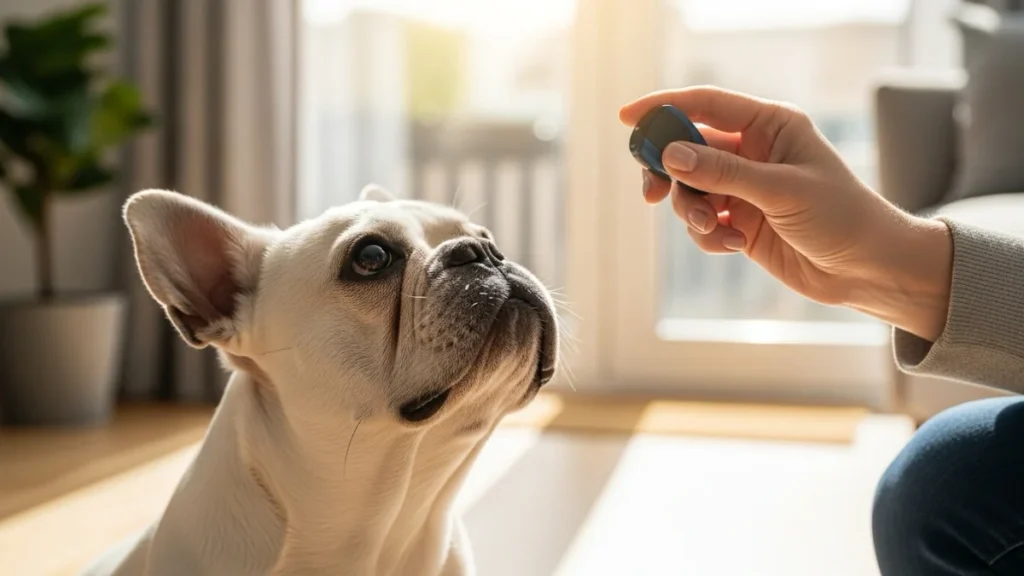

The best no-pull dog harness reduces pulling gently, through smart design, not pain. A front-clip harness redirects your dog back toward you when they surge ahead, taking the strain off their neck and giving you back control. As a certified professional dog trainer, I fit no-pull harnesses on client dogs almost daily, and the right one makes a night-and-day difference on walks. This guide covers my top picks and how to choose.
We will cover how no-pull harnesses actually work, what to look for, and my favorite models for 2026 across every budget and dog type. Every harness here is force-free: none use choking, pinching, or shock to stop pulling. Let us find the one that makes your walks calm and comfortable for both of you.
Smarter Paws Academy is reader-supported. When you buy through links on our site, we may earn an affiliate commission at no extra cost to you. As an Amazon Associate, I earn from qualifying purchases. Thank you for your support!
Last Updated: September 2026. This guide is regularly reviewed for accuracy by Sandie Calloway, CPDT-KA.
Important Fit Note
The information in this article is for educational purposes and reflects my experience as a certified dog trainer. A harness only works well when it fits correctly, so measure your dog and check for chafing or restricted shoulder movement. A harness is a management tool that supports training, not a replacement for it.
Key Takeaways: Best No-Pull Dog Harness
- Front-clip is the magic. A chest attachment turns your dog back toward you instead of letting them lean and pull.
- No pain required. Skip prong, choke, and shock collars, a good harness works through mechanics, not discomfort.
- Fit is everything. Measure your dog and check for free shoulder movement so the harness helps rather than rubs.
- Gear plus training wins. The harness manages pulling today while positive training builds the lasting habit.
Prefer to Listen? An Audio Overview
For a quick guide to picking the right no-pull harness, press play below.
Runtime: 1:05
View Full Audio Transcript
Narrator: Welcome to the Smarter Paws Academy audio overview. Sandie, the harness aisle is overwhelming. What actually makes one a no-pull harness?
Sandie Calloway: The clip on the chest. That front attachment is what does the work. When your dog pushes forward, the leash gently turns them back toward you instead of letting them dig in and haul you along. A back-only clip can actually make pulling worse.
Narrator: And these do all that without hurting the dog?
Sandie Calloway: Exactly, and that is the whole point. We never need pain to stop pulling. No prong collars, no shock. A well-made front-clip harness redirects the dog with simple physics. It is kinder and it works better, which is a rare combination.
Narrator: Any one thing people get wrong?
Sandie Calloway: Fit. A harness that rubs the armpits or pins the shoulders will not help, and your dog will hate it. Measure your dog, check that the shoulders move freely, and adjust all the straps. A good fit is half the battle.
Narrator: Front clip, no pain, and a proper fit.
Sandie Calloway: That is it. Pair the right harness with a little training and walks get so much better.
Table of Contents
How Does a No-Pull Harness Work?
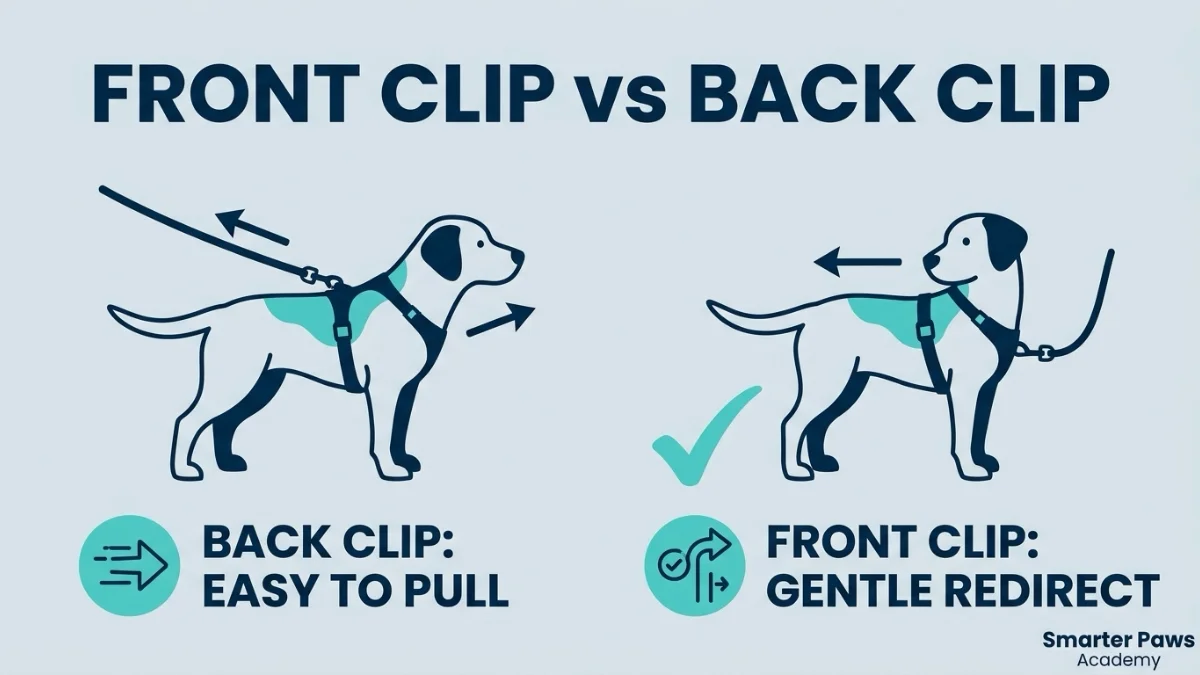
A no-pull harness works by attaching the leash at your dog’s chest instead of their back. When your dog lunges forward, that front clip gently rotates them back toward you, so pulling no longer moves them ahead. This uses simple physics to interrupt the pulling, without any pain or force. The redirection makes staying beside you the easier choice.
The design also sidesteps a natural reflex that makes back-clip harnesses backfire. Dogs have an opposition reflex, meaning they instinctively lean into steady pressure, so a back attachment can actually encourage harder pulling. A front clip removes that forward tug-of-war entirely. This is why trainers reach for front-clip harnesses first for dogs that pull.
A harness handles the management side, but real change still comes from training. The harness reduces pulling today so you can teach polite walking without a daily wrestling match. For the full method, follow my 5-step loose leash walking guide, which pairs perfectly with any harness below. Gear plus training is the combination that lasts.
What Should You Look for in a No-Pull Harness?
Look for a front clip, a comfortable fit, and adjustability so the harness suits your dog’s exact shape. A front leash ring is the feature that delivers the no-pull effect, and dual-clip designs add flexibility as your dog improves. Multiple adjustment points let you dial in a snug, chafe-free fit. Comfort keeps your dog cooperative rather than resentful.
Padding and material quality matter for daily walkers. Soft chest and belly panels prevent rubbing on longer outings, and durable hardware holds up to strong dogs. For escape artists, a martingale loop or extra security strap can stop a dog backing out. Choose the build that matches how and where you walk.
Steer clear of anything that works through discomfort. Prong collars, choke chains, and shock collars can suppress pulling by hurting your dog, and they damage trust and can worsen fear. A good harness achieves calm walking through better mechanics instead. Kind gear and effective gear are the same thing here.
What Are the Best No-Pull Harnesses for 2026?
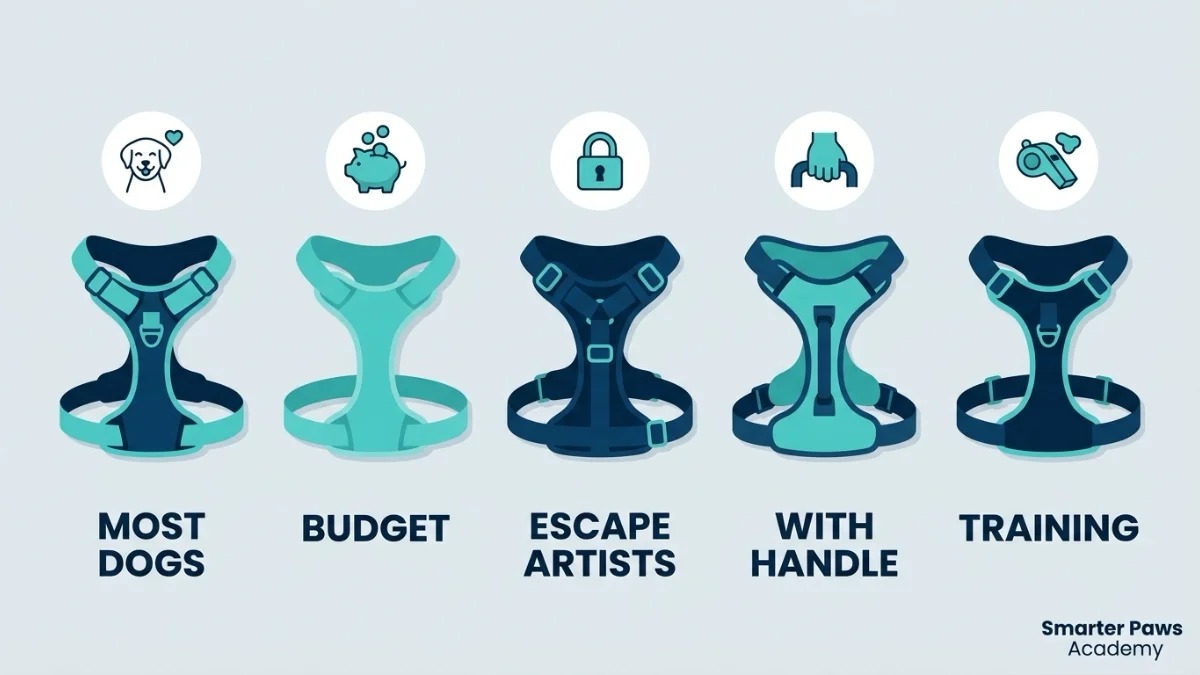
My picks below each shine for a specific dog and budget, from first-timers to committed escape artists. I chose them for no-pull effectiveness, comfort, fit range, and durability. Every one is force-free and trainer-approved.
Best for Most Dogs: Ruffwear Front Range Harness
The Ruffwear Front Range is my top all-around pick for comfort and versatility. It offers both front and back leash rings, so you use the front clip for training and switch to the back once your dog walks politely. Padded chest and belly panels prevent rubbing, and four adjustment points fit a wide range of body shapes. For daily walkers and active dogs, it is worth the investment.

- DUAL LEASH ATTACHMENT POINTS. Features an aluminum V-ring on the back and reinforced webbing at the chest. Gives you opt…
- FIND THE RIGHT FIT WITH EASE. Not sure which size to choose? Check out our sizing chart image and how-to-fit video to he…
- FOAM-PADDED CONSTRUCTION. Built with closed-cell foam padding in the chest and belly panels. This provides cushioned sup…
Best Budget Pick: PetSafe Easy Walk Harness
The PetSafe Easy Walk is the most widely recommended front-clip harness for good reason. Its chest strap clips at the sternum, so a pulling dog is gently redirected sideways instead of powering forward. Trainers love it because the pulling reduction is immediate and the price is friendly. It is my top starter pick for owners who want fast results without spending much.

- Effective No-Pull Solution: The PetSafe Easy Walk Harness helps create pull-free walks by using a martingale loop design…
- Designed for Comfort & Fit: Features adjustable comfort straps and a breathable harness design with less coverage, keepi…
- Simple to Use & Trainer Recommended: Includes an easy color-coded fit and quick-snap shoulder buckles for fast on-and-of…
Best for Escape Artists: 2 Hounds Design Freedom No-Pull
The 2 Hounds Design Freedom is my pick for dogs who slip out of everything. It combines a dual front-and-back clip system with a martingale loop specifically designed to stop a dog backing out. Swiss velvet lining reduces chafing and US-made stainless hardware holds up to strong pullers. For a determined escape artist, this is the secure, comfortable answer.

- ENJOY MORE WALKS: Enjoy stress-free walks with our anti pull dog harness. Experience superior control and comfort with t…
- OPTIMAL CONTROL & EASY TRAINING: Trusted by veterinarians and trainers, our no escape dog harness features two connectio…
- MADE IN THE USA: High-quality and durability are our priorities in crafting the top-rated dog walking harness. Proudly m…
Best Value with a Handle: Rabbitgoo Dog Harness
The Rabbitgoo delivers strong no-pull performance at a very accessible price. It has dual leash rings, a front chest ring for redirection and a back ring for casual walks, plus a top handle for close control near traffic. Soft padding and reflective stitching round out a practical everyday harness. It is a smart choice for owners who want features without a premium price.

- Easy to Wear: Features 3 buckles, our harness can be easily put on and taken off. No need to slip over the head or readj…
- Ultra Safety Design: Lockable neck buckle to prevent your dog from slipping out. Reflective strips can light up under ca…
- Control in Multiple Ways: Front clip for no pull, back clip for free walking, jogging, hiking. The top handle gives quic…
Best for Training Flexibility: Kurgo Tru-Fit Smart Harness
The Kurgo Tru-Fit suits owners who want a harness that grows with their dog’s progress. Its dual-clip design lets you use the front ring for active training sessions and switch to the back for relaxed strolls as manners improve. Five adjustment points make for a precise, secure fit. It is a well-built, flexible option for dogs actively learning leash manners.

- Crash-Tested Safety & Comfort: The Kurgo Enhanced Strength Tru-Fit Dog Car Harness offers a crash test-certified fit wit…
- Fit for Walks & Travel: Designed as a daily use harness fit, it features five points of adjustment and a padded chest pl…
- Durable & Travel Ready: Built with an enhanced strength build, includes a 10-inch seatbelt tether with steel carabiner, …
How Do the Top No-Pull Harnesses Compare?
The table below matches each harness to the dog and situation it suits best. Use it to narrow your choice, then confirm the size against your dog’s measurements. Fit always beats brand, so measure before you buy.
| Harness | Clip Setup | Best For |
|---|---|---|
| Ruffwear Front Range | Front + back | All-around comfort and daily walks |
| PetSafe Easy Walk | Front | Budget, fast results |
| 2 Hounds Freedom | Front + back, martingale | Escape artists |
| Rabbitgoo | Front + back, handle | Value with extra features |
| Kurgo Tru-Fit | Front + back | Training flexibility |
How Do You Fit and Use a No-Pull Harness?
Fit a no-pull harness snugly enough that two fingers slide under the straps, but not so tight that it restricts the shoulders. Measure your dog’s chest girth and check the brand’s size chart before buying, since fit varies between models. A harness that rubs the armpits or pins the shoulders will not help and your dog will resist it. Take a minute to adjust every strap on the first wear.
Clip the leash to the front ring while you are actively training loose leash walking. The front attachment gives you the redirection that makes teaching easier, and you can switch to the back ring for relaxed walks once your dog improves. This lets one harness serve both stages. Use the tool to match your dog’s current skill level.
Remember that the harness manages pulling but does not teach walking on its own. Pair it with rewards for the position you want, following my loose leash walking method. The gear buys you calm walks today, and the training makes them permanent. Together they turn a puller into a polite walking partner. If your dog pulls because they are barking or lunging at people or other dogs, the harness is only half the answer, so pair it with my leash reactivity guide and my plan to stop barking at people.
Frequently Asked Questions About No-Pull Harnesses
Do no-pull harnesses actually work?
Yes, front-clip no-pull harnesses reduce pulling immediately for most dogs by redirecting them toward you. They work through mechanics, not pain, so they are safe and humane. A harness manages the pulling, but pairing it with reward-based training creates lasting change. Expect a big improvement on the very first walk, with a permanent fix coming from training.
Are no-pull harnesses cruel or bad for dogs?
Quality front-clip harnesses are not cruel and do not harm dogs when fitted correctly. They redirect gently and keep pressure off the sensitive throat, unlike choke or prong collars. The main risk is a poor fit that rubs or restricts the shoulders, which good sizing prevents. Choose a padded, adjustable model and check the fit regularly.
Is a front-clip or back-clip harness better for pulling?
A front-clip harness is better for dogs that pull, because the chest attachment redirects them toward you. Back-clip harnesses are comfortable for trained dogs but can make pulling worse by engaging the opposition reflex. Many harnesses offer both clips, so use the front while training. Switch to the back once your dog walks politely.
What size no-pull harness does my dog need?
Measure your dog’s chest girth, the widest part behind the front legs, and match it to the brand’s size chart. Weight alone is not reliable because body shapes vary a lot between dogs. Adjust all straps for a snug, two-finger fit once it is on. Correct sizing is what makes a no-pull harness comfortable and effective.
Can a harness stop my dog from pulling permanently?
A harness reduces pulling right away, but permanent change comes from training. The gear manages the behavior while you teach your dog that a loose leash is what moves the walk forward. Used together, most dogs improve within a few weeks. Relying on the harness alone manages the symptom without teaching the skill.
Better Walks Start With the Right Gear
The right no-pull harness turns a daily battle into a pleasant walk, gently and without a shred of pain. When the leash stops choking and the pulling loses its payoff, both you and your dog relax into the outing. That comfort is what makes the training that follows actually stick.
Measure your dog, pick the harness that matches their needs, and clip the leash to the front ring for your next walk. Add the loose leash training method and give it a few consistent weeks. You are just one good harness and a little patience away from the calm walks you have been wanting.