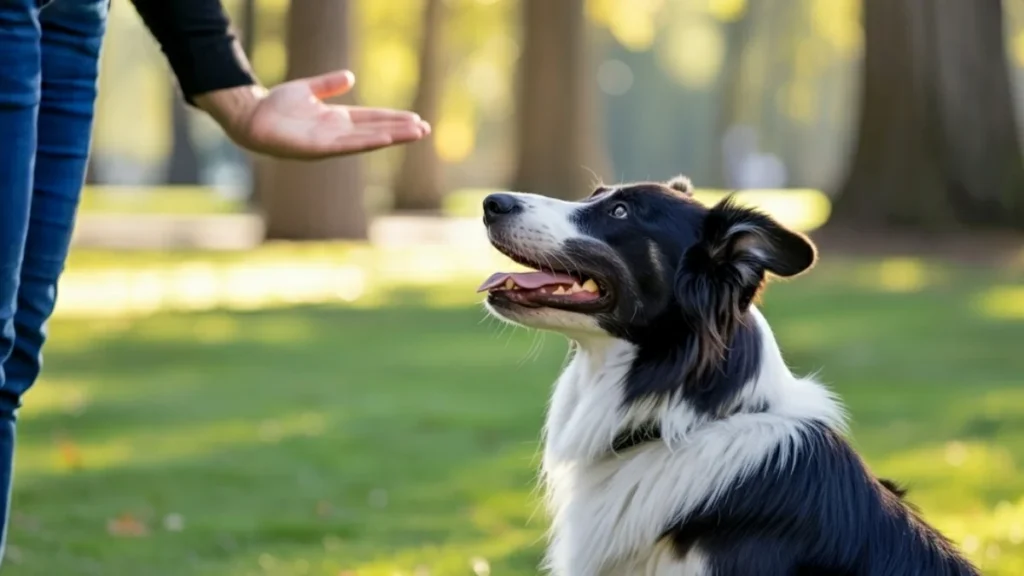

Positive reinforcement dog training means rewarding the behaviors you want, so your dog chooses to repeat them. It is the most effective and humane way to train, and it is the method I have built my whole practice around. As a certified professional dog trainer, I have watched reward-based training transform fearful, frustrated dogs into confident, eager learners. This guide explains exactly how it works and how to use it.
We will cover the science behind positive reinforcement, why it beats punishment, and the core skills that make it work. Wherever you want to go deeper, I will point you to my step-by-step guides for specific skills and problems. By the end, you will understand the humane philosophy that makes training a joy for both of you.
Smarter Paws Academy is reader-supported. When you buy through links on our site, we may earn an affiliate commission at no extra cost to you. As an Amazon Associate, I earn from qualifying purchases. Thank you for your support!
Last Updated: September 2026. This guide is regularly reviewed for accuracy by Sandie Calloway, CPDT-KA.
Important Behavior Disclaimer
The information in this article is for educational purposes and reflects my experience as a certified dog trainer. It is not a substitute for hands-on help with serious issues. For aggression, severe fear, or anxiety, please work with a certified professional dog trainer or veterinary behaviorist.
Key Takeaways: Positive Reinforcement Dog Training
- Reward what you want. Positive reinforcement adds something good after a behavior, so your dog repeats it.
- The science backs it. Research links reward-based training to lower stress and better learning than aversive methods.
- Timing and a marker are key. A clicker or a clear “yes” pinpoints the exact moment your dog earns the reward.
- It builds a bond, not just obedience. Training becomes a game you play together, deepening trust every session.
Prefer to Listen? An Audio Overview
For a clear, friendly explanation of positive reinforcement, press play below.
Runtime: 1:12
View Full Audio Transcript
Narrator: Welcome to the Smarter Paws Academy audio overview. Sandie, in plain words, what is positive reinforcement training?
Sandie Calloway: It is simple. When your dog does something you like, you add something they love right after, a treat, praise, a game. That good thing makes the behavior more likely to happen again. You are not forcing your dog, you are showing them that good choices pay off.
Narrator: Some people think it is soft or permissive. Is it?
Sandie Calloway: Not at all, and the science is on my side. Studies show reward-trained dogs are less stressed and often learn faster than dogs trained with punishment. You get real, reliable behavior, plus a dog who trusts you. That is not soft, that is smart.
Narrator: What is the one skill people should master first?
Sandie Calloway: Timing. Your reward has to land within a second or two of the behavior, or your dog connects it to the wrong thing. That is why we use a marker, a click or a clear “yes.” It is like taking a photo of the exact moment your dog got it right.
Narrator: Reward good choices, trust the science, and nail your timing.
Sandie Calloway: That is the whole foundation. Everything else in training builds on it.
Table of Contents
What Is Positive Reinforcement Dog Training?
Positive reinforcement dog training is a method where you add a reward after a behavior to make that behavior happen more often. In plain terms, you catch your dog doing something right and pay them for it with a treat, praise, or play. Over time, your dog offers those good behaviors on purpose because they have learned that they pay off. It is training built on cooperation rather than control.
The word “positive” here means adding something, not the opposite of negative. This comes from the science of learning, where reinforcement simply means anything that makes a behavior more likely to repeat. A treat after a sit reinforces sitting, so your dog sits more. Understanding this simple mechanism is the key to training almost anything.
This approach is the foundation of everything I teach at Smarter Paws Academy. Every skill and every problem, from a simple sit to serious anxiety, is addressed by rewarding the behavior you want and managing the situation kindly. It is a complete philosophy, not just a trick for teaching cute behaviors. That philosophy is what builds a genuinely well-trained, happy dog.
Why Is Positive Reinforcement Better Than Punishment?
Positive reinforcement is better because it teaches effectively while protecting your dog’s welfare and your bond. Research on training methods consistently finds that reward-based training produces lower stress than aversive methods. A 2020 study led by researcher Ana Catarina Vieira de Castro found that dogs trained with aversive methods showed higher cortisol, more stress behaviors, and a more pessimistic emotional state than reward-trained dogs.
Punishment also fails to teach your dog what to do instead. Yelling or correcting might briefly stop a behavior, but it leaves your dog anxious and guessing, and it can create fear or aggression. The American Veterinary Society of Animal Behavior states there is no evidence aversive methods work better than reward-based ones, and that they damage welfare and the human-animal bond. Kinder and more effective are the same thing here.
The bonus is a dog who actually enjoys learning with you. Reward-trained dogs tend to be more playful, attentive, and bonded to their owners, and some research suggests they even learn new tasks faster. When training is a game your dog wants to win, everything gets easier. That eager, trusting partnership is the real prize of positive reinforcement.
How Does Positive Reinforcement Actually Work?
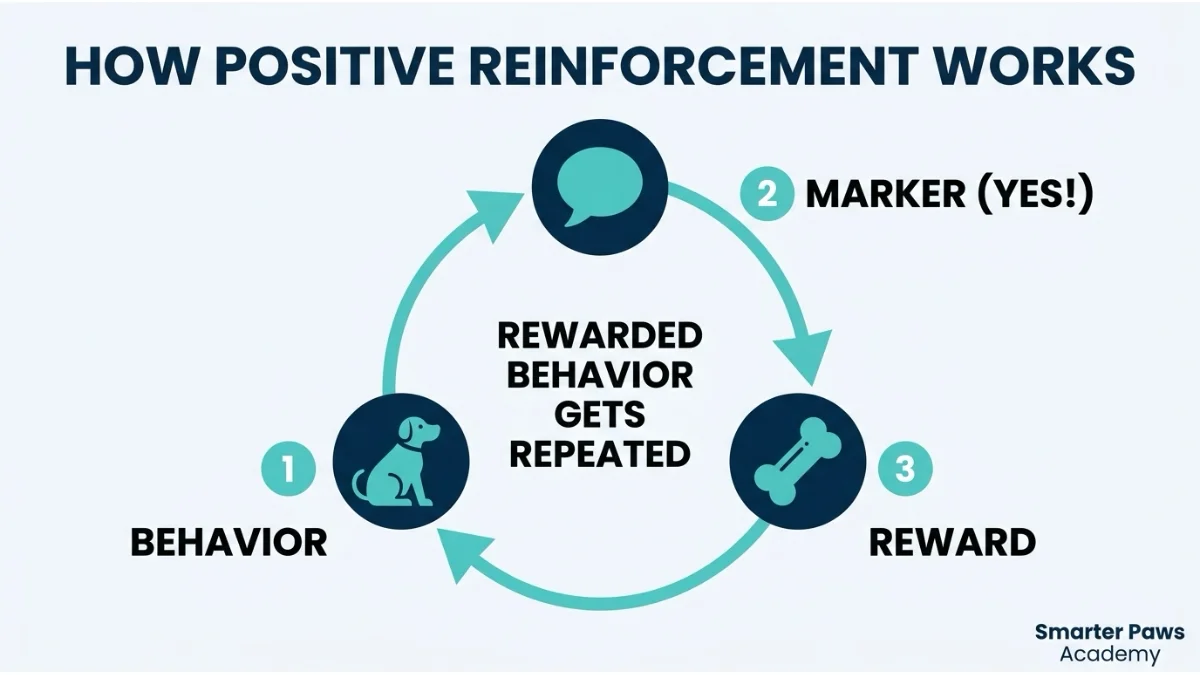
Positive reinforcement works through three simple pieces: a behavior, a marker, and a reward delivered with good timing. You wait for or prompt the behavior, mark the exact moment it happens with a click or a “yes,” then deliver a reward within a second or two. That precise timing is what tells your dog exactly which action earned the payment. Get the timing right and learning happens fast.
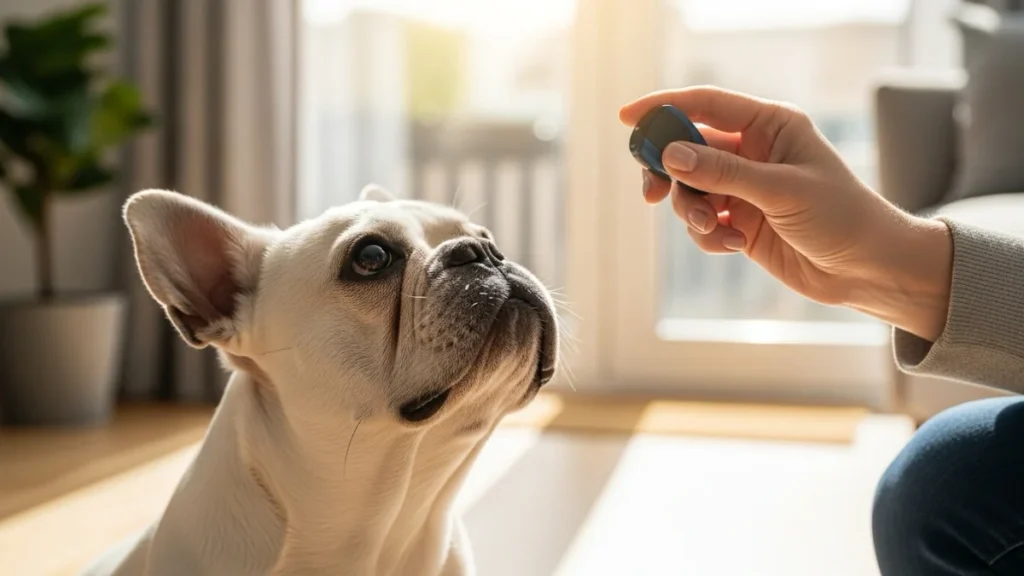
A marker signal is the tool that makes your timing sharp. A clicker or a consistent word acts like a camera shutter, capturing the precise instant of the correct behavior before the treat arrives. My guide to clicker training breaks down exactly how to build and use this marker. Once your dog understands the marker, you can teach almost anything.
Rewards are whatever your specific dog finds worth working for, and value matters. Most dogs work hardest for small, tasty treats, so my guide to the best training treats helps you pick the right ones. You raise the reward value for harder tasks and distracting places. Matching the reward to the challenge keeps your dog motivated through every stage.
What Skills Can You Teach With Positive Reinforcement?
You can teach every skill your dog needs with positive reinforcement, from basic manners to advanced behaviors. The same reward-and-mark method that teaches a sit also teaches recall, loose leash walking, and calm behavior around triggers. This is the beauty of the approach: one humane system covers your entire training plan. Each skill just applies the same core principle to a new goal.
The foundation skills are where every dog should start. Basic commands like sit, down, and stay give you a shared language, and my guide to teaching basic commands walks through each one. Hand signals add another layer of clear communication, covered in my hand signals guide. These basics make daily life smoother right away.
From there, positive reinforcement handles the skills that give your dog freedom and safety. A reliable recall, built in my recall training guide, lets your dog enjoy off-leash life, while my loose leash walking method makes every walk pleasant. Each skill compounds on the last. Together they build a dog who is a joy to live with. For off-leash freedom, a long line lets you practice recall safely while the skill is still growing.
What Mistakes Do People Make With Positive Reinforcement?
The most common mistake is poor timing, marking or rewarding a second too late. If the reward does not connect to the right moment, your dog learns the wrong lesson, so a marker signal and quick delivery are key. Practice your timing without your dog first if you need to. Sharp timing is the single biggest skill upgrade for most owners.
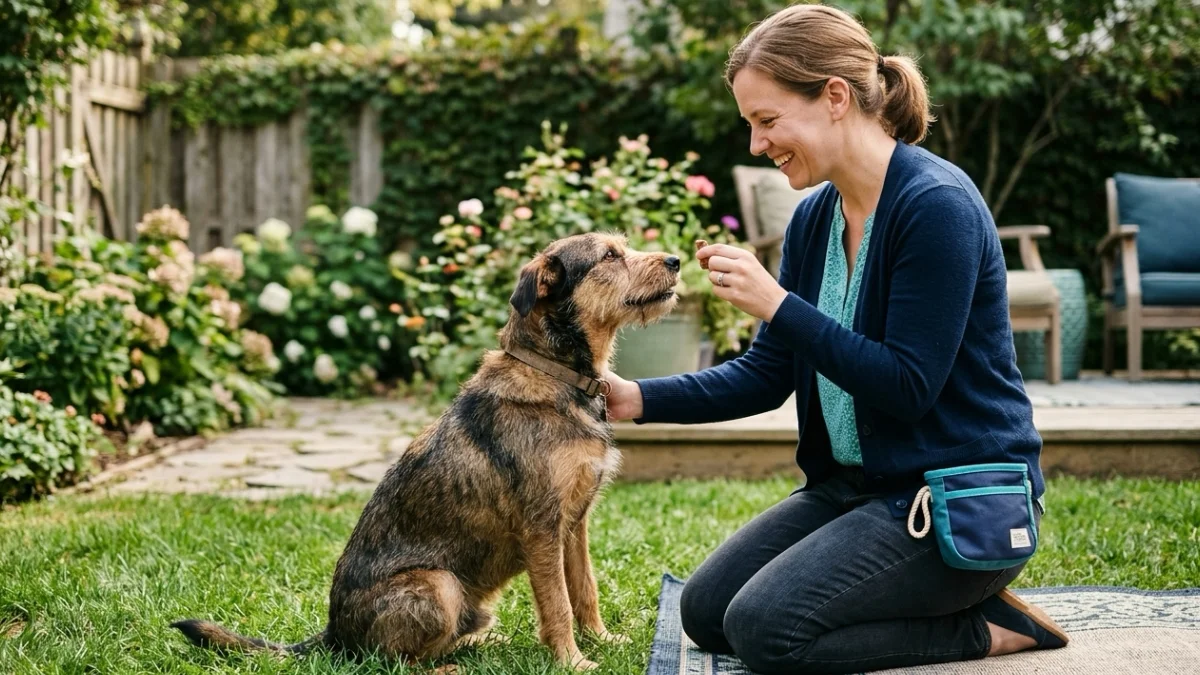
Another frequent error is keeping rewards visible or relying on them forever. If you only ever train with a treat in your hand, your dog works for the bribe rather than the behavior. The fix is to reward from a pouch or your pocket and to fade the food frequency as skills become reliable. You build a habit first, then reduce the food gradually.
Inconsistency is the third big pitfall, especially across a household. If one person rewards jumping with attention while another ignores it, your dog gets mixed messages and progress stalls. Everyone needs to reward the same behaviors the same way. Consistency turns scattered efforts into steady, reliable learning.
Frequently Asked Questions About Positive Reinforcement Training
Does positive reinforcement training really work?
Yes, positive reinforcement is a proven, effective training method backed by decades of behavioral science. Research shows it produces reliable results with less stress than aversive methods, and major veterinary behavior groups recommend it exclusively. It works for basic manners, complex skills, and behavior problems alike. The key is good timing, consistency, and rewards your dog values.
Do I have to use treats forever?
No, you fade treats as behaviors become reliable, moving to occasional rewards and everyday praise. Food is the most practical reward for teaching something new, but you gradually reward every second or third success instead of every time. You also mix in praise, play, and life rewards like walks. The behavior stays strong while the constant food fades away.
Is positive reinforcement too permissive for stubborn dogs?
No, positive reinforcement is not permissive, and it works well for so-called stubborn dogs. A dog who ignores cues usually needs higher-value rewards, clearer timing, or easier steps, not punishment. Reward-based training sets clear expectations and pays for the right choices. Most stubbornness disappears once the dog understands what earns the reward.
Can you fix behavior problems with positive reinforcement?
Yes, positive reinforcement and management resolve most common behavior problems, from barking to jumping to leash pulling. You reward an alternative behavior and manage the environment to prevent the unwanted one. Serious issues like aggression or severe anxiety should involve a certified professional or veterinary behaviorist. The reward-based approach remains the safe, effective foundation in every case.
What is the difference between positive reinforcement and bribery?
Bribery shows the reward before the behavior to lure it, while reinforcement delivers the reward after the behavior as payment. Early on, a treat lure can help teach a new skill, but you fade the lure quickly so the reward comes after. This shift is what builds real, reliable behavior. The reward becomes a paycheck, not a bribe.
Training That Builds Trust, Not Fear
Positive reinforcement is more than a training method, it is a way of building a relationship with your dog based on trust and cooperation. When you reward the behaviors you want, you teach your dog that working with you is safe, fun, and rewarding. That foundation makes every lesson easier and your bond stronger.
Start with a marker and some great treats, pick one skill from the guides above, and keep your sessions short and joyful. Reward generously, fade the food as skills lock in, and stay consistent. Step by kind step, you will build a confident, happy dog who genuinely loves to learn with you.