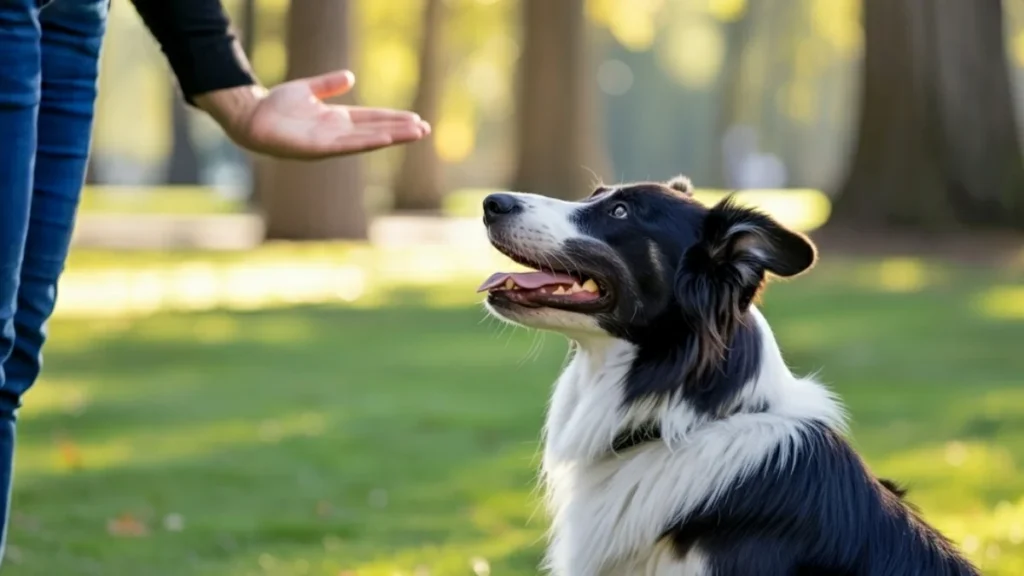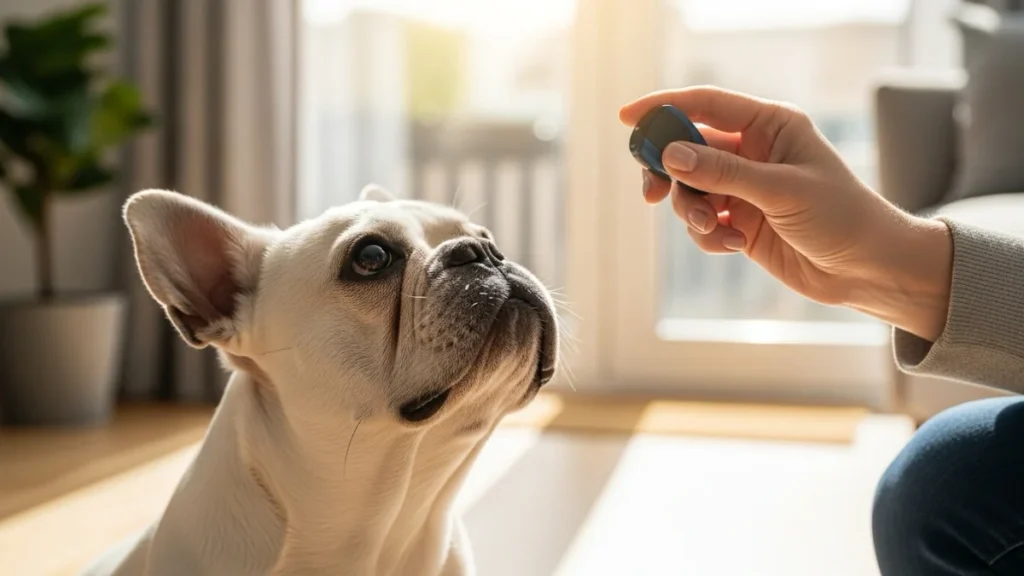
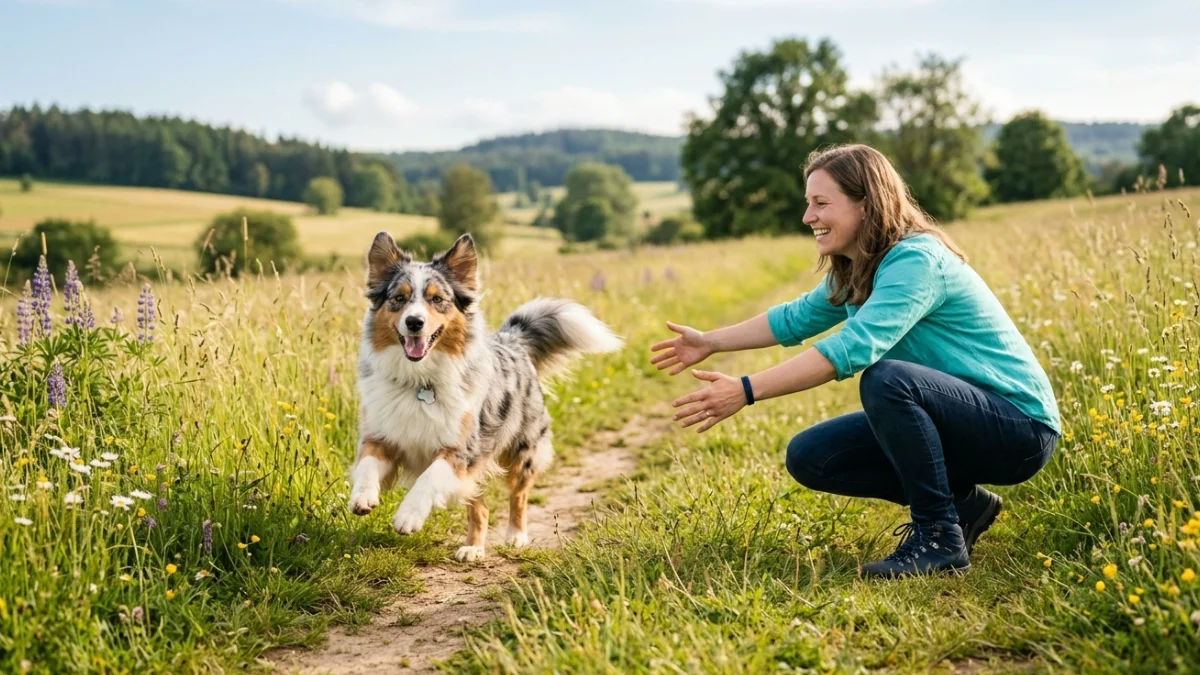

Recall is the skill of your dog coming back to you every time you call, no matter the distraction. It is the most important thing you will ever teach, because a reliable recall keeps your dog safe. As a certified professional dog trainer, I treat recall as a life skill, not a party trick, and I build it the same way every time: by making coming back the best choice your dog can make. This guide gives you my exact positive method.
We will cover why recall breaks down, the step-by-step plan to build it, and the mistakes that quietly ruin it. Every step uses positive reinforcement, so your dog runs back out of joy, not fear. Let us build a come-when-called you can truly rely on.
Smarter Paws Academy is reader-supported. When you buy through links on our site, we may earn an affiliate commission at no extra cost to you. As an Amazon Associate, I earn from qualifying purchases. Thank you for your support!
Last Updated: September 2026. This guide is regularly reviewed for accuracy by Sandie Calloway, CPDT-KA.
Important Safety Note
The information in this article is for educational purposes and reflects my experience as a certified dog trainer. Until your recall is reliable, keep your dog on a long line in open areas and never test an unproven recall near roads, wildlife, or off-leash dogs. Attach long lines to a harness, not a collar.
Key Takeaways: How to Teach Recall
- Make coming back the best deal. Reward recall so generously that returning always beats whatever your dog left behind.
- Never punish a dog who comes. If returning ever leads to something bad, your recall dies. Keep it 100% positive.
- Use a long line to practice safely. A training line lets you build distance recall without risking a runaway dog.
- Build distraction slowly. Start indoors, then add distance and distractions one small step at a time.
Prefer to Listen? An Audio Overview
For a practical walk through building a reliable recall, press play below.
Runtime: 1:11
View Full Audio Transcript
Narrator: Welcome to the Smarter Paws Academy audio overview. Sandie, recall is the skill everyone wants and so many dogs fail at. Why?
Sandie Calloway: Usually because coming back stopped being worth it. Think about it from the dog’s side. They are having the time of their life sniffing, and you call them to end the fun and go home. If that is the deal, why would they come? We have to make returning better than staying.
Narrator: So how do you make it worth it?
Sandie Calloway: You throw a party. When your dog comes back, they get the good stuff, high-value treats, praise, a game. And here is the big one, you do not always end the fun. Call them, reward them, then release them to go play again. Now coming back does not mean the fun stops.
Narrator: What is the fastest way to break a recall?
Sandie Calloway: Punishing a dog who comes to you. If your dog finally comes back and you scold them for taking so long, you just taught them that coming back is bad. Never, ever do that. No matter how frustrated you are, reward the return.
Narrator: Make it worth it, and never punish the comeback.
Sandie Calloway: That is the heart of it. Do those two things and recall gets reliable.
Table of Contents
Why Won’t My Dog Come When Called?
Your dog does not come when called because, from their point of view, staying is more rewarding than returning. Dogs do what works for them, and if coming back has ever ended the fun or led to something unpleasant, they learn to avoid it. The environment is full of exciting rewards, and your call has to compete with all of them. Winning that competition is the whole job of recall training.
A poisoned cue is the most common hidden reason recall fails. If you have ever called your dog only to end playtime, give a bath, or scold them, the word “come” now predicts something they dislike. Even a slightly annoyed tone teaches your dog to hesitate. This is why keeping recall purely positive matters so much.
The fix is to rebuild the meaning of your recall word into a promise of good things. Every single time your dog comes, something wonderful happens, and often they get released back to their fun. My guide to the best long line for recall shows the tool that lets you practice this safely. With enough positive reps, coming back becomes your dog’s favorite choice.
How Do You Teach a Dog to Come When Called?
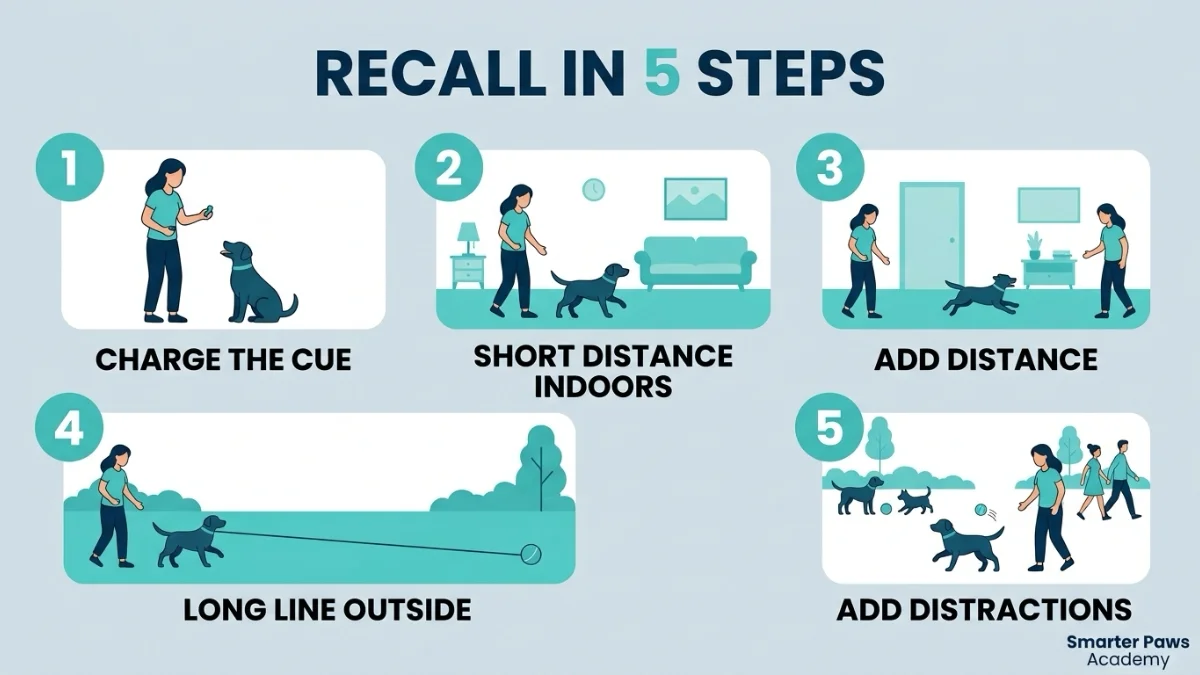
You teach recall by building a joyful association with your cue, then adding distance and distraction gradually. The plan below starts easy and safe, so your dog succeeds at every step and never rehearses ignoring you. Work through it at your dog’s pace, only raising difficulty when the current level is solid. Here is my step-by-step method.
Step 1: Charge the recall word. In a quiet room, say your dog’s recall cue and immediately give a great treat, several times. Your dog learns that the word itself predicts something wonderful, before you even ask them to move.
Step 2: Add short distance indoors. Call your dog from a step or two away, reward big when they come, and repeat. Keep it easy and win-heavy so the behavior feels effortless and fun.
Step 3: Move to a long line outdoors. Clip a long line to a harness in a safe open area, let your dog explore, then call and reward heavily on return. The line is your safety net, never a tool for reeling your dog in.
Step 4: Reward, then release. After your dog comes and gets their reward, release them with a happy “go play” so returning does not always end the fun. This single habit keeps your recall strong for life.
Step 5: Build distractions gradually. Practice near mild distractions, then busier ones, raising your treat value as it gets harder. Only trust off-leash recall once your dog succeeds reliably on the long line.
What Rewards Work Best for Recall Training?
The best recall rewards are your dog’s absolute favorites, saved specifically for coming when called. Recall competes with squirrels and smells, so it deserves your highest-value payment, not everyday kibble. Soft, meaty treats and freeze-dried liver are top choices, and my guide to the best training treats helps you pick. High value is what makes returning worth it.
Variety and surprise make recall rewards even more powerful. A jackpot of several treats, a favorite toy, or an excited game of tug can all pay for a great recall, and mixing them up keeps your dog guessing happily. The bigger the distraction your dog left, the bigger the party should be. Generosity now buys reliability later.
Your own enthusiasm is a reward many owners forget to use. Dogs read our energy, so calling in a bright, happy voice and celebrating the return makes coming back feel great. A flat or stern tone does the opposite. Bring genuine joy to every recall and your dog will want to run to you. A clear marker, like the click in my clicker training guide, tells your dog the exact moment they got it right.
What Mistakes Ruin a Dog’s Recall?
The recall-killer is punishing or disappointing your dog when they come to you. Scolding a slow return, ending all fun the moment they arrive, or calling only for baths and nail trims all teach your dog that coming back is a bad bet. Every return must pay off. Protect your recall word like it is precious, because it is.
Calling when you cannot enforce or reward is another common mistake. If you call your dog in a distracting place before the skill is ready and they ignore you, they just practiced blowing you off. Use a long line so you can always help them succeed. Never give a recall cue you are not prepared to back up positively.
Overusing the cue also wears it out. If you repeat “come, come, come” while your dog ignores you, the word loses meaning. Say it once, make yourself exciting, and help your dog succeed rather than nagging. One clear, well-rewarded cue beats a dozen ignored ones. If your dog drags you on every walk, work on loose leash walking alongside recall, since both skills teach your dog that staying near you pays.
Frequently Asked Questions About Recall Training
How long does it take to train a reliable recall?
Building a reliable recall usually takes several weeks to a few months of consistent, positive practice. Early progress in easy settings comes quickly, while proofing against strong distractions takes longer. The timeline depends on your dog’s history and how consistently you reward. Rushing to off-leash freedom is the main thing that slows progress.
Should I use a different word if my recall is poisoned?
Yes, if your current recall word predicts bad things, switch to a fresh cue and train it from scratch. A new word like “here” or a whistle carries no negative history, so your dog starts clean. Charge the new cue with rewards and keep it strictly positive. A fresh word plus good training rebuilds recall faster than fixing a poisoned one.
Can I train recall off-leash right away?
No, you should not train recall off-leash until it is reliable on a long line. Practicing off-leash too soon lets your dog rehearse ignoring you, which weakens the cue. A long line gives your dog freedom while keeping a safety connection. Move to off-leash only once your dog returns consistently through strong distractions.
Is a whistle better than my voice for recall?
A whistle can be excellent for recall because it sounds identical every time and carries over distance. Unlike a voice, it never sounds frustrated, which keeps the cue positive. Many trainers pair a whistle with treats to build a strong, consistent recall. Voice recalls work too, as long as you keep your tone bright and happy.
Why does my dog come inside but not at the park?
Your dog comes at home but not at the park because the park is far more distracting and you have not proofed the recall there yet. Skills do not automatically transfer to harder environments, so you rebuild the recall step by step in each new place. Use a long line and high-value rewards at the park. Practice raises reliability where the distractions are strongest.
A Recall You Can Trust Gives Your Dog Freedom
A reliable recall is the key that unlocks a bigger, freer life for your dog. When you know your dog will come back, you can offer them off-leash adventures, safe hikes, and the joy of running free. That freedom is built one rewarded return at a time, on a foundation of trust.
Start today by charging your recall word with great treats, practice on a long line in safe spaces, and always throw a party when your dog comes. Protect the cue, reward generously, and build distractions slowly. Give your dog every reason to run back to you, and you will earn a recall you can genuinely trust.