
Potty training a puppy comes down to a simple formula: control the schedule, prevent accidents, and reward every success outside. It feels overwhelming at 2 a.m. with a wet carpet, but it is one of the most predictable things you will teach. As a certified professional dog trainer, I have guided countless owners through this exact process, and it works when you stay consistent. This guide gives you the whole positive plan.
We will cover how often puppies need to go, the step-by-step routine that builds clean habits fast, and how to handle the inevitable accidents kindly. There is no punishment here, only prevention and reward. Let us get your puppy reliably going outside and give you back your floors.
Smarter Paws Academy is reader-supported. When you buy through links on our site, we may earn an affiliate commission at no extra cost to you. As an Amazon Associate, I earn from qualifying purchases. Thank you for your support!
Last Updated: September 2026. This guide is regularly reviewed for accuracy by Sandie Calloway, CPDT-KA.
Important Health Note
The information in this article is for educational purposes and reflects my experience as a certified dog trainer. Frequent accidents, straining, or blood in the urine can signal a medical issue like a urinary tract infection, so check with your veterinarian if house training suddenly stalls or your puppy seems uncomfortable.
Key Takeaways: How to Potty Train a Puppy
- Schedule beats luck. Take your puppy out on a predictable routine so success is built into the day.
- Mind the bladder math. Puppies can hold about one hour per month of age, so plan trips around their limits.
- Reward instantly outside. Praise and treat within seconds of finishing so your puppy links going outside to good things.
- Never punish accidents. Punishment teaches puppies to hide, so just clean up and tighten your supervision.
Prefer to Listen? An Audio Overview
For a calm, step-by-step guide to house training, press play below.
Runtime: 1:09
View Full Audio Transcript
Narrator: Welcome to the Smarter Paws Academy audio overview. Sandie, potty training stresses out every new puppy owner. What is the secret?
Sandie Calloway: The secret is that it is about your schedule, not your puppy’s willpower. A young puppy simply cannot hold it long, so we set them up to succeed by taking them out often and at the right times. Potty training is really human training. If you run the schedule, the puppy follows.
Narrator: How often are we talking?
Sandie Calloway: The rule of thumb is about one hour per month of age for the bladder. So a two-month-old needs a trip out roughly every two hours, plus after every meal, nap, and play session. Those transition moments are when they almost always need to go.
Narrator: And accidents? People get so frustrated.
Sandie Calloway: I know, but never punish an accident. If you scold or rub their nose in it, all you teach is that peeing in front of you is dangerous, so they start hiding it. Just clean it up with an enzyme cleaner, watch closer next time, and celebrate like crazy when they go outside.
Narrator: Run the schedule, reward outside, never punish.
Sandie Calloway: That is the whole plan. Stay consistent and it comes together faster than you think.
Table of Contents
How Often Does a Puppy Need to Go Potty?
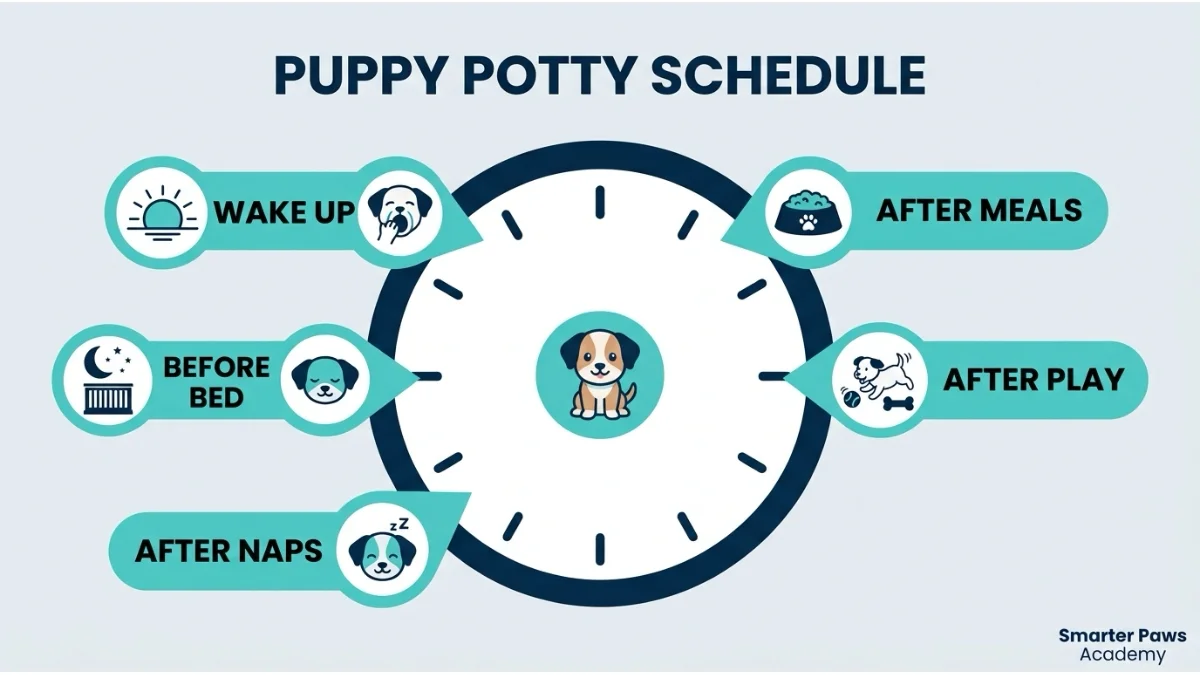
A puppy needs to go potty very frequently, roughly every one to two hours during the day when young. The common guideline is that a puppy can hold their bladder about one hour for each month of age, so a 2-month-old needs a trip out about every two hours. On top of that, puppies almost always need to go after specific triggers. Planning around these limits is what prevents most accidents.
Certain moments practically guarantee your puppy needs to go. Take your puppy out immediately after waking, after eating or drinking, after play, and right before bed, since these transitions reliably trigger the need. Missing one of these windows is the cause of most indoor accidents. Learn your puppy’s pattern and you will stay one step ahead.
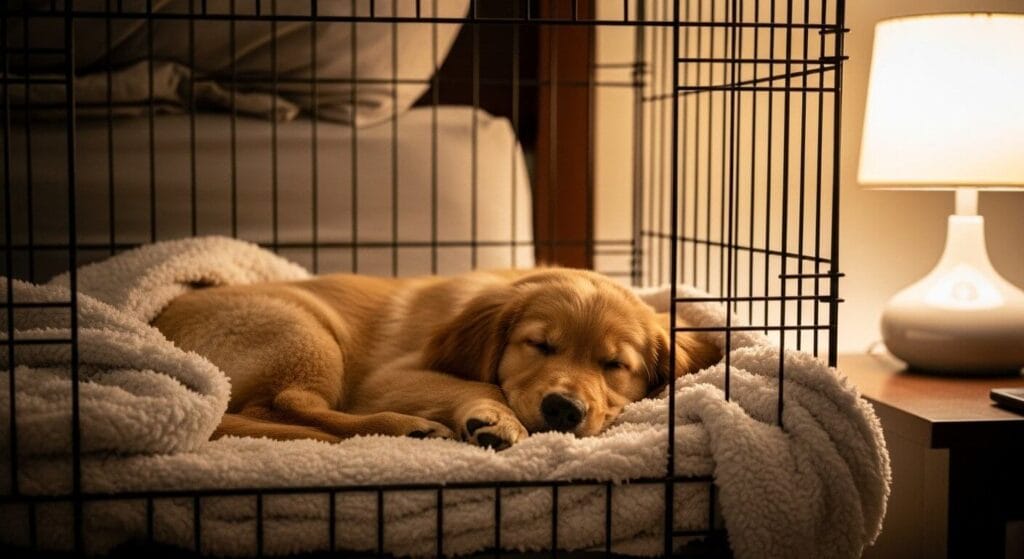
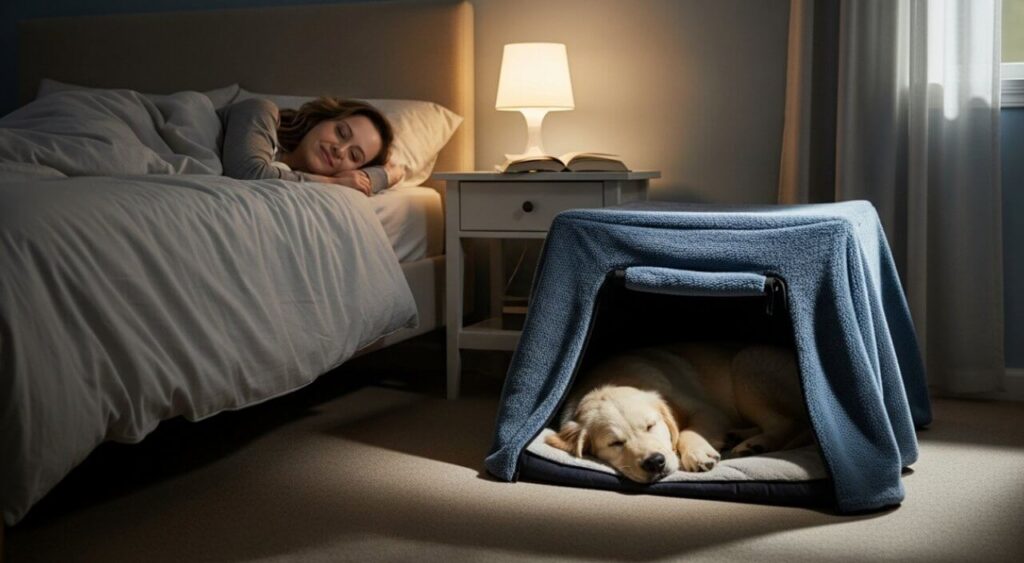
Overnight, puppies can usually hold a little longer than during active daytime hours. Still, a very young puppy may need one middle-of-the-night trip for the first few weeks, which ties into the crate routine in my crate training guide. As your puppy grows, the bladder catches up. Most puppies sleep through the night by around 4 months.
How Do You Potty Train a Puppy Step by Step?
You potty train a puppy by combining a tight schedule, close supervision, and instant rewards for going outside. The plan below prevents accidents while teaching your puppy exactly where the good things happen. Consistency from everyone in the home is what makes it click. Here is the step-by-step routine I use.
Step 1: Set a potty schedule. Take your puppy to the same outdoor spot on a regular timetable and after every trigger, like waking, eating, and play. Predictable timing builds success into the day.
Step 2: Supervise or confine. When you cannot watch your puppy closely, use a crate or a small safe area so they cannot sneak off to have an accident. Prevention is far more powerful than correction.
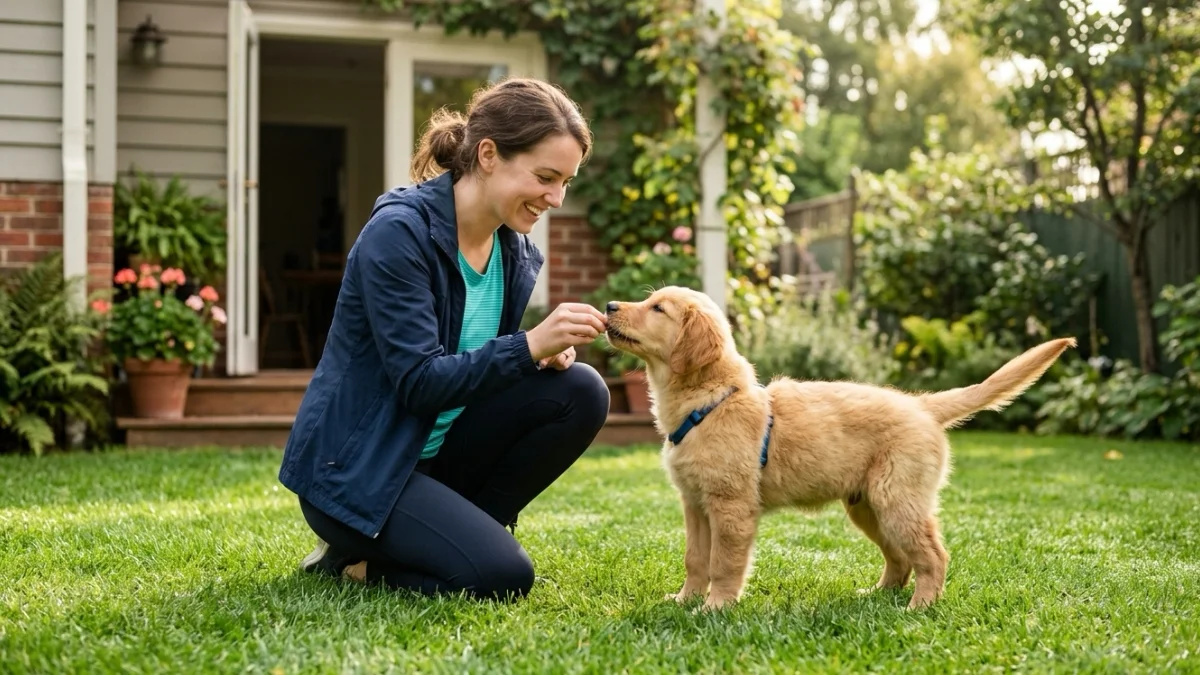
Step 3: Reward the instant they finish. The second your puppy finishes going outside, praise warmly and give a treat right there. Rewarding on the spot teaches the location clearly, while a reward given back inside teaches nothing.
Step 4: Add a potty cue. As your puppy starts to go, say a gentle cue like “go potty,” so they learn to associate the word with the act. Over time this lets you prompt them on demand.
Step 5: Expand freedom slowly. As accidents disappear, gradually give your puppy more unsupervised house access, one room at a time. Too much freedom too soon undoes your progress. Teething puppies often chew and nip in the same tired moments that accidents happen, so keep safe puppy chew toys nearby and follow my plan to stop puppy biting if the nipping ramps up.
How Do You Handle Potty Accidents the Right Way?
You handle accidents by cleaning them thoroughly and never punishing your puppy. Punishment, including scolding or the old nose-rubbing myth, only teaches your puppy that going in front of you is dangerous, so they learn to hide it. That makes house training much harder. Calm cleanup and tighter supervision are the productive response.
Enzyme cleaner is a non-negotiable tool for accidents. Regular cleaners leave scent markers that draw your puppy back to the same spot, while an enzymatic cleaner fully breaks down the odor. Clean every accident completely to avoid repeat visits. Removing the scent removes the invitation.
If you catch your puppy mid-accident, interrupt gently and get them outside. A calm, quick “let’s go” and a scoop toward the door, followed by a reward if they finish outside, redirects without fear. Never make a big scary reaction. Interruption plus redirection teaches the right choice without damaging trust.
What Tools Help With Potty Training?
A few simple tools make potty training smoother and faster. None replace your consistency, but they support the routine and cut down on accidents. My most-recommended basics are a properly sized crate, an enzyme cleaner, and high-value treats for instant rewards.
A correctly sized crate is the backbone of house training because puppies avoid soiling where they sleep. Pair it with the positive crate routine in my crate training guide so the crate stays a happy den. A treat pouch keeps rewards fast, and an enzyme cleaner erases accident scents. These few items carry you through the whole process.
Potty training also fits into your puppy’s bigger daily routine. A consistent schedule for meals, naps, and play makes potty timing predictable, which is why it connects to my full puppy schedule and puppy training guide. Everything works together. A well-structured day is the easiest path to a house-trained puppy.
Frequently Asked Questions About Potty Training a Puppy
How long does it take to potty train a puppy?
Most puppies are reliably potty trained within 4 to 6 months, though some take longer. Younger puppies need more time simply because their bladders are small, and consistency speeds everything up. Occasional accidents are normal well into this window. Full reliability comes as bladder control and good habits both mature.
Should I use pee pads or take my puppy outside?
Taking your puppy directly outside is usually the fastest route to clean habits. Pee pads can teach a puppy it is acceptable to go indoors, which you may later have to untrain, though they help in apartments or for very young puppies. If you use pads, plan to transition outdoors. Consistency about the final goal matters most.
Why is my puppy having accidents after being trained?
A sudden return of accidents can signal a medical issue, a change in routine, or too much freedom given too soon. Rule out a urinary tract infection with your veterinarian first, especially if there is straining or frequent small puddles. Then tighten your schedule and supervision. Regression is common and usually fixable with a quick reset.
Can I potty train a puppy in winter or an apartment?
Yes, you can potty train in any season or living situation with a consistent routine. In cold weather, keep trips short and reward quickly so your puppy learns to go promptly. In apartments, plan for extra time to reach a suitable spot and consider a balcony potty station as a backup. Consistency matters more than the setting.
Should I wake my puppy up at night to potty?
For very young puppies, one scheduled overnight trip can prevent accidents in the first few weeks. Keep the trip quiet and boring so your puppy learns night is for sleeping, not playing. As your puppy grows, you can phase out the overnight trip. Most puppies can hold it through the night by around 4 months.
Clean Habits Are Built on Consistency and Kindness
Potty training feels endless in the thick of it, but it is a short season with a clear finish line. When you run a steady schedule, prevent accidents, and celebrate every success outside, your puppy learns the rules faster than you expect. Consistency and kindness, not punishment, are what get you there.
Start today by setting a potty schedule, keeping treats by the door, and rewarding every outdoor success on the spot. Clean any accidents with an enzyme cleaner and simply watch a little closer next time. Stay patient and consistent, and your puppy will be reliably house trained before you know it. While you build these habits, grab my free Puppy Socialization Checklist so the early learning window does not slip by.