
Crate training teaches your puppy to see a crate as their own safe, cozy den, not a cage. Done with positive reinforcement, the crate becomes the single most useful tool for house training, safe rest, and a calmer home. As a certified professional dog trainer, I crate train every puppy I raise, and I have never once needed to force a door shut on a crying pup. The trick is to build love for the crate before you ever ask for the door.
This is your complete, gentle plan to crate train a puppy, from picking the right crate to the first quiet night. We will go step by step, cover the mistakes that create crate-hating dogs, and share the exact gear that makes it easier. By the end you will have a puppy who walks into the crate on their own for a nap. Crate training is one piece of the bigger picture, so keep my complete puppy training guide handy as your roadmap.
Smarter Paws Academy is reader-supported. When you buy through links on our site, we may earn an affiliate commission at no extra cost to you. As an Amazon Associate, I earn from qualifying purchases. Thank you for your support!
Last Updated: September 2026. This guide is regularly reviewed for accuracy by Sandie Calloway, CPDT-KA.
Important Behavior Disclaimer
The information in this article is for educational purposes and reflects my experience as a certified dog trainer. It is not veterinary advice. If your puppy shows signs of true panic in the crate, such as frantic escape attempts, drooling, or injury, stop and consult your veterinarian or a certified behavior professional, as this can signal separation anxiety.
Key Takeaways: Crate Training a Puppy
- Build love before the door. Feed meals and toss treats inside so the crate predicts good things from day one.
- Size it right. The crate should let your puppy stand, turn, and lie down, but no bigger, so use a divider as they grow.
- Mind the bladder math. A puppy holds about one hour per month of age, so match crate time to their limits.
- Never use the crate as punishment. One bad association can undo weeks of work, so keep the crate a happy place only.
Prefer to Listen? An Audio Overview
For a gentle, step-by-step walk through crate training, press play below.
Runtime: 1:07
View Full Audio Transcript
Narrator: Welcome to the Smarter Paws Academy audio overview. Crate training makes some new owners nervous. Sandie, is the crate really kind?
Sandie Calloway: When it is done right, it is one of the kindest things you can give a puppy. Dogs like having a small, safe den to retreat to. The crate is not a jail, it is a bedroom. The whole job is teaching your puppy that this little space is the best spot in the house.
Narrator: So how do you teach that?
Sandie Calloway: You make good things happen there before you ever close a door. Feed meals inside. Toss treats in and let your puppy wander in and out. Hide a chew in the back. Your puppy starts choosing the crate on their own, and that is the moment you know it is working.
Narrator: What is the biggest mistake people make?
Sandie Calloway: Using it as a time-out. The second the crate becomes the place you get sent when you are in trouble, your puppy learns to dread it. Keep it positive, always. And go at your puppy’s pace, not the schedule in your head.
Narrator: Make it a bedroom, never a punishment.
Sandie Calloway: That is it. Patience and good associations, and you will have a puppy who naps in there by choice.
Table of Contents
Why Should You Crate Train a Puppy?
Crate training gives your puppy a safe den and gives you a powerful house-training tool. Dogs have a natural instinct not to soil the area where they sleep, so a right-sized crate speeds up potty training dramatically. The crate also keeps your puppy safe from hazards when you cannot watch them, and gives them a quiet place to rest. Every one of these benefits depends on the crate feeling good, not scary.
A crate also prevents many common puppy problems before they start. A puppy resting calmly in a den is not chewing your baseboards, raiding the trash, or practicing separation panic. The Humane Society and most veterinarians support crate training as a humane management tool when the crate is introduced positively. Used kindly, it protects your home and your puppy at the same time.
The lasting payoff is a dog who travels well and settles anywhere. A dog raised to love their crate handles vet stays, car trips, and new places with far less stress. My Frenchie Gus still chooses his open crate for afternoon naps years later, which tells you everything about how he feels about it.
What Size Crate Does a Puppy Need?
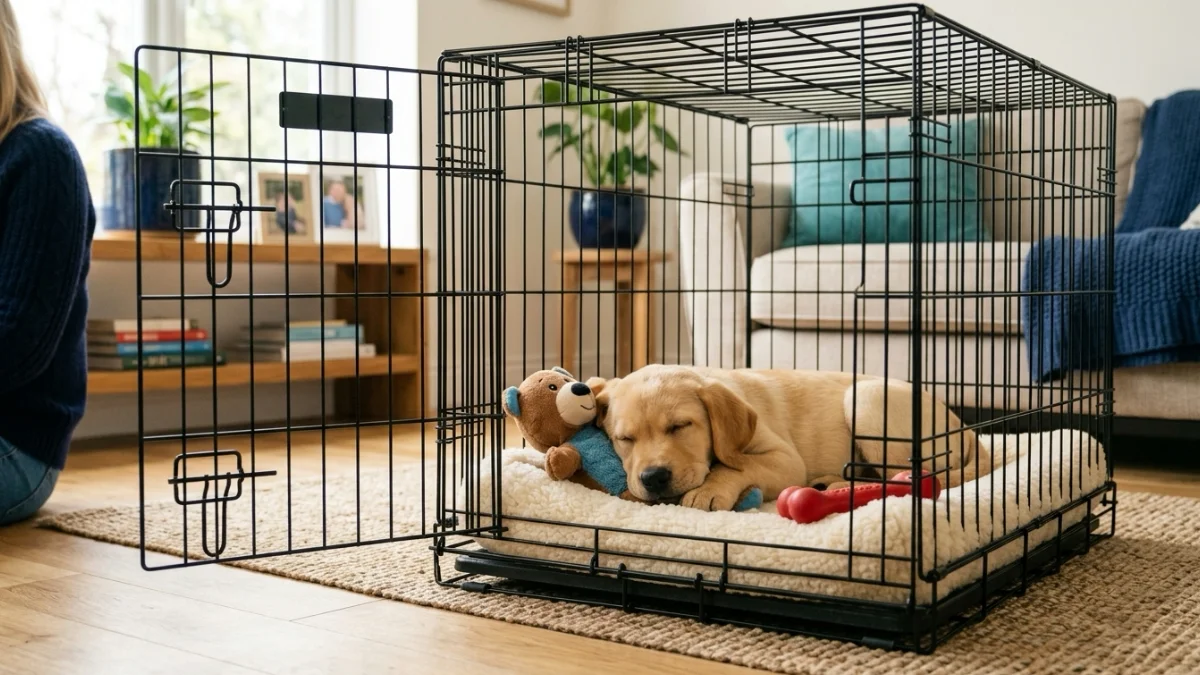
Your puppy’s crate should be just big enough to stand up, turn around, and lie down comfortably. Too much space lets a puppy potty in one corner and sleep in another, which defeats the house-training benefit. The smartest buy is a larger crate with a divider panel you move as your puppy grows. This saves you from buying two or three crates as they hit full size.
Wire crates with a divider are my default recommendation for growing puppies. They offer good airflow, easy cleaning, and that adjustable divider that keeps the space right at every stage. A crate cover can turn a wire crate into a cozier, den-like space for anxious pups. Match the crate to your dog’s projected adult size, then shrink the usable area with the divider for now.
My Crate Pick: MidWest iCrate Double Door with Divider
The MidWest iCrate is the crate I recommend most often for growing puppies. It includes a divider panel so you can expand the space as your puppy grows, which makes it a true buy-once crate. Double doors help you fit it into different rooms, and the slide-bolt latches are secure. It folds flat for travel and storage, which owners appreciate.

How Do You Crate Train a Puppy Step by Step?
You crate train a puppy by building a positive association in small, patient steps over several days. Rushing straight to a closed door and a long absence is the fastest way to create a crate-hating puppy. Move at your puppy’s pace and let every step feel like a win. Here is the exact progression I use with new puppies.
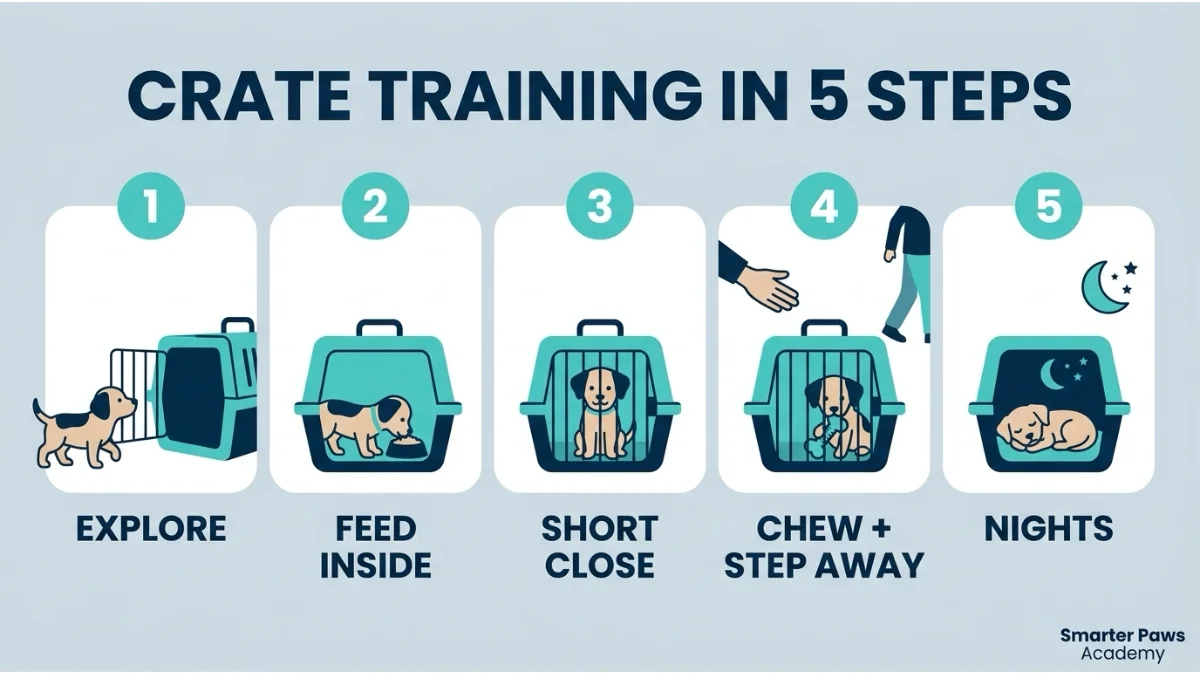
Step 1: Make the crate inviting. Place the crate in a family area with a soft bed inside and the door propped open. Let your puppy explore it freely with no pressure, so it feels like part of the home.
Step 2: Feed meals inside. Serve every meal at the back of the crate so your puppy walks in willingly. Food creates a strong, happy link to the space without any force.
Step 3: Add short closed-door moments. Once your puppy eats calmly inside, close the door for a few seconds while they finish, then open it. Slowly build the closed time as your puppy stays relaxed.
Step 4: Build duration and distance. Give a stuffed chew, close the door, and step away for a minute, then return calmly. Gradually stretch the time so your puppy learns that alone-in-the-crate always ends well.
Step 5: Move to nights and departures. Once your puppy rests calmly for short stretches, use the crate for sleep and brief outings. Keep the bladder math in mind and never leave a young puppy crated longer than they can hold. Build these crate sessions into a predictable puppy schedule so naps, meals, and potty breaks happen at the same times each day.
How Do You Handle a Puppy Crying in the Crate?
Handle crate crying by making sure needs are met, then rewarding quiet rather than fuss. First rule out a real need, because a young puppy may genuinely have to potty overnight. If needs are met, wait for a pause in the crying and reward that quiet moment, so your puppy learns calm gets your attention. Rushing to a screaming puppy every time teaches them that noise opens the door.
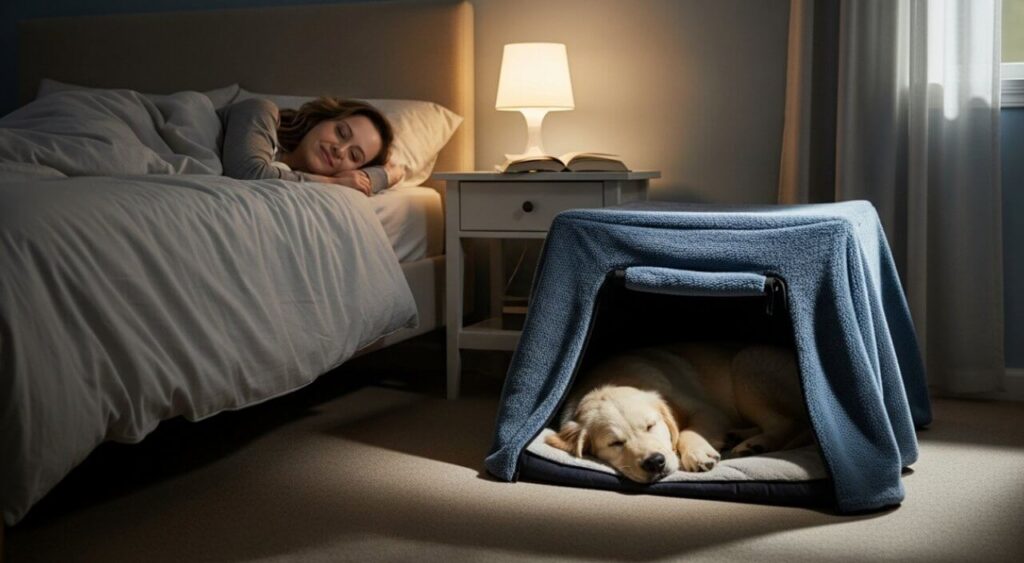
Placement and comfort items make a big difference for a crying puppy. Keeping the crate in your bedroom for the first weeks lets your puppy hear and smell you, which is deeply reassuring. A heartbeat-and-warmth toy can mimic the comfort of littermates and settle a lonely pup. For a full nighttime plan, see my guide on puppy barking in the crate. Nipping in those tired, overstimulated moments is common too, and my humane plan to stop puppy biting walks you through it.
Best Comfort Aid: Snuggle Puppy Heartbeat Toy
The Snuggle Puppy is my top pick for easing those first lonely nights. It mimics the warmth and heartbeat of littermates, which helps a newly separated puppy settle in the crate. Many owners see a real drop in whining once it goes in the crate. It is a small comfort item that solves a very common early problem.

What Extra Gear Helps with Crate Training?
A few extras make crate training smoother, especially for young or anxious puppies. None of these replace the step-by-step plan, but they make the right choices easier for your puppy. My most-recommended add-ons are a crate cover and a playpen for supervised, larger-space time.
A playpen attached to the crate gives your puppy a safe, roomier zone for the hours between crate rests. This is perfect for potty-training setups and for times you are home but busy. A breathable crate cover creates a darker, den-like feel that helps some puppies settle. Together they turn a single crate into a flexible puppy management system. A safe chew makes crate time far more relaxing, and my guide to the best puppy chew toys covers the ones that survive teething.
Best for a Safe Play Zone: Puppy Playpen
A foldable metal playpen extends your puppy’s safe space without giving up on management. You can attach it to the crate to create a den-plus-play zone, which is ideal for potty training and busy days. Look for adjustable heights and secure panels that match your puppy’s size. It is the piece that bridges crate rest and full house freedom.

Frequently Asked Questions About Crate Training
How long can a puppy stay in a crate?
A puppy can hold their bladder about one hour for each month of age, so a 3-month-old manages roughly three hours during the day. Overnight, puppies can often go a little longer as their systems slow during sleep. Never leave a young puppy crated beyond their bladder limit. Adult dogs should not be crated more than about four to five hours at a stretch during the day.
Should I ignore my puppy crying in the crate at night?
You should not ignore all crying, because a young puppy may truly need to potty overnight. Take them out quietly for a boring bathroom break, then return them to the crate. For attention-seeking cries once needs are met, wait for a quiet pause and reward that. The goal is to answer real needs while rewarding calm, not fuss.
Where should I put my puppy’s crate?
Place the crate in a family area during the day and in your bedroom at night for the first few weeks. Daytime placement keeps your puppy feeling included, while nighttime closeness reduces loneliness and crying. Being able to hear and smell you is deeply reassuring to a new puppy. You can gradually move the crate later once your puppy is confident.
How long does it take to crate train a puppy?
Most puppies accept the crate within one to three weeks of consistent, positive practice. The exact timeline depends on your puppy’s temperament and how gradually you build up the closed-door time. Rushing tends to slow the whole process by creating fear. Patience in the first week usually pays off with faster progress overall.
Is it cruel to crate a puppy?
Crate training is not cruel when the crate is introduced positively and sized correctly. Dogs naturally seek out small, safe dens, and a well-trained puppy chooses their crate for rest. It becomes cruel only when used as punishment or for excessive hours. Kind, gradual training makes the crate a comfort, not a confinement.
Can you crate train an older dog?
Yes, older dogs can be crate trained using the same positive, gradual steps. Adult dogs often progress quickly because they have longer bladder control and calmer temperaments. Build the same happy association with meals, treats, and chews inside the crate. Age is rarely a barrier when the approach stays kind and patient.
A Crate Your Puppy Loves Is a Gift for Life
A crate done right is not a cage, it is your puppy’s favorite retreat and your best training partner. Every meal fed inside, every calm nap, every quiet night is teaching your puppy that their den is a safe, wonderful place. That feeling pays you back for years in easier travel, faster house training, and a more relaxed dog.
Start today by making the crate inviting, feed the next meal inside, and let your puppy set the pace. Keep it positive, mind the bladder math, and never use it as a punishment. Follow these steps and you will soon have a puppy who trots into their crate on their own, ready for a happy rest. While your puppy is young, grab my free Puppy Socialization Checklist so you make the most of the early learning window.