
Leash reactivity is when a dog barks, lunges, or pulls at other dogs, people, or triggers while on leash. It looks aggressive, but it is almost always rooted in fear, frustration, or over-excitement, not a desire to fight. As a certified professional dog trainer, I help reactive dogs and their stressed owners often, and I want you to know it can get so much better. This guide gives you the kind, science-based plan.
We will cover what really causes reactivity, the concept of threshold that makes or breaks progress, and the positive method to help your dog feel calm. There is no punishment here, because adding fear to an already worried dog only makes things worse. Let us turn those tense, embarrassing walks into calm ones.
Smarter Paws Academy is reader-supported. When you buy through links on our site, we may earn an affiliate commission at no extra cost to you. As an Amazon Associate, I earn from qualifying purchases. Thank you for your support!
Last Updated: September 2026. This guide is regularly reviewed for accuracy by Sandie Calloway, CPDT-KA.
Important Behavior Disclaimer
The information in this article is for educational purposes and reflects my experience as a certified dog trainer. Reactivity that involves genuine aggression, a bite history, or intense fear needs hands-on professional support. Please work with a certified professional dog trainer or veterinary behaviorist for these cases.
Key Takeaways: Leash Reactivity
- Reactivity is emotion, not aggression. Most leash reactivity is fear or frustration, so punishment makes the feeling worse.
- Distance is your best tool. Keep your dog far enough from the trigger to stay under their reaction threshold.
- Change the feeling, not just the behavior. Pair the sight of the trigger with treats so it predicts good things.
- Go slow to go fast. Small steps under threshold build lasting calm faster than pushing your dog too close.
Prefer to Listen? An Audio Overview
For a calm walk through helping a reactive dog, press play below.
Runtime: 1:21
View Full Audio Transcript
Narrator: Welcome to the Smarter Paws Academy audio overview. Sandie, a reactive dog on the leash is so stressful. What is actually going on?
Sandie Calloway: It usually looks scary, all that barking and lunging, but underneath it is almost always fear or frustration. The dog is on a leash, they cannot get away or say hello the way they want, so they explode. It is a panic response, not a mean one. That reframe changes everything about how we help.
Narrator: So how do we help?
Sandie Calloway: The magic word is distance. Every dog has a threshold, a distance where they notice the trigger but can still think. We work at that distance, far enough that your dog stays calm, and we pair the trigger with amazing treats. Another dog appears, chicken rains from the sky. Over time, the other dog starts to predict good things instead of danger.
Narrator: And what is the mistake people make?
Sandie Calloway: Getting too close, too fast. Once your dog is over threshold and barking, no learning is happening, they are just rehearsing the panic. Cross the street, make space, and protect that distance like gold. Slow really is fast here.
Narrator: Fear not aggression, use distance, and change the feeling.
Sandie Calloway: That is the heart of it. With patience, these dogs relax so much.
Table of Contents
What Is Leash Reactivity in Dogs?
Leash reactivity is an over-the-top response, like barking or lunging, that a dog shows toward a trigger while on leash. The trigger is often other dogs, but it can be people, bikes, or cars. The key detail is that the dog is restrained, which removes their ability to move away or greet naturally. That restriction turns normal wariness into an explosive display.
Reactivity is usually driven by emotion, most often fear or frustration. A fearful dog barks to make the scary thing go away, while a frustrated, social dog lunges because they want to greet but cannot. Either way, the behavior comes from a big feeling your dog cannot manage. Naming the underlying emotion is the first step to helping.
Reactivity is not the same as aggression, though it can look similar. Most reactive dogs have no intention to harm and are simply overwhelmed, though reactivity paired with a real bite risk needs professional help. Understanding the difference guides your response, from a home training plan to calling in an expert. Compassion, not correction, is the right starting point. If people are your dog’s main trigger, read my guide to dogs reactive to people on walks, and if a new dog is joining your home, follow my plan for introducing two dogs calmly.
Why Does My Dog Bark and Lunge on Walks?
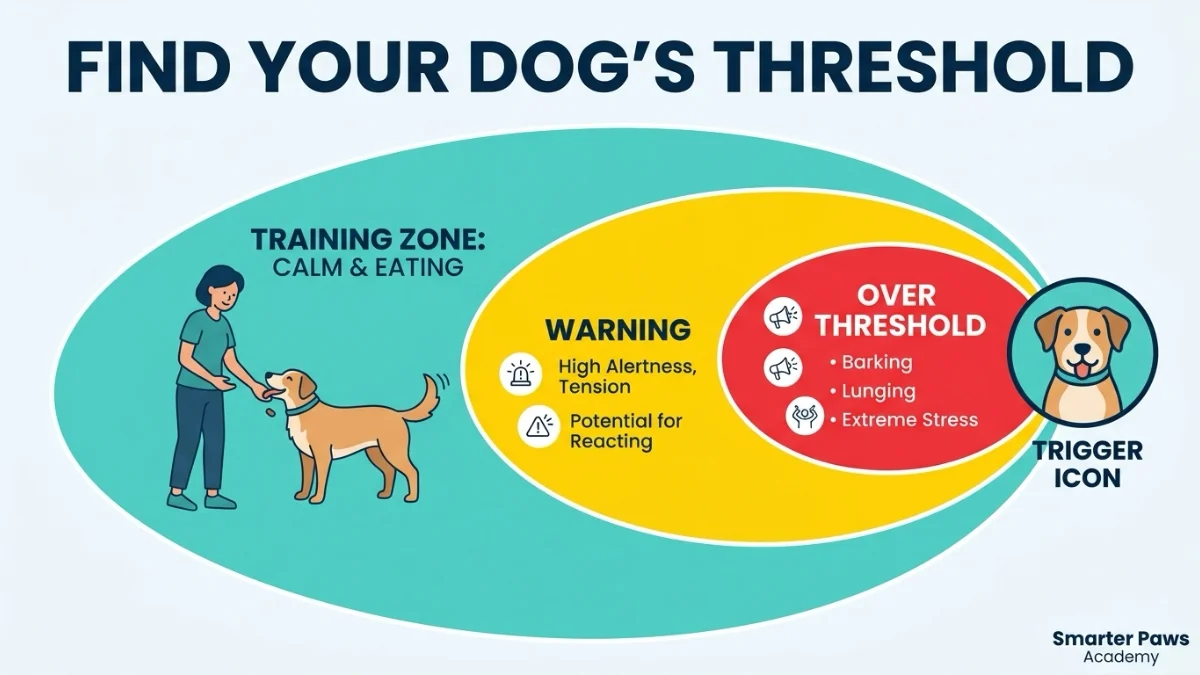
Your dog barks and lunges because a trigger has pushed them past the point where they can stay calm. That tipping point is called the threshold, and once your dog crosses it, the thinking part of their brain goes offline. This is why a normally sweet dog seems to lose their mind at the sight of another dog. They are reacting, not choosing.
The leash itself often makes reactivity worse. Being unable to move away or approach creates frustration, and any tension you put on the leash can add to your dog’s arousal. This is one reason gentle equipment matters, and my guide to the best no-pull harness covers comfortable, low-stress options. Reducing physical tension helps lower emotional tension too.
Reactivity also gets rehearsed and stronger over time. Every time your dog barks and the trigger eventually passes, the barking feels like it worked, which reinforces it. Breaking this cycle means preventing the rehearsal by managing distance. My guide on barking at people on walks shares related strategies. Stopping the practice is central to the fix.
How Do You Train a Leash-Reactive Dog Positively?
You help a reactive dog by working under threshold and pairing triggers with rewards to change how your dog feels. The method combines management, distance, and counterconditioning so your dog learns that triggers predict good things. Progress comes from many calm, successful exposures, not from confronting the fear head-on. Here is the step-by-step approach I use.
Step 1: Find your dog’s threshold. Notice the distance at which your dog sees a trigger but can still take treats and respond to you. That distance is your training zone, and staying inside it is the whole game.
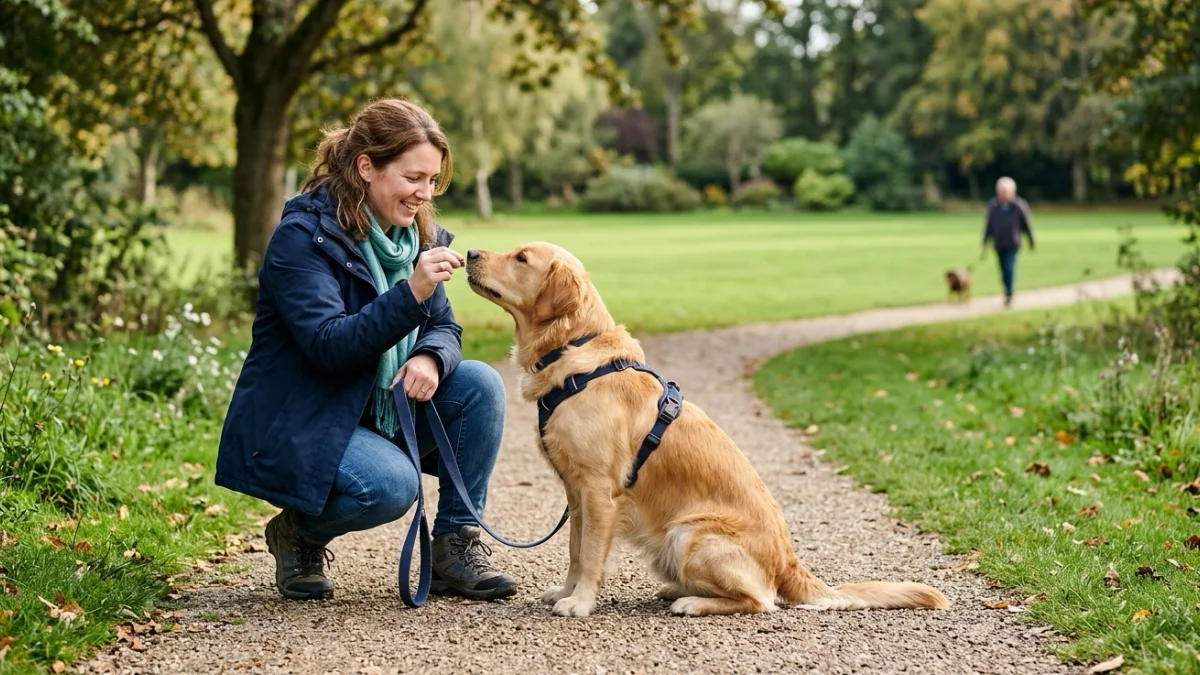
Step 2: Pair the trigger with treats. The instant your dog notices a trigger at a safe distance, feed a stream of high-value treats, stopping when the trigger passes. Your dog learns that the trigger makes chicken appear.
Step 3: Reward calm looks with the “Look at That” game. Mark and reward your dog for calmly glancing at the trigger and then back to you. This teaches your dog that noticing a trigger is a cue to check in with you, not to react.
Step 4: Protect the distance. If a trigger comes too close, calmly move away, cross the street, or turn a corner. Preventing a reaction protects your progress far more than pushing through.
Step 5: Decrease distance slowly. Over many sessions, close the gap in small steps only when your dog stays relaxed. Patience here is what builds a genuinely calmer dog. My favorite exercise here is the Look at That game, which teaches your dog to notice a trigger and turn back to you for a reward.
What Tools and Management Help With Reactivity?
The right tools and daily management make reactivity training far easier and more successful. A comfortable front-clip harness gives you control without adding pain, and high-value treats fuel the counterconditioning. Good equipment lowers stress for both of you, which supports calmer walks. Set yourself up well before you start training.
Managing your environment protects your dog from going over threshold between sessions. Walking at quiet times, choosing low-traffic routes, and using visual barriers like parked cars all help you keep distance from triggers. Every avoided reaction is a small win for your training. Smart route planning is a quietly powerful tool.
Reducing your dog’s overall stress helps too, because a calmer baseline raises the threshold. Enrichment, sniffing walks, and calming support can all lower daily arousal, and my guide to calming products for anxious dogs covers helpful aids. A dog who starts the walk relaxed handles triggers far better. Lowering the baseline is part of the plan. A long line gives your dog room to decompress on quiet trails, and solid loose leash walking skills make every walk less tense.
Frequently Asked Questions About Leash Reactivity
Is my leash-reactive dog aggressive?
Most leash-reactive dogs are not truly aggressive, they are fearful, frustrated, or overexcited. The behavior looks alarming, but the goal is usually to create distance or greet, not to cause harm. That said, reactivity combined with a bite history needs professional assessment. A certified trainer or behaviorist can tell you where your dog falls and how to proceed safely.
What is threshold in dog training?
Threshold is the point at which a trigger becomes too intense for your dog to stay calm and think. Below threshold, your dog can notice a trigger and still take treats and respond to you, while above it they react. Training happens below threshold, where learning is possible. Managing distance is how you keep your dog under threshold.
Should I correct my dog for reacting on leash?
No, correcting a reactive dog usually makes reactivity worse by adding fear to an already stressful situation. Punishment can also teach your dog that triggers predict bad things, deepening the negative association. The effective approach is to build a positive association with triggers instead. Kind counterconditioning changes the underlying emotion that drives the reaction.
How long does it take to fix leash reactivity?
Improving leash reactivity typically takes several weeks to many months of consistent, under-threshold practice. The timeline depends on the severity, your dog’s history, and how well you manage distance. Progress is often gradual with ups and downs. Steady, patient work below threshold produces the most lasting calm.
Can I walk two dogs if one is reactive?
Walking a reactive dog separately is usually best while you train, so you can manage distance and reward calmly. A second dog makes it harder to control the situation and can raise your reactive dog’s arousal. Once your reactive dog is calmer, you can reintroduce joint walks carefully. Solo training walks give you the focus reactivity work needs.
Calmer Walks Come From Changing the Feeling, Not Forcing It
A reactive dog is not a bad dog, they are an overwhelmed one asking for help. When you work under threshold and teach your dog that triggers predict good things, the barking and lunging slowly give way to calm curiosity. You are not suppressing a reaction, you are changing the emotion beneath it.
Start by finding your dog’s threshold, arming yourself with great treats, and protecting distance like it is precious. Pair every trigger with rewards, decrease the gap slowly, and bring in a professional for anything intense. With patience and kindness, you can give your dog, and yourself, the relaxed walks you have both been missing. Everything here rests on positive reinforcement, because changing how your dog feels is what makes calm walks last.