
Separation anxiety is real distress a dog feels when left alone, not spite or bad behavior. A dog with true separation anxiety panics, and the barking, chewing, or accidents you come home to are symptoms of genuine fear. As a certified professional dog trainer, I want you to know two things: your dog is not doing this to punish you, and it can get better with a kind, gradual plan. This guide walks you through that plan.
We will cover what separation anxiety really is, how to tell it apart from boredom, and the positive, step-by-step approach that helps dogs feel safe alone. There is no punishment here, because fear cannot be scolded away. Let us help your dog learn that being alone is nothing to dread.
Smarter Paws Academy is reader-supported. When you buy through links on our site, we may earn an affiliate commission at no extra cost to you. As an Amazon Associate, I earn from qualifying purchases. Thank you for your support!
Last Updated: September 2026. This guide is regularly reviewed for accuracy by Sandie Calloway, CPDT-KA.
Important Health Disclaimer
The information in this article is for educational purposes and reflects my experience as a certified dog trainer. True separation anxiety is a serious welfare issue that often needs professional help. Please work with your veterinarian or a veterinary behaviorist, who can rule out medical causes and, when appropriate, discuss medication alongside a behavior plan.
Key Takeaways: Dog Separation Anxiety
- It is fear, not spite. Separation anxiety is genuine panic, so punishment makes it worse and never helps.
- It is common. Veterinary estimates put separation-related problems in roughly 13 to 28% of dogs, so you are far from alone.
- Go gradual. The core fix is slowly building alone-time from seconds upward, so your dog never tips into panic.
- Get help for severe cases. Real separation anxiety often needs a vet or veterinary behaviorist, and that is okay.
Prefer to Listen? An Audio Overview
For a compassionate walk through helping an anxious dog, press play below.
Runtime: 1:20
View Full Audio Transcript
Narrator: Welcome to the Smarter Paws Academy audio overview. Separation anxiety breaks owners’ hearts. Sandie, what do people most need to understand?
Sandie Calloway: That it is real fear, not misbehavior. When a dog with separation anxiety destroys the door or howls for hours, they are panicking, not getting revenge. The moment you understand that, everything changes. You stop being angry and you start helping.
Narrator: How do you tell it apart from a bored dog?
Sandie Calloway: Great question. A bored dog chews a shoe and takes a nap. An anxious dog often panics the instant you leave, sometimes within minutes, and you see things like drooling, frantic escape attempts, or house soiling in a house-trained dog. Boredom you fix with enrichment. Anxiety you fix by slowly teaching them that alone is safe.
Narrator: And that gradual work, how does it go?
Sandie Calloway: Slowly and kindly. You build alone-time in tiny pieces, starting with seconds, always staying under the point where your dog panics. It takes weeks of daily practice, and for serious cases you bring in a vet or a behaviorist. There is no shame in that. It is the fastest path to relief.
Narrator: It is fear, not spite, and the fix is gradual and kind.
Sandie Calloway: That is the whole heart of it. With patience, most of these dogs get so much better.
Table of Contents
What Is Dog Separation Anxiety?
Separation anxiety is a panic response some dogs have when separated from the people they are bonded to. It is a genuine emotional disorder, not a training gap or an act of spite, and the distress is real. Separation-related problems are common, with veterinary estimates ranging from roughly 13 to 28% of dogs, and even more owners suspect it. Knowing it is a recognized condition helps you respond with compassion instead of frustration.
The signs usually appear soon after you leave and center on distress. Common signs include persistent howling or barking, destructive chewing focused on exits, pacing, drooling, and house soiling in an otherwise house-trained dog. These behaviors happen because your dog is frightened, not because they are being naughty. Recognizing them as fear signals is the first step to helping.
Separation anxiety exists on a spectrum, from mild unease to severe panic. Mild cases may settle with enrichment and gradual practice, while severe cases can involve self-injury and need professional support. The ASPCA describes it as a treatable condition that responds to a structured, gradual plan. Where your dog sits on that spectrum guides how much help you will need.
Is It Separation Anxiety or Just Boredom?
Telling anxiety from boredom comes down to timing and intensity. A bored dog gets into mischief at some point during a long, under-stimulated day, then rests, while an anxious dog often panics within minutes of your departure. Boredom looks like casual destruction, and anxiety looks like frantic distress. This distinction completely changes the solution.
Watching what happens right after you leave is the clearest test. Anxious dogs typically show distress immediately, with signs like drooling, escape attempts at doors and windows, or vocalizing that starts as soon as you are gone. A discreet camera can show you exactly what unfolds in those first minutes. That footage is the most useful diagnostic tool most owners have.
Boredom-driven behavior responds to more exercise and mental enrichment, which is a simpler fix. If your dog just needs a job, my guide to the best puzzle toys and daily activity will make a big difference. True anxiety, though, needs the gradual desensitization plan below. Matching the solution to the real cause is what makes progress possible. If the noise happens mainly after dark, my plan to stop dog barking at night helps you sort out the cause.
How Do You Treat Separation Anxiety Positively?
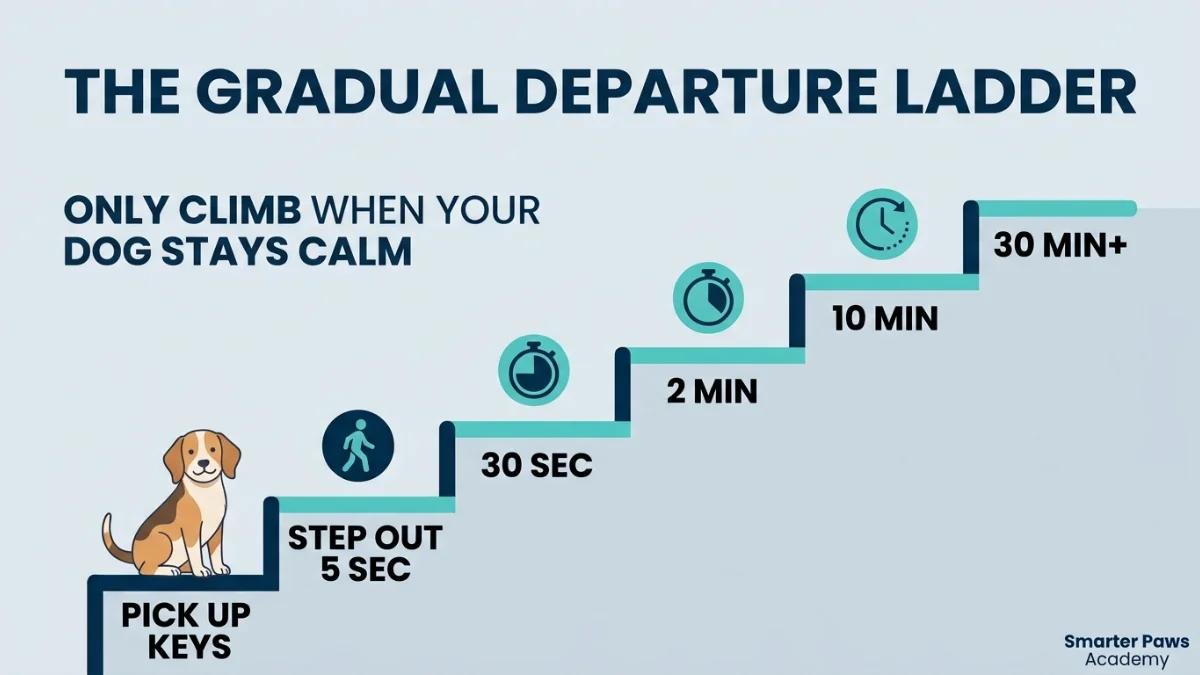
You treat separation anxiety through gradual desensitization, slowly teaching your dog that being alone is safe. The core method is to build alone-time in tiny increments, always staying below the point where your dog panics. Behavior experts describe this as starting with many short separations that cause no anxiety, then increasing the duration over many weeks of daily sessions. Patience and staying under threshold are everything.
Start by breaking down your departures into their smallest pieces. Practice picking up your keys or putting on your shoes without leaving, so those cues stop predicting a scary absence. Then work up from stepping to the door, to opening it, to brief absences of seconds, rewarding calm at each tiny step. You are rebuilding your dog’s emotional response to alone-time from the ground up.
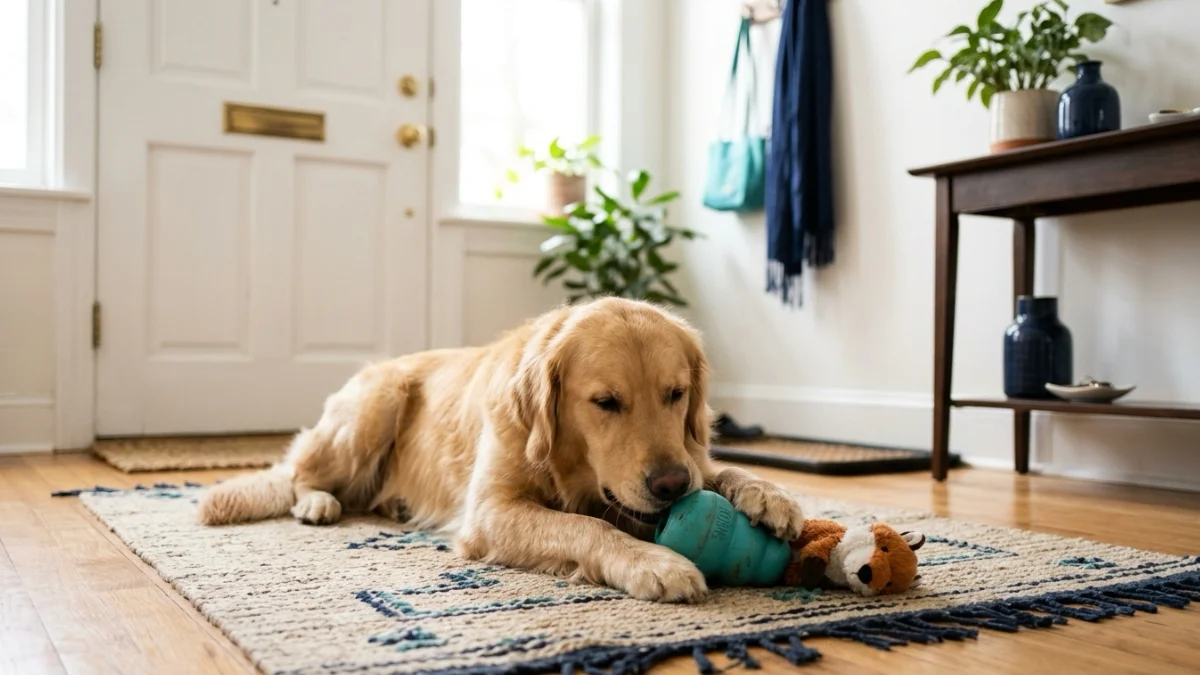
Counterconditioning pairs your departures with good things to change how your dog feels. Giving a special food-stuffed toy that only appears when you leave can help build a positive association, as covered in my guide to calming products for anxious dogs. For many dogs, calming aids support this work while the training does the heavy lifting. Together, desensitization and counterconditioning gently rewire the fear.
What Helps a Dog With Separation Anxiety Day to Day?
Day-to-day management keeps your dog under threshold while the training progresses. The key principle is to avoid leaving your dog alone longer than they can currently handle, since every panic episode sets the training back. Using a pet sitter, daycare, or a trusted friend during the training period protects your progress. Preventing panic is just as important as practicing calm.
A predictable routine and plenty of enrichment lower your dog’s baseline stress. Regular exercise, mental enrichment, and a calm, consistent daily rhythm all help an anxious dog feel more secure. A safe, comfortable resting space matters too, which connects to the positive crate work in my crate training guide. A steady, enriched day is a quietly powerful anxiety tool.
Calming support can take the edge off while you train. Pheromone diffusers, pressure wraps, and, for some dogs, vet-recommended options can lower stress enough for the desensitization to work, all covered in my calming products guide. Always check with your vet before any supplement. These aids support the plan, but the gradual training is what creates lasting change.
When Should You See a Professional for Separation Anxiety?
You should involve a professional whenever separation anxiety is moderate to severe or not improving. Signs that call for help include self-injury, destruction that endangers your dog, panic that starts the instant you leave, or a plan that stalls despite consistent effort. A veterinary behaviorist can build a tailored plan and rule out medical causes. Reaching out early often shortens the whole journey.
Medication is a valid and often kind part of treatment for serious cases. For dogs in real distress, a veterinarian may recommend anti-anxiety medication to lower the panic enough for behavior work to succeed. This is not a failure or a shortcut, it is appropriate care for a suffering animal. Medication and training together often produce the best outcomes.
A certified separation anxiety specialist can guide the desensitization precisely. These professionals design gradual absence plans and adjust them based on your dog’s daily responses, often using remote monitoring. Their expertise prevents the common mistake of moving too fast. Skilled guidance can turn a frustrating plateau into steady progress.
Frequently Asked Questions About Separation Anxiety
Can dog separation anxiety be cured?
Many dogs improve dramatically with consistent, gradual training, though outcomes depend on severity. Mild to moderate cases often resolve well, while severe cases may need ongoing management rather than a complete cure. The realistic goal is a dog who can be left alone comfortably. Most dogs get significantly better with a patient, positive plan and, when needed, professional help.
How long does it take to fix separation anxiety?
Resolving separation anxiety typically takes several weeks to a few months of daily, gradual practice. The timeline depends on the severity and how consistently you stay under your dog’s panic threshold. Rushing the absences is the main thing that slows progress. Steady, patient work over many short daily sessions is what produces lasting change.
Does getting a second dog help separation anxiety?
Getting a second dog rarely fixes true separation anxiety, because the attachment is usually to the person, not to canine company. Some dogs are calmer with a companion, but many remain anxious even with another dog present. Adding a dog is a big commitment that may not solve the problem. Address the anxiety directly with a gradual plan rather than relying on a second dog.
Should I crate a dog with separation anxiety?
Crating can help some anxious dogs feel secure, but it can worsen panic in others, so it depends on the individual. A dog who loves their crate may settle in it, while a dog who panics in confinement can injure themselves trying to escape. Only use a crate if your dog is genuinely relaxed in it. When in doubt, a safe open room or professional guidance is the better choice.
Is it my fault my dog has separation anxiety?
No, separation anxiety is not your fault, and blaming yourself only adds stress. It can stem from genetics, early experiences, rehoming, or changes in routine, and often no single cause is clear. What matters now is the compassionate, gradual help you give going forward. Focusing on the plan, not the guilt, is what helps your dog most.
Helping Your Dog Feel Safe When You’re Away
Separation anxiety is one of the hardest things an owner can face, but it is also one of the most treatable with patience and kindness. When you understand that your dog is frightened rather than defiant, you can trade frustration for a gentle plan that actually works. Slowly and lovingly, you can teach your dog that alone-time is safe.
Start by watching what happens when you leave, keep your dog under their panic threshold, and build alone-time in the tiniest steps. Lean on calming support and enrichment, and reach out to your vet or a behaviorist for anything beyond mild. With consistency and compassion, you can help your dog find real peace when you are away.