
Puppy training is the process of teaching your new dog the skills and habits that make life together easy and joyful. It starts the day you bring your puppy home, and the early weeks matter more than any other period in your dog’s life. As a certified professional dog trainer, I promise you this: the goal is not a perfectly obedient robot, it is a confident, happy dog who trusts you completely. Positive reinforcement is how you get there.
This is your roadmap for the whole first stretch of puppy raising, from the first night to reliable house training. We will cover when to start, what to teach first, how to handle the hard parts like biting and crate crying, and the exact positive methods that build a lifelong bond. Wherever you need more detail, I will point you to my step-by-step guides.
Smarter Paws Academy is reader-supported. When you buy through links on our site, we may earn an affiliate commission at no extra cost to you. As an Amazon Associate, I earn from qualifying purchases. Thank you for your support!
Last Updated: September 2026. This guide is regularly reviewed for accuracy by Sandie Calloway, CPDT-KA.
Important Behavior Disclaimer
The information in this article is for educational purposes and reflects my experience as a certified dog trainer. It is not a substitute for veterinary care. Please keep your puppy current on vet checkups and vaccinations, and consult a professional for any concern about your puppy’s health or behavior.
Key Takeaways: Puppy Training
- Start on day one. Puppies begin learning the moment they arrive, so gentle training from the first week sets the tone.
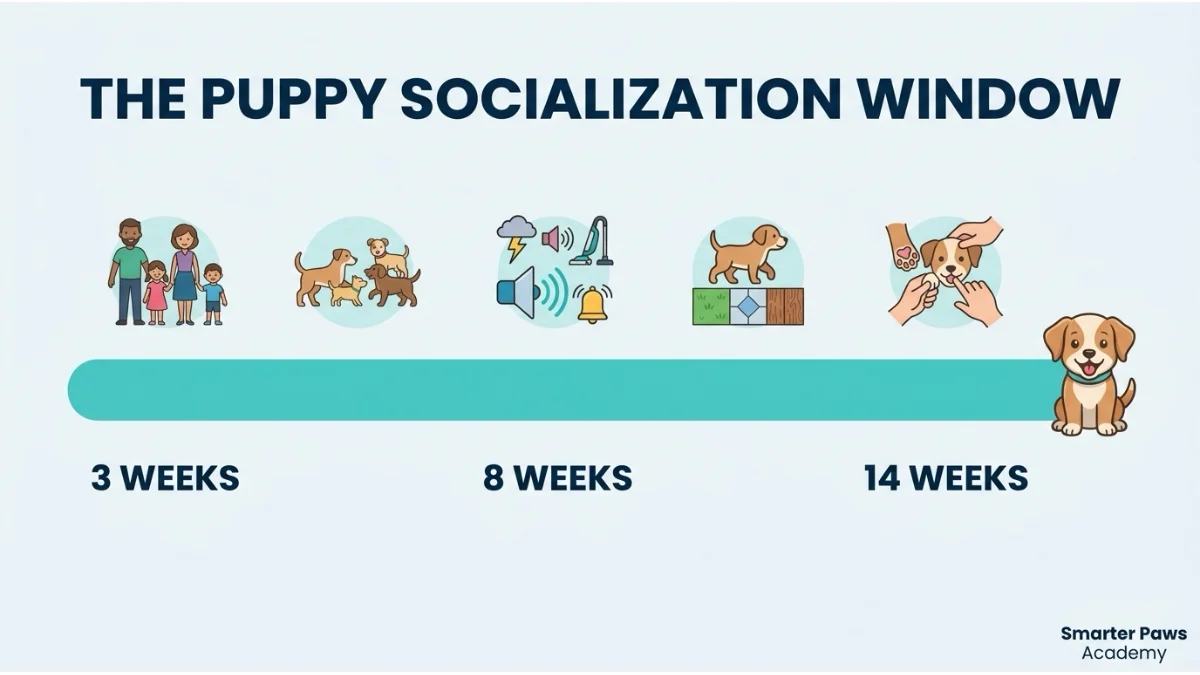
- Socialization has a window. The prime period runs roughly 3 to 14 weeks, and the AVSAB urges positive exposure during it.
- Reward what you want. Positive reinforcement builds behaviors faster and protects the trust between you and your puppy.
- Routine solves most problems. A predictable schedule for potty, meals, play, and rest prevents biting, crying, and accidents.
- Short and fun wins. Two to five minute sessions that end on a success beat long, frustrating drills every time.
Prefer to Listen? An Audio Overview
For a warm, conversational walk through your puppy’s first weeks, press play below.
Runtime: 1:13
View Full Audio Transcript
Narrator: Welcome to the Smarter Paws Academy audio overview. New puppy, big feelings, and a very long to-do list. Sandie, if an owner does just one thing right in week one, what should it be?
Sandie Calloway: Build a routine. Puppies feel safe when life is predictable. When you set regular times for potty, food, play, and naps, half the problems people panic about, the biting, the crying, the accidents, they shrink on their own. Structure is kindness.
Narrator: And what about all the training people feel pressure to cram in?
Sandie Calloway: Keep it tiny and happy. Two minutes, a few treats, end on a win. A puppy brain is like a puppy body, it tires fast. Short joyful sessions teach more than a long boring one, and they keep your puppy loving the game.
Narrator: There is a lot of talk about the socialization window. Why does it matter so much?
Sandie Calloway: Because it closes. In those early weeks your puppy decides what is normal and safe in the world. Gentle, positive exposure now saves you from fear problems later. It is the highest-value thing you will ever do, and you cannot get the time back.
Narrator: Structure, short happy sessions, and early socialization. A great start.
Sandie Calloway: That is the whole foundation. Everything else builds on it.
Table of Contents
When Should You Start Training a Puppy?
You should start training your puppy the day you bring them home, usually around 8 weeks old. Puppies are capable of learning simple cues and house habits far earlier than most owners expect. The old advice to wait until 6 months came from outdated punishment-based methods, and it has been left behind. With positive reinforcement, early and gentle is exactly right.
The most time-sensitive piece is socialization, not obedience. The prime socialization window runs from about 3 to 14 weeks, and the AVSAB recommends starting positive socialization and puppy classes as early as 7 to 8 weeks, before the vaccination series is even complete, because the behavioral risk of under-socialization is greater than the managed disease risk. This is one of the most important findings in modern dog training.
What this means for you is simple: start now, keep it positive, and prioritize gentle exposure to the world. My day-by-day puppy schedule lays out exactly what a first week looks like hour by hour, so you are never guessing.
What Should You Teach a Puppy First?
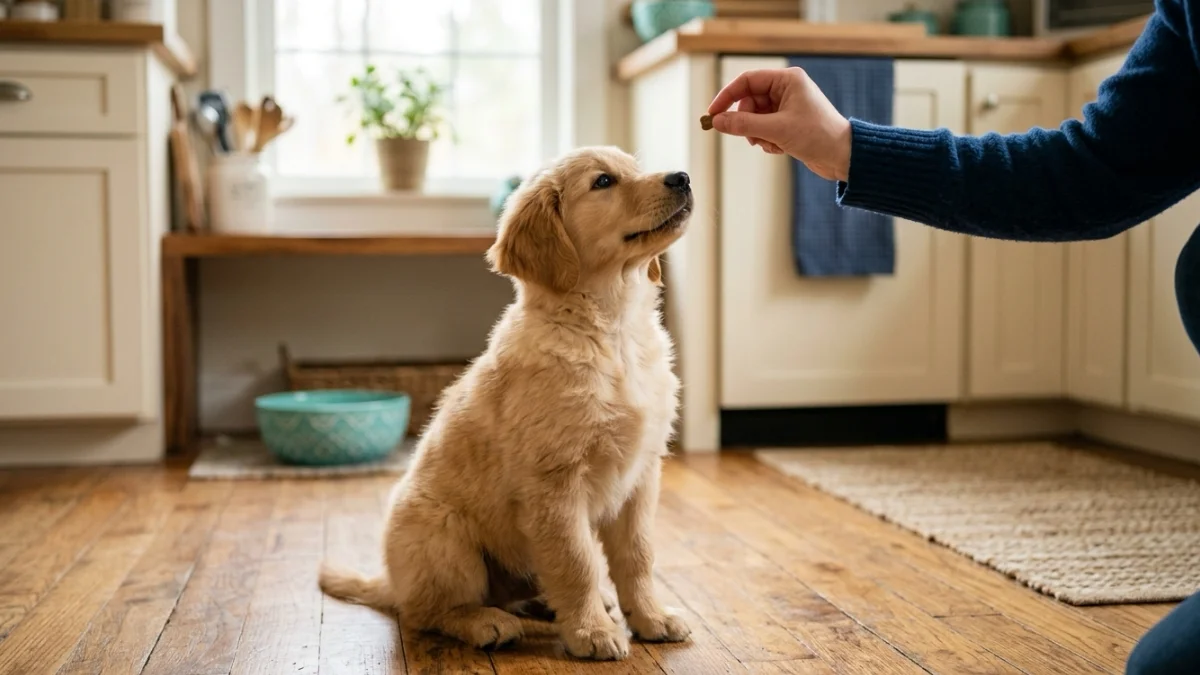
Teach your puppy their name, potty habits, and a happy response to the crate before any fancy tricks. These three foundations make everything else easier and prevent the problems owners struggle with most. Sit and other cues are fun, but they come after the basics that shape daily life. Get the foundation solid and the rest falls into place.
Name recognition is the first building block, because a puppy who looks at you can learn anything. I charge a new puppy’s name the same way I charge a clicker: say the name, then treat, dozens of times, until that little head whips around every time. My guide to clicker training shows the exact marker-and-reward mechanics that power this.
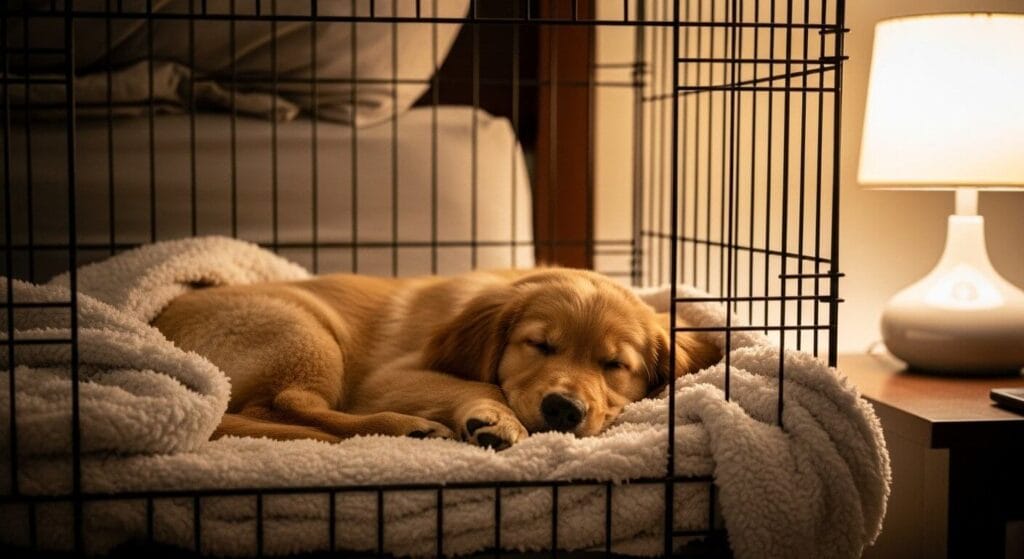
House training and crate comfort come right behind the name. Both rely on routine and positive associations rather than correction, and both pay off fast when done kindly. For the crate specifically, follow my plan for puppy barking in the crate so the crate becomes a happy den, not a source of night crying.
How Do You Potty Train a Puppy with Positive Methods?
You potty train a puppy by controlling the schedule and rewarding every success outside. Puppies do not soil where they sleep, so a correctly sized crate plus frequent trips out builds clean habits quickly. The rule of thumb from most veterinarians is that a puppy can hold their bladder roughly one hour for each month of age, so an 8-week pup needs a trip out about every two hours.
Timing your trips around your puppy’s natural rhythm is the secret. Take your puppy out after waking, after eating, after play, and before bed, then reward the instant they finish outside. I keep treats by the door so the reward lands within two seconds, because late praise teaches nothing.
Accidents are information, not misbehavior, so never punish them. If you catch your puppy mid-squat indoors, calmly scoop them outside and reward the finish, then clean the spot with an enzyme cleaner so the scent does not draw them back. Punishment only teaches a puppy to hide when they need to go, which makes everything harder.
How Do You Stop a Puppy from Biting?
You stop puppy biting by teaching bite inhibition and redirecting those needle teeth onto appropriate outlets. Mouthing is completely normal and is how puppies explore and play, so the goal is to channel it, not to crush it. Puppies learn gentleness from feedback, the same way they would from their littermates.
The core technique is simple and gentle: when teeth touch skin, let out a soft “ouch,” pause the fun for a moment, then offer a toy. Your puppy learns that soft mouths keep the game going and hard bites end it. My Frenchie Gus went through a piranha phase at 10 weeks, and this exact routine, plus plenty of chew toys, had him gentle within two weeks.
Management makes the training stick, because a tired, well-fed, well-chewed puppy bites far less. Keep chew toys in every room, watch for the overtired “witching hour,” and offer a nap when the biting ramps up. For the full protocol, see my humane 5-step plan to stop puppy biting.
Why Is Socialization So Important for Puppies?
Socialization is important because it teaches your puppy that the world is safe, and it can only be done well during a short window. Positive exposure to new people, dogs, sounds, and surfaces during the first few months prevents most adult fear and reactivity problems. This is prevention that you cannot buy back later.
Good socialization is about quality, not quantity or force. You want your puppy to have calm, positive experiences at their own pace, paired with treats and praise, never overwhelming pile-ons. The AVSAB stresses that these exposures should be gradual and rewarding, so your puppy builds confidence rather than fear.
A simple checklist keeps you on track during these busy weeks. Grab my free puppy socialization checklist to make sure your puppy meets the world in a happy, structured way before the window closes. It is the single best free resource I can hand a new puppy owner.
What Tools Make Puppy Training Easier?
A few well-chosen tools turn puppy training from chaos into a smooth routine. None of them replace your time and consistency, but they make the right choices easier for both of you. My short list focuses on management and reward, the two pillars of positive training.
The items I recommend to every new puppy client are practical, not fancy. A properly sized crate, a treat pouch for fast rewards, high-value training treats, and a handful of safe chew toys will carry you through the first months. I cover the specific products inside my detailed guides on crate training and training treats, so you can see exactly what I use and why.
Frequently Asked Questions About Puppy Training
What is the hardest age for a puppy?
The hardest stretch for most owners is between 8 and 16 weeks, when biting, potty accidents, and night waking all peak at once. This is also the richest learning window, so the effort pays off fast. A consistent routine is what carries you through. Most families feel a big shift by around 4 to 5 months as habits lock in.
How long should puppy training sessions be?
Puppy training sessions should last just 2 to 5 minutes and end on a success. Puppies have short attention spans, so several tiny sessions across the day teach far more than one long one. Stopping while your puppy still wants more keeps them eager for the next round. Quality and frequency beat duration every time.
Can you train a puppy without treats?
You can use other rewards, but food is the most practical and powerful reinforcer for a young puppy. Toys, praise, and play all work as rewards too, and variety keeps training interesting. Most trainers rely on small, high-value treats early on because they are fast to deliver and highly motivating. You fade the food frequency as skills become reliable.
Should I train my puppy before or after vaccinations?
You should begin gentle training and socialization before the vaccination series is finished, using safe settings. The AVSAB advises early socialization because the behavioral risk of waiting outweighs the managed disease risk. Use clean, low-traffic areas and healthy, vaccinated playmates while your puppy builds immunity. Your veterinarian can help you plan safe early outings.
How do I get my puppy to sleep through the night?
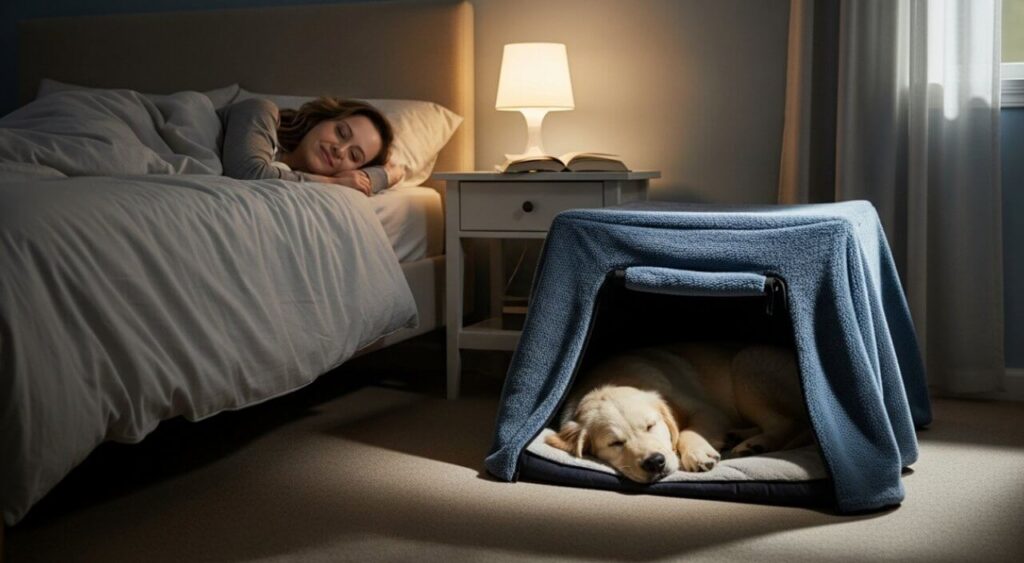
You help a puppy sleep through the night with a calm bedtime routine, a comfortable crate, and a late potty trip. Young puppies may still need one overnight bathroom break for the first few weeks. Keep nighttime trips boring and quiet so your puppy learns night is for sleeping. Most puppies sleep through by around 4 months as their bladder grows.
What is the first command to teach a puppy?
The first thing to teach is name recognition, then a hand-target or “sit.” A puppy who reliably looks at you when you say their name can learn every other cue easily. Start in a quiet room with tasty rewards and build from there. Name recognition is the foundation that makes all future training smoother.
Raising a Confident Dog Starts This Week
The puppy weeks feel long, but they are the shortest, most important season you will share. Every treat you give for a good choice, every calm potty trip, every gentle socialization outing is building the adult dog you will live with for years. You are not just managing a puppy, you are shaping a friend.
Start with a routine, keep your sessions short and joyful, and prioritize positive socialization while the window is open. Pick the specific guide that matches whatever you are facing right now, whether that is biting, crate crying, or the daily schedule, and take it one kind step at a time. The confident, happy dog you are picturing is being built in these very weeks.