
Puppy socialization is the process of gently introducing your puppy to the world so they grow up confident instead of fearful. It is the single most important thing you will do in your puppy’s first few months, and the window for it does not stay open long. As a certified professional dog trainer, I have seen good socialization prevent a lifetime of fear and reactivity. This guide shows you exactly how to do it right.
We will cover what socialization really means, the critical window and why it matters, and a safe, positive plan for introducing your puppy to new things. Done well, socialization is the best insurance policy you can give your dog. Let us set your puppy up for a happy, confident life.
Smarter Paws Academy is reader-supported. When you buy through links on our site, we may earn an affiliate commission at no extra cost to you. As an Amazon Associate, I earn from qualifying purchases. Thank you for your support!
Last Updated: September 2026. This guide is regularly reviewed for accuracy by Sandie Calloway, CPDT-KA.
Important Health Note
The information in this article is for educational purposes and reflects my experience as a certified dog trainer. Socialize safely while your puppy builds immunity by choosing clean, low-traffic areas and healthy, vaccinated playmates. Talk to your veterinarian about the safest ways to socialize your specific puppy before their vaccinations are complete.
Key Takeaways: Puppy Socialization
- There is a window. The prime socialization period runs from about 3 to 14 weeks, so start early.
- Quality beats quantity. Calm, positive exposures build confidence, while overwhelming ones can create fear.
- Socialize safely before full vaccination. Use clean areas and healthy playmates so you do not miss the window.
- Let your puppy set the pace. Watch body language and never force a scared puppy toward something.
Prefer to Listen? An Audio Overview
For a warm guide to socializing your puppy right, press play below.
Runtime: 1:17
View Full Audio Transcript
Narrator: Welcome to the Smarter Paws Academy audio overview. Sandie, you call socialization the most important thing in puppyhood. Why?
Sandie Calloway: Because it decides how your puppy sees the world for life. In those early weeks, their brain is deciding what is normal and safe. If they meet the world gently and positively now, they grow up confident. Miss that window and you are often dealing with fear and reactivity later, which is so much harder to fix.
Narrator: There is a debate about waiting for vaccinations. Where do you land?
Sandie Calloway: The behavior experts are clear on this. The risk of a poorly socialized dog is greater than the managed disease risk, so we socialize safely before the shots are done. Clean areas, healthy vaccinated friends, carrying your puppy to watch the world. You do not have to choose between safe and social.
Narrator: What do people get wrong?
Sandie Calloway: They think more is better and flood the puppy, big loud dog parks, crowds of grabbing hands. That can backfire and scare them. It is about quality. Calm, happy little exposures with treats, letting the puppy choose to approach. Confidence, not chaos.
Narrator: Start early, stay safe, and keep it calm and positive.
Sandie Calloway: That is the whole recipe for a confident dog.
Table of Contents
What Is Puppy Socialization?
Puppy socialization is the positive introduction of your puppy to the sights, sounds, people, animals, and experiences of everyday life. The goal is to teach your puppy that the world is safe and normal, so they grow into a confident adult. It is not about play alone, it is about calm, happy exposure to variety. This early learning shapes your dog’s temperament for years.
Good socialization covers far more than meeting other dogs. It includes new surfaces underfoot, household noises, hats and umbrellas, car rides, gentle handling of paws and ears, and many kinds of people. The broader the positive exposure, the more resilient your puppy becomes. Variety, paired with good feelings, is the heart of it.
Socialization is prevention, and it is the most powerful behavioral insurance you can buy. Most adult fear, anxiety, and reactivity trace back to gaps in early socialization. Getting it right now saves you from struggles later, and my free puppy socialization checklist helps you cover everything. A well-socialized puppy is a gift to your future self.
When Is the Puppy Socialization Window?
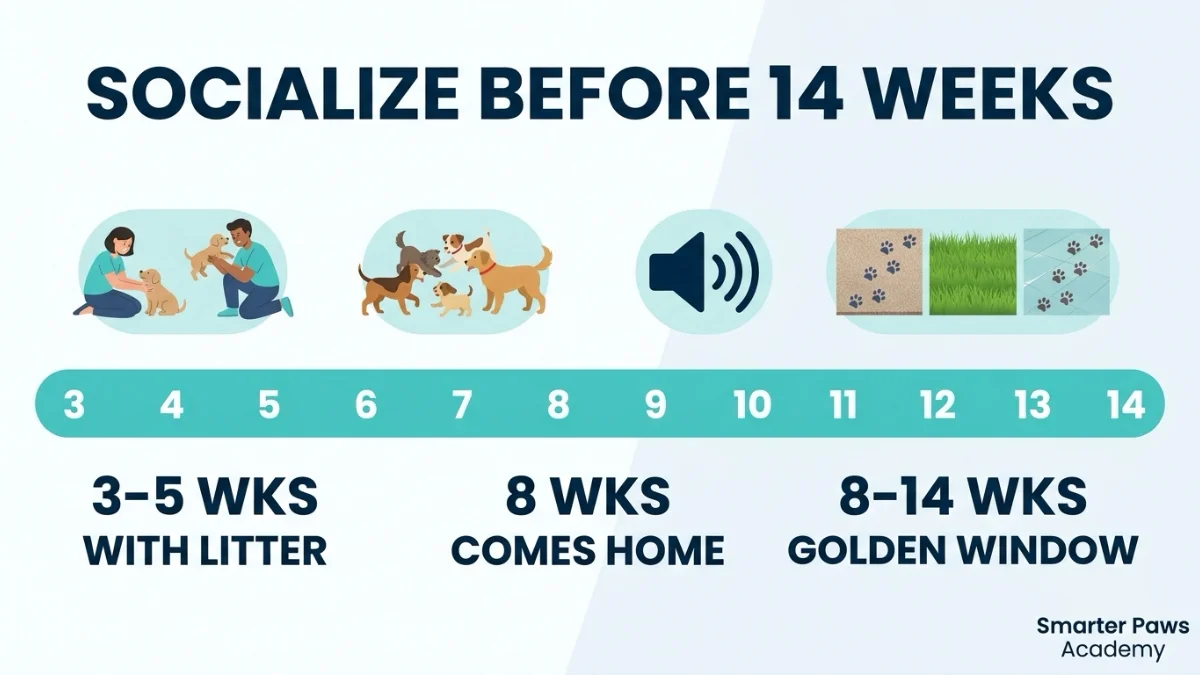
The prime socialization window runs from roughly 3 to 14 weeks of age, and it does not stay open. During this period, a puppy’s brain is primed to accept new experiences as normal, while after it, novelty is more likely to trigger caution or fear. This is why the early weeks are so precious. The clock is genuinely ticking.
Because the window closes early, you cannot wait until vaccinations are fully complete. The American Veterinary Society of Animal Behavior recommends starting socialization and puppy classes as early as 7 to 8 weeks, because the behavioral risk of waiting outweighs the managed disease risk. You socialize safely rather than not at all. This guidance has reshaped how modern trainers raise puppies.
Socialization does not stop when the window closes, it just gets harder. You should keep exposing your dog to new positive experiences throughout their first year and beyond to maintain confidence. Ongoing exposure reinforces the early foundation. Think of the window as the critical head start, not the finish line.
How Do You Socialize a Puppy Safely?
You socialize safely by combining positive exposure with sensible disease precautions during the vaccination period. The aim is many small, happy experiences that build confidence without overwhelming your puppy. Pair each new thing with treats and let your puppy explore at their own pace. Here is a safe, step-by-step approach.
Step 1: Start at home. Introduce household sounds, surfaces, and gentle handling in the safety of your home, pairing each with treats. This builds a confident base before you venture out.
Step 2: Carry your puppy to watch the world. Before full vaccination, carry your puppy or use a stroller to safely observe traffic, crowds, and other dogs from a distance. They learn the world is normal without touching the ground in risky spots.
Step 3: Set up safe social meetings. Arrange playdates with healthy, vaccinated dogs and calm, dog-savvy people in clean environments. Quality introductions matter more than the number of them.
Step 4: Join a positive puppy class. A well-run puppy class offers safe socialization and early training in one, which is why the AVSAB supports them. Look for reward-based classes on clean, controlled premises.
Step 5: Pair everything with good things. Bring treats everywhere and let new experiences predict rewards, always letting your puppy choose to approach. Positive associations are what make socialization stick. Fit short outings into your puppy schedule so socialization happens a little every day, and expect some mouthing when your puppy gets excited, which my puppy biting plan handles kindly.
What Should You Socialize Your Puppy To?
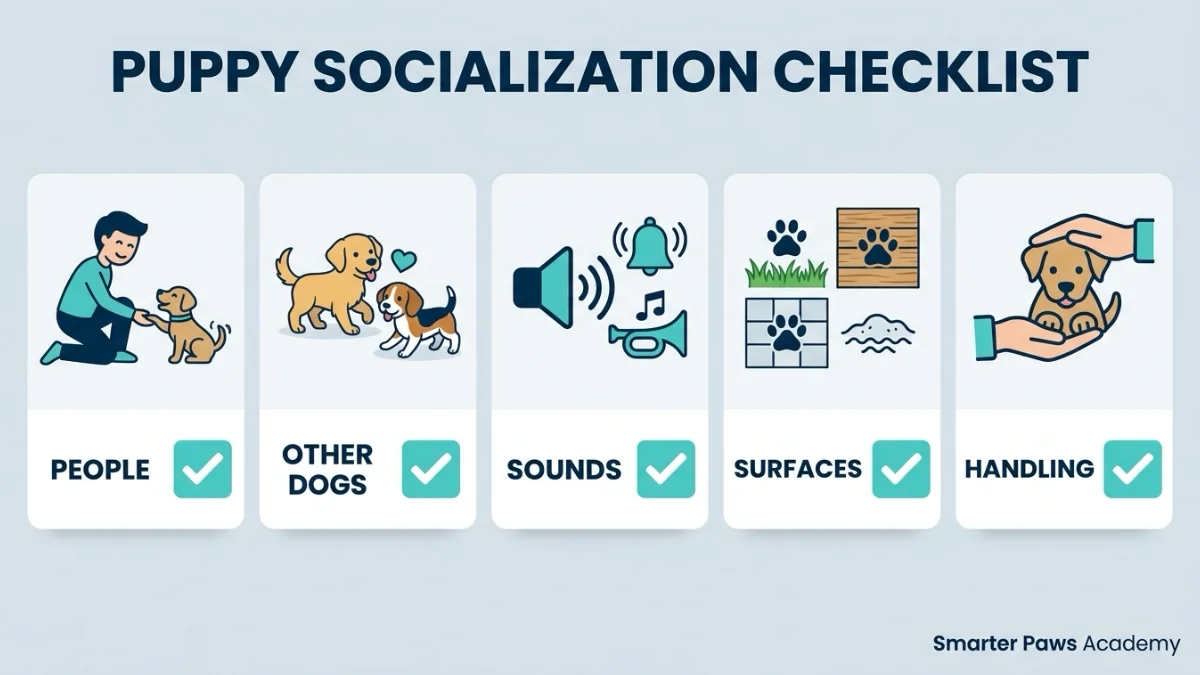
Aim to expose your puppy to a wide, varied checklist of people, animals, places, sounds, and handling. The more positive variety your puppy experiences during the window, the more confident they become with novelty later. A structured list keeps you from accidentally missing whole categories. My free socialization checklist lays it all out so nothing slips through.
People and handling deserve special attention. Introduce your puppy to people of different ages, appearances, and accessories like hats and umbrellas, and practice gentle handling of paws, ears, and mouth. This prepares your puppy for vet visits, grooming, and life with all kinds of humans. Comfort with handling prevents so many future struggles.
Sounds, surfaces, and situations round out a strong plan. Expose your puppy to vacuum cleaners, doorbells, traffic, slippery floors, stairs, and car rides, always at a level they can handle happily. Everyday things become non-events when introduced positively and early. Broad, gentle exposure builds a genuinely unflappable dog.
Frequently Asked Questions About Puppy Socialization
Can I socialize my puppy before they are fully vaccinated?
Yes, and experts recommend it, because the socialization window closes before vaccinations are complete. Socialize safely by using clean, low-traffic areas, carrying your puppy in busy places, and choosing healthy, vaccinated playmates. The AVSAB advises early socialization because the behavioral risk of waiting outweighs the managed disease risk. Ask your vet about the safest options for your puppy.
What happens if I miss the socialization window?
Missing the window makes it harder, but not impossible, to build confidence later. Under-socialized dogs are more prone to fear and reactivity, though patient, gradual exposure as an adult still helps. You simply work more slowly and carefully to build positive associations. Start where your dog is comfortable and progress at their pace.
How many new things should a puppy experience?
Aim for a steady variety of positive experiences rather than a fixed number, focusing on quality over quantity. A common goal is exposing your puppy to many different people, dogs, places, surfaces, and sounds during the window. Each should be calm and paired with good things. A structured checklist helps you cover the important categories.
Are dog parks good for puppy socialization?
Dog parks are generally not ideal for young puppies, because they can be overwhelming and expose your puppy to unknown, unvaccinated dogs. Uncontrolled or rough interactions can create fear rather than confidence. Safer options include arranged playdates with known healthy dogs and structured puppy classes. Save dog parks for later, if at all.
Is my puppy too old to socialize?
An older puppy or adult dog can still learn to feel more comfortable with the world, just more gradually. While the prime window offers the easiest learning, positive exposure at any age builds confidence over time. Go slowly, keep experiences positive, and let your dog set the pace. It is always worth continuing socialization efforts.
A Confident Puppy Becomes a Happy, Easygoing Dog
Socialization is the quiet work that shapes who your dog becomes, and the payoff lasts a lifetime. When you fill your puppy’s early weeks with calm, positive experiences, you build a dog who meets the world with curiosity instead of fear. Few things you do will matter more than this.
Start today by exposing your puppy to gentle new experiences at home, carrying them out to watch the world, and pairing everything with treats. Grab my free socialization checklist so you cover every category, and let your puppy set the pace. Give your puppy the gift of confidence now, and you give yourself an easygoing companion for years to come.