Smarter Paws Academy
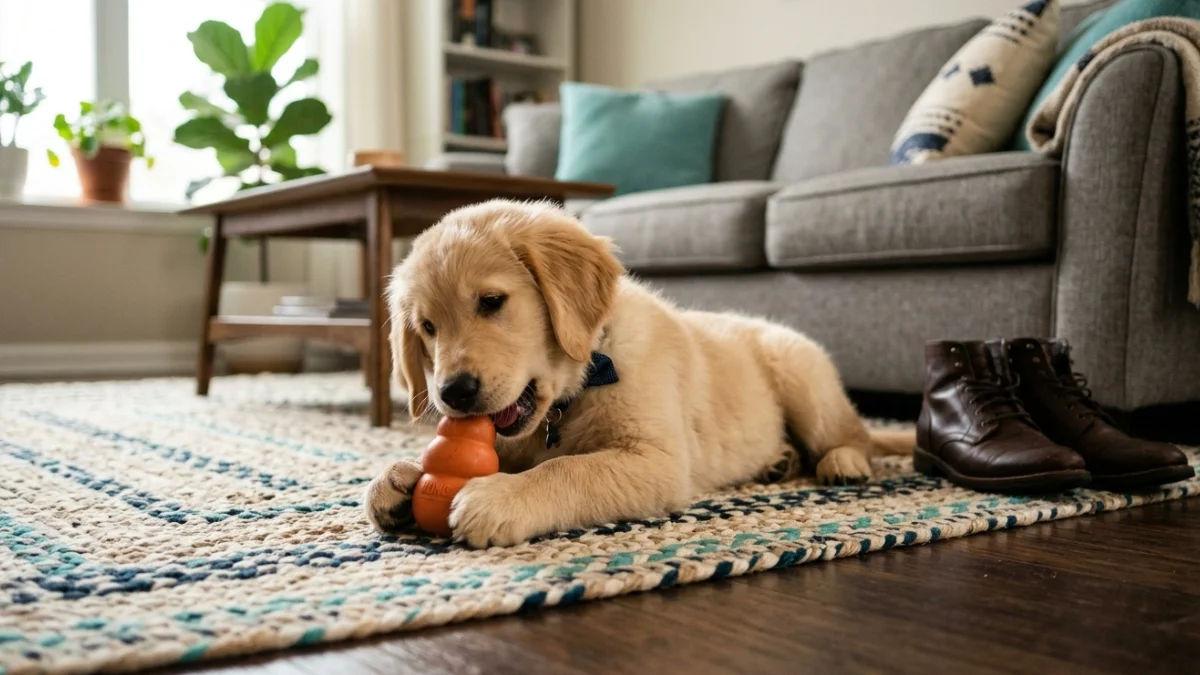
The best puppy chew toys give a teething puppy a safe outlet and save your furniture at the same time. Teething puppies have to chew, so your real job is giving them the right things to chew instead of your shoes. It’s one of the first questions new puppy owners ask, often while staring at a chewed table leg. This guide shares the safe chew toys I trust and how to use them.
We will cover why puppies chew, how to pick a toy that is safe for baby teeth, and my top picks for 2026. Every toy here is puppy-appropriate, meaning soft enough to protect new teeth but tough enough to actually last. Let us redirect those needle teeth onto the right targets.
Smarter Paws Academy is reader-supported. When you buy through links on our site, we may earn an affiliate commission at no extra cost to you. As an Amazon Associate I earn from qualifying purchases. Thank you for your support!
Last Updated: September 2026.
Important Safety Note
The information in this article is for educational purposes only. Always supervise your puppy with any chew toy, pick a size too big to swallow, and remove a toy once it is chewed down or damaged. Avoid very hard chews that can crack a puppy’s delicate baby teeth, and check with your vet if you have concerns. If your puppy seems in pain, won’t eat or has a broken tooth, call your vet.
Key Takeaways: Best Puppy Chew Toys
- Chewing is a need, not a crime. Teething puppies must chew, so redirect them onto safe toys instead of punishing.
- Soft but tough is the sweet spot. Choose gentle rubber or soft nylon that protects baby teeth yet survives sharp puppy chewing.
- Try a chilled toy. A freezable teether or a chilled rubber toy is another option during peak teething.
- Supervise and size up. Pick a toy too big to swallow and watch your puppy, replacing anything that gets chewed down.
Table of Contents
Why Do Puppies Chew So Much?
Puppies chew because they are teething and exploring the world with their mouths. Between about 4 and 7 months, a puppy’s baby teeth fall out and 42 adult teeth come in (Merck Veterinary Manual). Chewing on safe toys gives them an outlet while the adult teeth come in. Understanding this turns frustration into a simple plan: give them better things to chew.
Chewing is also how puppies investigate and self-soothe. A bored, anxious, or overtired puppy will chew more, so meeting their needs reduces the damage. This is the same principle behind managing puppy biting, which I cover in my humane plan to stop puppy biting. Redirecting the mouth onto appropriate outlets is the kind, effective approach.
The goal is never to stop chewing, only to aim it at the right targets. When you keep safe chew toys within reach and calmly trade them for forbidden items, your puppy learns what belongs in their mouth. Punishment teaches fear, while redirection teaches good habits. Set your puppy up to succeed and the shoes survive.
How Do You Choose a Safe Puppy Chew Toy?
Choose a chew toy that is soft enough for baby teeth but durable enough to survive sharp puppy chewing. Natural rubber, soft nylon, and specially formulated puppy materials hit that balance, while rock-hard chews can crack delicate baby teeth. A good rule is that if you cannot make a slight dent with your fingernail, it is too hard for a puppy. Protecting those baby teeth comes first.
Size and supervision keep chew time safe. Always pick a toy too large for your puppy to swallow, and watch how they chew during the first few sessions. Remove any toy that gets chewed into small pieces, since broken bits can be a choking or blockage risk. Stick with puppy-specific products until the full set of adult teeth is in.
Variety keeps a teething puppy engaged and your belongings safe. Puppies get bored with a single toy, so a small rotation of textures, from soft rubber to a freezable teether, holds their interest. Reintroducing a rested toy makes it feel new again. A few well-chosen toys beat a pile of forgotten ones.
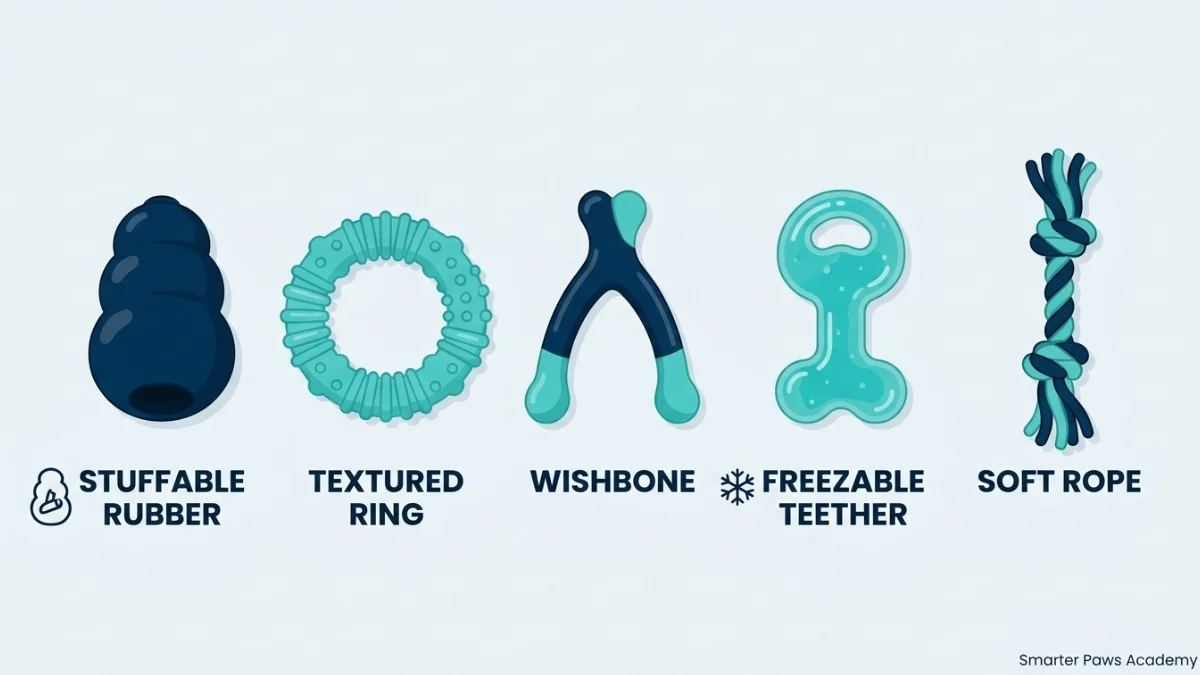
What Are the Best Puppy Chew Toys for 2026?
My picks below cover every teething need, from stuffable chews to gentle textured chews. I chose them for puppy-safe materials, durability, and how well they redirect determined little chewers. Each one gives your puppy a satisfying, safe outlet.
We don’t test products ourselves. These picks are based on each product’s published information, and a commission never changes a pick.
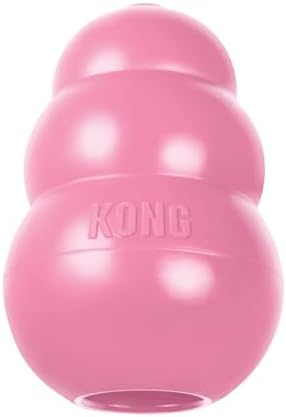
Best Overall: KONG Puppy
The KONG Puppy is my top all-around pick for teething puppies. Its soft, natural rubber is gentle on new teeth while still standing up to eager chewing, and you can stuff it with a little food and freeze it. That combination of chew outlet and food puzzle keeps a puppy happily busy for ages.
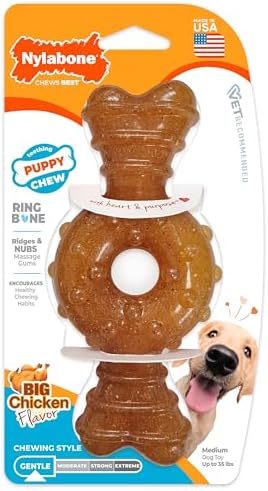
Best Budget Textured Chew: Nylabone Puppy Chew
The Nylabone Puppy line is an affordable textured chew. The material is softer than adult Nylabones, so it is safe for baby teeth. It comes in puppy-friendly flavors that keep interest high. For a low-cost, dedicated teething chew, it is a reliable staple.
Best Hold-and-Chew: Benebone Puppy Wishbone
The Benebone Puppy Wishbone is shaped for a puppy to grip and chew comfortably. It is flavored with real food ingredients and its wishbone shape lets a puppy hold it between their paws for a good gnaw. Choose the puppy-specific version, since standard Benebones are quite hard, and supervise closely. For a paws-on chew that keeps a puppy engaged, it is a great option.

Best for Teething Weeks: Freezable Rubber Teether
Keep a freezable teether in the freezer and rotate it in on the rough days. A chilled toy is one of the simplest things to try during teething.

Best Soft Comfort Chew: Puppy Rope Toy
A soft cotton rope toy gives a gentle chewing and tugging outlet. You can wet and freeze it for a teething puppy. Rope toys also work for supervised gentle tug, which is a great bonding game with a teething puppy. Always supervise and retire it if strands start coming loose.

How Do the Top Puppy Chews Compare?
The table below matches each toy to the teething job it does best. Use it to build a small rotation rather than relying on just one. A little variety keeps your puppy chewing the right things.
| Chew Toy | Type | Best For |
|---|---|---|
| KONG Puppy | Stuffable rubber | All-around chew + food puzzle |
| Nylabone Puppy | Soft textured nylon | Budget textured chew |
| Benebone Puppy Wishbone | Flavored, paw-hold shape | Engaged solo chewing |
| Freezable Teether | Cold rubber | Chilled chew |
| Puppy Rope Toy | Soft cotton | Gentle chew and tug |
How Do You Stop a Puppy Chewing the Wrong Things?
You stop unwanted chewing by managing the environment and redirecting your puppy to a legal chew. Puppy-proof the space by moving shoes, cords, and valuables out of reach, so your puppy cannot practice the wrong choices. When you catch them eyeing furniture, calmly swap in a chew toy and praise them for taking it. Prevention plus redirection beats scolding every time. If your puppy seems to chew everything in sight, the guide to a puppy chewing everything covers what to give, how to trade instead of chase, and when to call the vet.
Keep chew toys within arm’s reach in every room your puppy uses. A puppy will grab whatever is closest when the urge hits, so make the right choice the easy one. Rotating toys keeps them interesting enough to compete with your table leg. Convenience is quietly one of your best training tools.
Pair chewing management with the rest of your puppy routine for the best results. A tired, well-fed, mentally satisfied puppy chews far less destructively, which ties into the whole-puppy approach in my complete puppy training guide. Chewing is one piece of a bigger picture. Meet all the needs and the destructive chewing fades. A stuffed chew is also the best crate companion, so it slots right into my step-by-step crate training plan, and as your puppy grows, puzzle toys add brain work to the chewing.
Frequently Asked Questions About Puppy Chew Toys
When do puppies stop teething?
Most puppies have all 42 adult teeth by about 7 months. Chewing is often strongest while the adult teeth come in, from about 4 to 7 months. Chewing continues at a lower level into adulthood as a normal behavior. Keep appropriate chew toys available well past the teething stage. If your grown dog turns out to be a strong chewer, our durable toys for aggressive chewers guide covers tougher options and how to use them safely.
Are rawhide or hard bones safe for teething puppies?
No, very hard chews and rawhide are not recommended for teething puppies. Hard bones and antlers can crack delicate baby teeth, and rawhide poses choking and blockage risks. Stick with soft rubber, soft nylon, and puppy-specific chews instead. Always supervise and choose puppy-appropriate materials to protect those new teeth.
How many chew toys does a puppy need?
A small rotation of three to five different chew toys works well for most puppies. Variety in texture and type keeps your puppy interested and less likely to seek out your belongings. Swap the toys in and out so they feel fresh. A handful of well-chosen chews beats a big pile they ignore.
Can I freeze my puppy’s chew toys?
Yes, you can freeze safe rubber toys or a wet rope toy for a teething puppy. A stuffed, frozen KONG Puppy is a long-lasting favorite. Always give frozen toys under supervision and let very hard-frozen items soften slightly for tiny puppies.
Why does my puppy chew more at night?
Puppies often chew more in the evening because they are overtired and struggling to settle. An overtired puppy can get wound up rather than sleepy, and chewing helps them wind down. Offer a calm chew and a quiet space to help them relax into sleep. A consistent bedtime routine reduces the evening chewing frenzy.
The Right Chew Toys Make Teething So Much Easier
Teething is a short, intense season, and the right chew toys carry you and your puppy through it. When you give those needle teeth safe outlets, your furniture survives and your puppy has something safe to chew. Redirection, not punishment, is what builds good chewing habits for life.
Grab a couple of puppy-safe chews, keep one in the freezer for the rough days, and stash toys in every room. Trade calmly whenever your puppy grabs the wrong thing, and praise the good choices. With the right toys and a little patience, you will both come through teething happy and shoe-intact.
Sandie Calloway is the pen name of the Smarter Paws Academy team. How we write