
The best dog puzzle toys give your dog a real job, tiring their brain in ways a walk alone never can. A bored dog invents their own entertainment, and it is usually barking, digging, or chewing your shoes. As a certified professional dog trainer, I lean on puzzle toys constantly, because mental enrichment solves more behavior problems than almost any other single change. This guide shares the puzzle toys I trust and how to use them.
We will cover why mental stimulation matters so much, how to match a puzzle to your dog’s skill level, and my top picks for 2026 across every budget. Every toy here supports positive, force-free enrichment: your dog problem-solves for a reward and feels wonderfully accomplished. Let us turn your dog’s restless energy into calm, happy focus.
Smarter Paws Academy is reader-supported. When you buy through links on our site, we may earn an affiliate commission at no extra cost to you. As an Amazon Associate, I earn from qualifying purchases. Thank you for your support!
Last Updated: September 2026. This guide is regularly reviewed for accuracy by Sandie Calloway, CPDT-KA.
Important Safety Note
The information in this article is for educational purposes and reflects my experience as a certified dog trainer. Always supervise your dog with a new puzzle toy, pick a size and durability level suited to your dog, and remove any toy that gets chewed into small pieces. Count puzzle treats toward your dog’s daily food to avoid overfeeding.
Key Takeaways: Best Dog Puzzle Toys
- A tired brain equals a calm dog. Mental work can tire a dog faster than a walk, which cuts boredom barking and chewing.
- Match the level to your dog. Start easy so your dog wins early, then work up to harder puzzles for lasting interest.
- Feeding puzzles beat plain bowls. Turning meals into a foraging game adds enrichment your dog already needs to eat.
- Supervise and size correctly. Pick a durable, correctly sized toy and watch your dog, especially strong chewers.
Prefer to Listen? An Audio Overview
For a quick guide to choosing and using puzzle toys, press play below.
Runtime: 1:13
View Full Audio Transcript
Narrator: Welcome to the Smarter Paws Academy audio overview. Sandie, you recommend puzzle toys to almost every client. Why?
Sandie Calloway: Because so much bad behavior is really just boredom. A dog with nothing to do makes their own fun, and that means barking, digging, chewing. A puzzle toy gives their brain a job. And here is the surprise, mental work tires a dog out faster than a walk does.
Narrator: That is surprising. How does someone start?
Sandie Calloway: Start easy. If the first puzzle is too hard, your dog quits and loses interest. Pick a beginner level, let them win fast, and build up from there. Confidence is part of the reward. Once they get the idea, you can move to trickier puzzles that really make them think.
Narrator: Any simple everyday tip?
Sandie Calloway: Feed meals through the toys. Instead of a boring bowl, put breakfast in a snuffle mat or a food puzzle. Your dog gets enrichment they need anyway, and you are not adding extra calories. It is the easiest enrichment win there is.
Narrator: Start easy, build up, and feed through the puzzles.
Sandie Calloway: That is the whole approach. A thinking dog is a calm, happy dog.
Table of Contents
Why Do Dogs Need Puzzle Toys?
Dogs need puzzle toys because mental stimulation is a basic need, not a luxury. Dogs were bred to work, and without an outlet for that problem-solving drive, they get bored and frustrated. Boredom is the hidden cause behind a huge share of nuisance behaviors, from barking to destructive chewing. A puzzle toy channels that energy into something productive and satisfying.
Mental exercise is also remarkably efficient at tiring a dog out. Sniffing and problem-solving engage the brain deeply, and many trainers find a short enrichment session settles a dog faster than a long walk. Research on canine cognition supports this, with nose-work and foraging tasks linked to lower stress and a calmer state afterward. A thinking dog is a tired, content dog.
For dogs whose barking comes from boredom, puzzle toys are often the missing piece. If your dog barks when under-stimulated, pairing enrichment with the plan in my guide on how to stop dog barking works far better than either alone. Meeting the need is always kinder and more effective than suppressing the symptom.
How Do You Choose the Right Puzzle Toy?
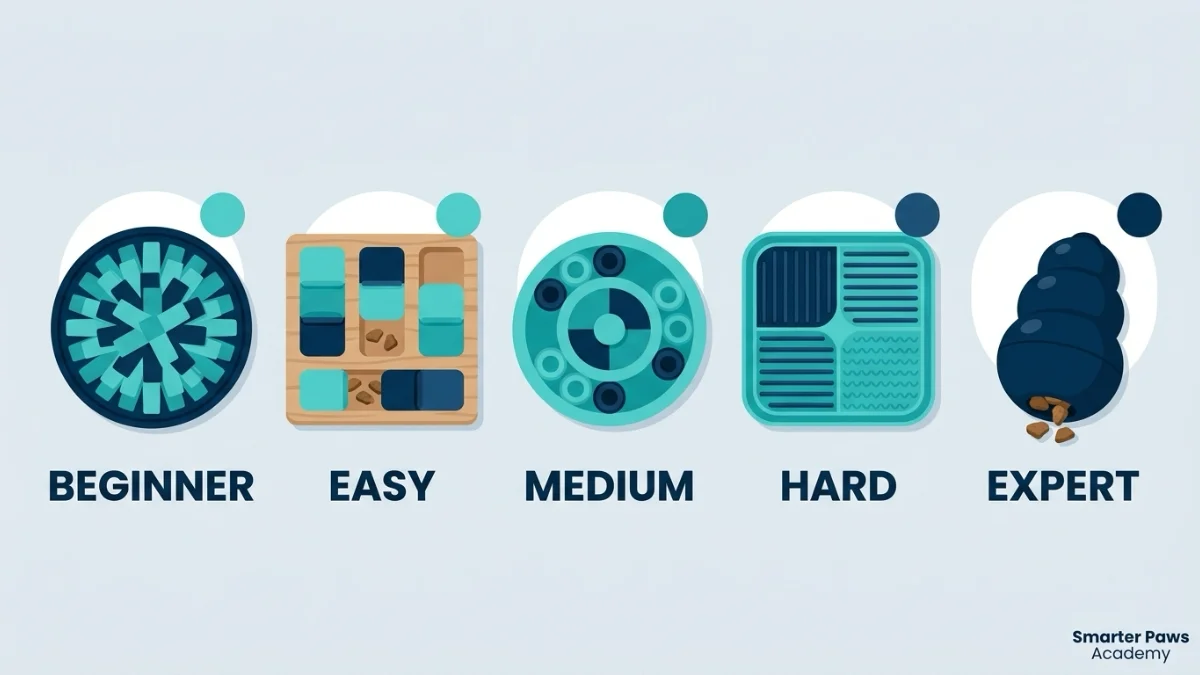
Choose a puzzle toy based on your dog’s skill level, chewing strength, and the type of enrichment you want. Puzzles come in difficulty levels, and starting too hard makes a dog give up, while starting too easy bores them quickly. Match the challenge to your dog and raise it as they master each stage. Success builds the confidence that keeps them engaged.
Durability and size matter just as much as difficulty. A strong chewer needs a tougher rubber toy rather than a thin plastic puzzle, and every toy should be too big to swallow. Always supervise the first few sessions to see how your dog interacts with it. Safety first means matching the toy to how your specific dog plays.
Finally, think about the style of enrichment that fits your routine. Food-dispensing toys and snuffle mats turn meals into foraging, while multi-step puzzles offer concentrated brain workouts. A mix keeps things fresh, since novelty is part of what makes enrichment work. Rotating a few toys prevents your dog from getting bored of any single one.
What Are the Best Dog Puzzle Toys for 2026?
My picks below cover every level and play style, from beginner sliders to advanced multi-step challenges. I chose them for smart design, durability, and how reliably they hold a dog’s interest. Each one delivers positive, force-free enrichment your dog will actually enjoy.
Best Beginner Puzzle: Outward Hound Nina Ottosson Dog Smart
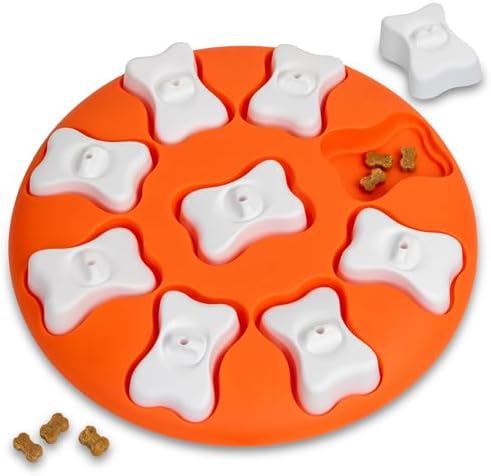
The Nina Ottosson Dog Smart is the perfect first puzzle for most dogs. It is a Level 1 design where your dog nudges covers aside to find hidden treats, so they win quickly and stay motivated. That early success is what builds a dog’s confidence to try harder puzzles later. I start nearly every puzzle-curious dog here.
Best All-Around: Outward Hound Nina Ottosson Dog Tornado
The Dog Tornado is my top all-around pick for building brainpower. Its three spinning layers hide treats your dog has to rotate and uncover, giving a solid Level 2 challenge that suits most breeds. The design is durable and easy to clean, which matters for a toy you will use often. It is the puzzle I recommend when a dog has outgrown the beginner level.

Best for Strong Chewers: KONG Classic
The KONG Classic is the gold standard for durable, stuffable enrichment. You pack it with kibble, a little peanut butter, or wet food and freeze it, and a well-stuffed KONG delivers 20 to 45 minutes of focused licking and extraction. The tough natural rubber stands up to serious chewers where plastic puzzles cannot. It is my go-to for crate time and for dogs who need a long-lasting job.

Best Easy-Win Stuffable: West Paw Toppl
The West Paw Toppl is the friendlier cousin of the classic stuffable toy. Its wider opening makes it easier for dogs who find a traditional KONG frustrating, so beginners and gentler eaters stay engaged. You can stuff and freeze it the same way for longer enrichment. I reach for the Toppl when a dog needs a confidence-building win rather than a tough challenge.

Best for Mealtimes: LickiMat Slow Feeder
The LickiMat turns a quick meal into a long, calming licking session. You spread wet food, plain yogurt, or a soft topper across the textured surface, and the licking motion soothes and settles your dog. It is fantastic for slowing fast eaters and for calming dogs before a stressful moment. As a low-mess daily enrichment tool, it earns its spot in my kitchen.

How Do the Top Puzzle Toys Compare?
The quick table below matches each toy to a level and play style. Use it to pick a starting point, then add variety as your dog masters each one. Rotating a few keeps enrichment fresh and interesting.
| Puzzle Toy | Level / Type | Best For |
|---|---|---|
| Nina Ottosson Dog Smart | Level 1 slider | Beginners, building confidence |
| Nina Ottosson Dog Tornado | Level 2 spinner | All-around brain workout |
| KONG Classic | Stuffable rubber | Strong chewers, crate time |
| West Paw Toppl | Stuffable, wide mouth | Easy wins, gentle eaters |
| LickiMat | Lick mat | Mealtimes, calming |
How Do You Use Puzzle Toys the Right Way?
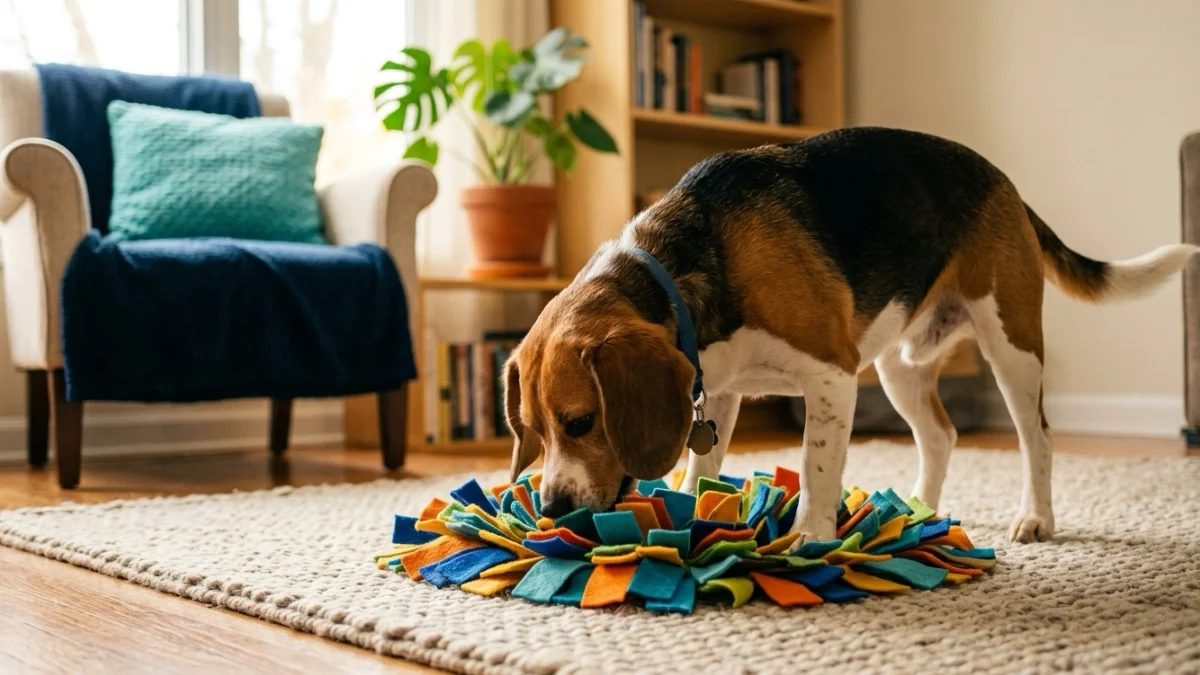
Use puzzle toys as part of your dog’s daily routine, feeding meals through them whenever you can. Turning breakfast into a foraging game adds enrichment your dog needs without adding calories, since the food is their normal ration. This makes daily enrichment effortless to keep up. A fed brain is a settled brain.
Rotate your toys to keep the novelty alive. Dogs lose interest in the same puzzle offered every day, so keep three or four in a cupboard and swap them out. Reintroducing a “forgotten” toy makes it feel new again. Variety is a big part of what keeps enrichment effective over time.
Pair puzzle time with your training, especially for boredom-driven behaviors. A dog who gets a daily brain workout has far less fuel for nuisance barking, and my core training guides pair perfectly with enrichment. Together, exercise for the body and puzzles for the mind build a genuinely balanced dog.
Frequently Asked Questions About Dog Puzzle Toys
Do puzzle toys really tire dogs out?
Yes, puzzle toys tire dogs out effectively because mental work is genuinely demanding. Problem-solving and sniffing engage the brain deeply, and many trainers find a short enrichment session settles a dog faster than a long walk. Research links foraging and nose-work tasks to a calmer, lower-stress state. Mental exercise is a powerful complement to physical activity.
What puzzle toy is best for aggressive chewers?
The best choice for strong chewers is a durable rubber stuffable toy like the KONG Classic. Hard natural rubber withstands serious chewing where thin plastic puzzles can crack and create hazards. Always pick the correct size and supervise heavy chewers closely. Match the toy’s toughness to how your dog plays.
Are puzzle toys good for puppies?
Yes, puzzle toys are great for puppies when you choose easy, puppy-safe designs. Beginner-level food puzzles and soft stuffables provide gentle mental exercise and can ease teething and boredom. Start simple so your puppy wins quickly and stays interested. Always supervise and pick a size suited to a small mouth.
How long should a dog play with a puzzle toy?
Most dogs do well with 10 to 30 minutes of puzzle play per session, once or twice a day. Watch for signs of frustration or fatigue and end while your dog is still enjoying it. Short, successful sessions keep enrichment fun rather than stressful. You can offer longer-lasting stuffed toys like a frozen KONG for extended solo time.
Can puzzle toys help with separation anxiety?
Puzzle toys can help mild alone-time stress by giving your dog a positive activity, but they are not a cure for true separation anxiety. A frozen stuffed toy at departure can create a better association with you leaving. Serious separation anxiety needs a dedicated behavior plan and often professional support. Always pair enrichment with proper training for anxious dogs.
A Thinking Dog Is a Happy, Calm Dog
Puzzle toys are one of the simplest ways to transform a restless dog into a settled, satisfied one. When you give your dog’s brain a real job, the boredom behaviors that drive owners crazy tend to fade on their own. Enrichment is not extra work, it is the missing piece that makes everything else easier.
Pick a puzzle that matches your dog’s level, start feeding a meal or two through it, and rotate a few to keep things fresh. Watch how much calmer your dog becomes once their mind is engaged every day. A little daily brain work builds the relaxed, contented dog you have been hoping for.