
Dogs jump on people to greet them and get attention, and the fix is to teach a polite behavior that earns that attention instead. Jumping is friendly, not naughty, but it can knock over kids and guests, so it is worth solving. As a certified professional dog trainer, I stop jumping the same kind way every time: by making four paws on the floor the thing that gets the greeting. This guide gives you the full positive plan.
We will cover why dogs jump, the step-by-step method to teach calm greetings, and the common mistakes that accidentally reward the jumping. There is no kneeing, yelling, or scary corrections here, only clear, consistent teaching. Let us turn those excited leaps into polite hellos.
Smarter Paws Academy is reader-supported. When you buy through links on our site, we may earn an affiliate commission at no extra cost to you. As an Amazon Associate, I earn from qualifying purchases. Thank you for your support!
Last Updated: September 2026. This guide is regularly reviewed for accuracy by Sandie Calloway, CPDT-KA.
Important Behavior Disclaimer
The information in this article is for educational purposes and reflects my experience as a certified dog trainer. It covers friendly, excited jumping. If your dog jumps and also growls, snaps, or shows fear or aggression, please work with a certified professional dog trainer or veterinary behaviorist.
Key Takeaways: How to Stop a Dog Jumping
- Jumping is a bid for attention. Dogs jump to greet, so the fix is teaching a polite way to earn that greeting.
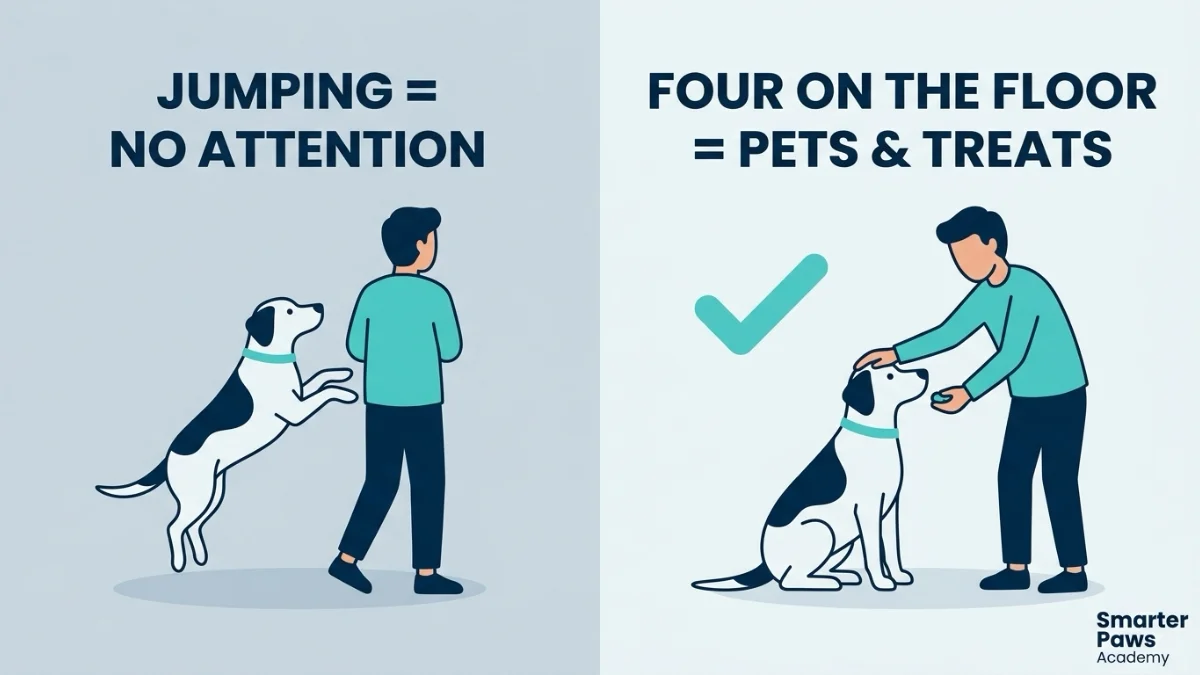
- Remove the reward. When your dog jumps, turn away and give zero attention, so jumping stops working.
- Reward four on the floor. Pay attention and treats the instant all four paws are down or your dog sits.
- Everyone must be consistent. If one guest rewards jumping, the habit sticks, so the whole household follows the same rule.
Prefer to Listen? An Audio Overview
For a quick guide to polite greetings, press play below.
Runtime: 1:15
View Full Audio Transcript
Narrator: Welcome to the Smarter Paws Academy audio overview. Sandie, jumping up is such a common complaint. Why do dogs do it?
Sandie Calloway: It is a greeting. Dogs say hello face to face, so they jump up to reach ours. It is friendly, not defiance. The problem is that we accidentally reward it. We push them off, we talk to them, we make eye contact, and to a dog, all of that is attention, which is exactly what they wanted.
Narrator: So what do we do instead?
Sandie Calloway: Two halves. First, when the paws come up, the attention goes away. Turn your back, no talking, no eye contact, be boring. Then the second your dog has four paws down or sits, they get the party, attention, praise, a treat. You are flipping the deal. Calm gets the greeting now, not jumping.
Narrator: And the piece people forget?
Sandie Calloway: Consistency. If everyone in the house ignores jumping but Grandma lets him jump all over her because it is cute, the dog keeps jumping. It only takes one person rewarding it to keep the habit alive. Everyone has to play by the same rule.
Narrator: Ignore the jump, reward four on the floor, and stay consistent.
Sandie Calloway: That is the whole plan. Do it with everyone and jumping fades fast.
Table of Contents
Why Do Dogs Jump on People?
Dogs jump on people mainly to greet them and reach their faces. In the dog world, greeting happens face to face, so jumping up is a natural, friendly attempt to say hello. It is excitement and affection, not dominance or bad manners. Understanding this reframes the whole problem from correcting a naughty dog to teaching a better greeting.
Jumping continues because it usually works to get attention. Every time a dog jumps and a person looks, talks, touches, or even pushes them off, the dog gets the attention they wanted. Even scolding counts as attention to an excited dog. This means most jumping has been accidentally rewarded for a long time.
The solution follows directly from the cause: change what earns attention. When jumping stops working and calm behavior starts paying off, your dog quickly switches strategies. This is pure positive reinforcement, the same approach I use across all my training, explained in my guide to positive reinforcement. Teach the polite alternative and the jumping fades.
How Do You Stop a Dog From Jumping on People?
You stop jumping by removing attention when paws come up and rewarding your dog when they are calm. This two-part approach teaches your dog that jumping ends the greeting while four paws on the floor earns it. Consistency from everyone is what makes it stick. Here is the step-by-step plan I use.
Step 1: Remove attention for the jump. The instant your dog jumps, turn your back, stay quiet, and avoid eye contact. Be as boring as possible so jumping earns nothing at all.
Step 2: Reward four on the floor. The moment all four paws are down, turn back and calmly reward with attention, praise, or a treat. You are showing your dog that calm is what gets the greeting.
Step 3: Teach a sit for greetings. Ask for or reward a sit when people approach, since a dog cannot sit and jump at the same time. A sit gives your dog a clear, polite job to do instead.
Step 4: Practice with helpers. Set up calm greetings with family and friends who agree to follow the rules, rewarding sits and ignoring jumps. Controlled practice builds the habit faster than random real-life greetings.
Step 5: Manage exciting arrivals. Use a leash, baby gate, or a treat scatter for high-excitement moments like the doorbell, so your dog cannot rehearse jumping. Management protects your training while the new habit grows. Keep small, high-value treats ready so you can pay for four paws on the floor instantly, and a clicker makes that moment even clearer.
How Do You Handle Jumping at the Front Door?
Front-door greetings are the hardest, so you manage the excitement while you train the calm. The doorbell often triggers peak arousal, which makes jumping almost automatic, so preventing the rehearsal matters. A leash, a gate, or sending your dog to a mat gives you control during those charged moments. Managing the environment is half the battle at the door.
Teaching a “go to your mat” behavior gives your dog a clear job when guests arrive. When the doorbell means “go lie on your mat for a treat” instead of “race to the door,” you replace chaos with calm. This same station-training concept helps with barking too, as covered in my guide on managing excited behavior. A trained alternative behavior is your best friend at the door.
Practice door greetings when you are not actually expecting anyone. Ring your own doorbell, reward calm, and repeat, so the sound stops predicting a jumping frenzy. Rehearsing in low-stakes moments builds the skill for the real ones. Preparation turns the doorway from a trigger into a training opportunity.
What Mistakes Make Jumping Worse?
The biggest mistake is giving any attention to a jumping dog, including negative attention. Pushing your dog down, saying “off” repeatedly, or making eye contact all reward the jump for an attention-seeking dog. Even a stern reaction can feel like a win to your dog. The fix is to be genuinely boring the instant paws come up.
Old-school punishments like kneeing the chest or stepping on paws are another mistake to avoid. These can hurt or frighten your dog, damage your bond, and sometimes make greetings scary rather than calm. They also fail to teach what you actually want. Positive teaching of an alternative behavior is both kinder and more effective.
Inconsistency is the quiet habit-killer. If jumping is ignored most of the time but occasionally rewarded by an excited guest, it becomes a stubborn behavior that pays off just often enough to persist. Everyone who greets your dog needs to follow the same rule. Consistency across all people is what finally ends the jumping.
Frequently Asked Questions About Dog Jumping
How do I stop my dog from jumping on guests?
Stop jumping on guests by managing the greeting and rewarding calm behavior. Keep your dog on a leash or behind a gate at first, ask for a sit, and have guests give attention only when all four paws are down. Brief guests on the plan before they enter. Consistent, controlled greetings teach your dog that calm earns the hello.
Does kneeing a dog in the chest stop jumping?
No, kneeing a dog is not recommended, as it can cause injury and fear without teaching a better behavior. It may also turn greetings into something your dog dreads. A positive approach of ignoring the jump and rewarding four paws on the floor is safer and more effective. Kind teaching beats physical correction every time.
Why does my dog jump on some people and not others?
Your dog jumps on the people who reward it, usually the most excited or attention-giving ones. A guest who squeals and pets a jumping dog reinforces the behavior, while a calm person who ignores it does not. This is why consistency across everyone matters. Teach all your dog’s greeters to reward only calm behavior.
Can you stop an older dog from jumping?
Yes, dogs of any age can learn polite greetings with positive reinforcement. Older dogs often have longer attention spans, which can help them learn the new habit. The same ignore-the-jump, reward-the-calm method works regardless of age. Consistency and practice matter far more than how old your dog is.
Should I ignore my dog completely when they jump?
Yes, withdrawing all attention is the key to stopping attention-seeking jumping. Turn away, stay silent, and avoid eye contact until your dog has four paws on the floor, then immediately reward the calm. This clear contrast teaches your dog which behavior earns the greeting. Ignoring the jump is only half the plan, though, so always pair it with rewarding calm.
Polite Greetings Build a Calmer, Happier Dog
Jumping up comes from a happy place, and the kindest way to stop it is to teach your dog a better way to say hello. When four paws on the floor earns the attention your dog craves, the leaping simply fades because it no longer works. You are not squashing your dog’s joy, you are giving it a polite outlet.
Start today by ignoring the jump, rewarding calm greetings, and asking for a sit when people arrive. Get everyone in the household on the same page and practice with friendly helpers. Stay consistent, and you will soon have a dog who greets the world with four paws on the floor and a wagging tail.