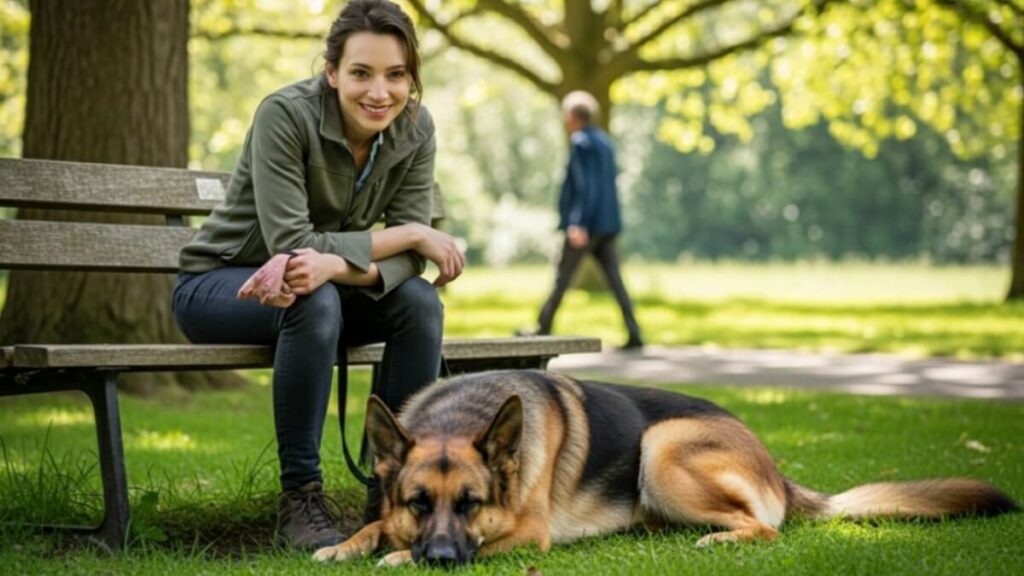
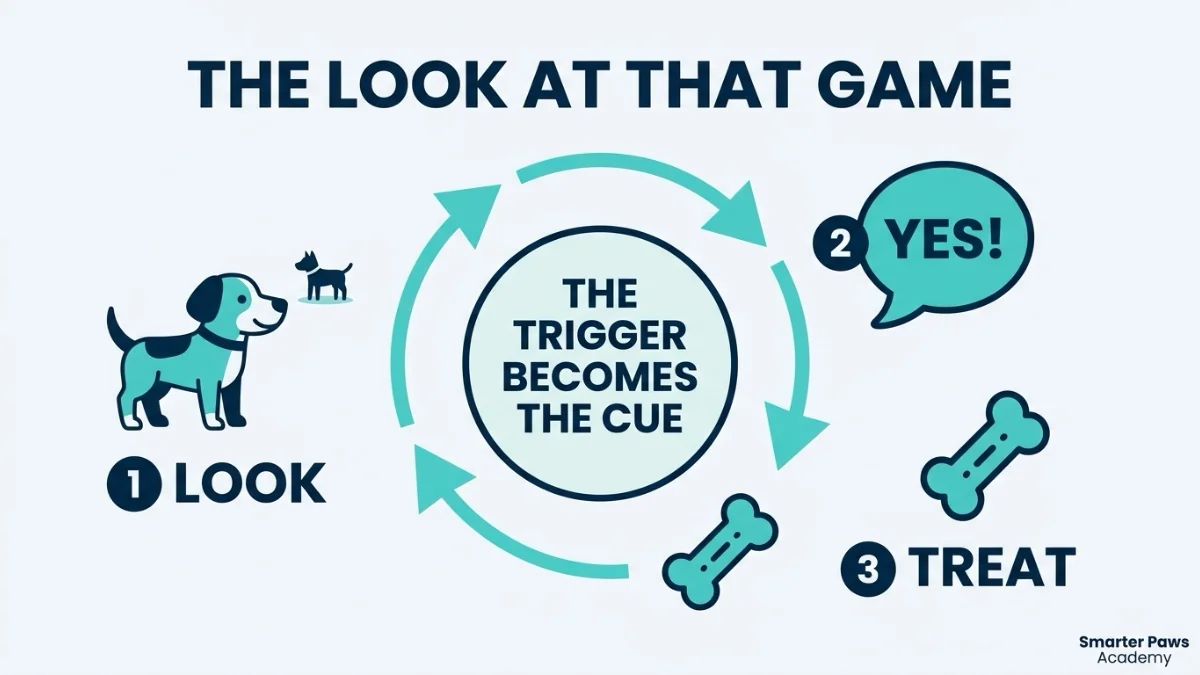

The “Look at That” game teaches your dog that noticing a trigger is a cue to look back at you for a treat, instead of reacting. It turns the thing your dog worries about into a simple, rewarding game of glance-and-check-in. As a certified professional dog trainer, I use this technique with almost every reactive dog because it is gentle, clear, and genuinely fun for the dog. This guide walks you through it step by step.
We will cover how the game works, exactly how to teach it, and how to use it out in the real world. Everything here is positive and pressure-free, so your dog builds calm confidence. Let us give your dog a happy new response to the things that used to set them off. If people are the trigger that sets your dog off, pair this game with my guide to dogs reactive to people on walks.
Smarter Paws Academy is reader-supported. When you buy through links on our site, we may earn an affiliate commission at no extra cost to you. As an Amazon Associate, I earn from qualifying purchases. Thank you for your support!
Last Updated: September 2026. This guide is regularly reviewed for accuracy by Sandie Calloway, CPDT-KA.
Important Behavior Disclaimer
The information in this article is for educational purposes and reflects my experience as a certified dog trainer. This game works best below your dog’s reaction threshold. For intense reactivity, aggression, or a bite history, please work alongside a certified professional dog trainer or veterinary behaviorist.
Key Takeaways: The Look at That Game
- Looking becomes the cue. Your dog learns that glancing at a trigger means “look back at me for a treat.”
- It makes triggers boring and safe. The scary thing becomes just a cue for a game, not a threat.
- Start below threshold. Practice at a distance where your dog can notice the trigger and still stay calm.
- It builds a calm reflex. With practice, checking in with you becomes your dog’s automatic response to triggers.
Prefer to Listen? An Audio Overview
For a quick guide to the Look at That game, press play below.
Runtime: 1:13
View Full Audio Transcript
Narrator: Welcome to the Smarter Paws Academy audio overview. Sandie, the Look at That game is a trainer favorite. What is the idea behind it?
Sandie Calloway: It is beautifully simple. Normally a reactive dog sees a trigger and thinks danger, react. With this game, we flip it. Your dog sees the trigger, and instead of reacting, they learn to look back at you for a treat. The trigger literally becomes the cue for a happy little game.
Narrator: How do you teach it?
Sandie Calloway: You start with something boring, like a chair. Your dog glances at it, you mark that look with a “yes,” and treat. They start offering glances to earn the treat. Then you use that exact pattern with a real trigger at a safe distance. Look at the dog, yes, treat. Look, yes, treat. It becomes a rhythm.
Narrator: Why does it work so well?
Sandie Calloway: Because it gives your dog something to do besides panic, and it lets them look at the scary thing, which they need to do, without getting stuck staring. Every glance ends with them turning back to you and getting paid. Over time, that check-in becomes automatic. The trigger stops being scary and starts being boring.
Narrator: Turn the trigger into a cue for a game.
Sandie Calloway: That is the whole magic of it. Calm becomes the habit.
Table of Contents
What Is the “Look at That” Game?
The Look at That game teaches your dog that noticing a trigger is a cue to look back at you for a reward. Instead of fixating and reacting, your dog learns a simple loop: glance at the trigger, turn back to you, get a treat. This popular technique comes from positive reactivity training and gives your dog a calm job to do. It replaces the panic response with a happy, rewarding pattern.
The game works because it changes both the behavior and the emotion. Your dog gets to look at the trigger, which they need to do to feel safe, without getting stuck in a hard stare that builds to a reaction. Each look ends with a check-in and a treat, so the trigger starts predicting good things. This is counterconditioning wrapped in a fun, easy game.
It pairs perfectly with the broader reactivity plan. The game is one of the most useful tools within the threshold-and-counterconditioning approach in my complete leash reactivity guide. Think of Look at That as the specific move that makes the bigger plan click. Together they help your dog feel calm around triggers.
How Do You Teach the “Look at That” Game?
You teach the game by first rewarding your dog for looking at a neutral object, then transferring it to a real trigger. Building the pattern on something boring first makes it easy to use when it counts. Always start with a real trigger at a distance where your dog stays calm. Here is my step-by-step method.
Step 1: Charge a marker. Use a clicker or a clear “yes” that already means a treat is coming, as covered in my clicker training guide. A sharp marker makes your timing precise.
Step 2: Practice on a neutral object. Let your dog glance at a boring item like a chair, mark the look with “yes,” and treat. Repeat until your dog offers glances and then looks back at you for the reward.
Step 3: Move to a real trigger at a distance. With a trigger far enough away that your dog stays calm, mark and reward each glance the same way. Your dog learns the same look-then-check-in pattern applies to the real thing.
Step 4: Build a rhythm. Keep the loop flowing: look, yes, treat, look, yes, treat. This steady rhythm keeps your dog engaged and under threshold while the trigger is present.
Step 5: Slowly decrease distance. Over many sessions, let the trigger come a little closer only when your dog stays relaxed and keeps playing. Patience makes the calm response reliable.
How Do You Use the Game on Real Walks?
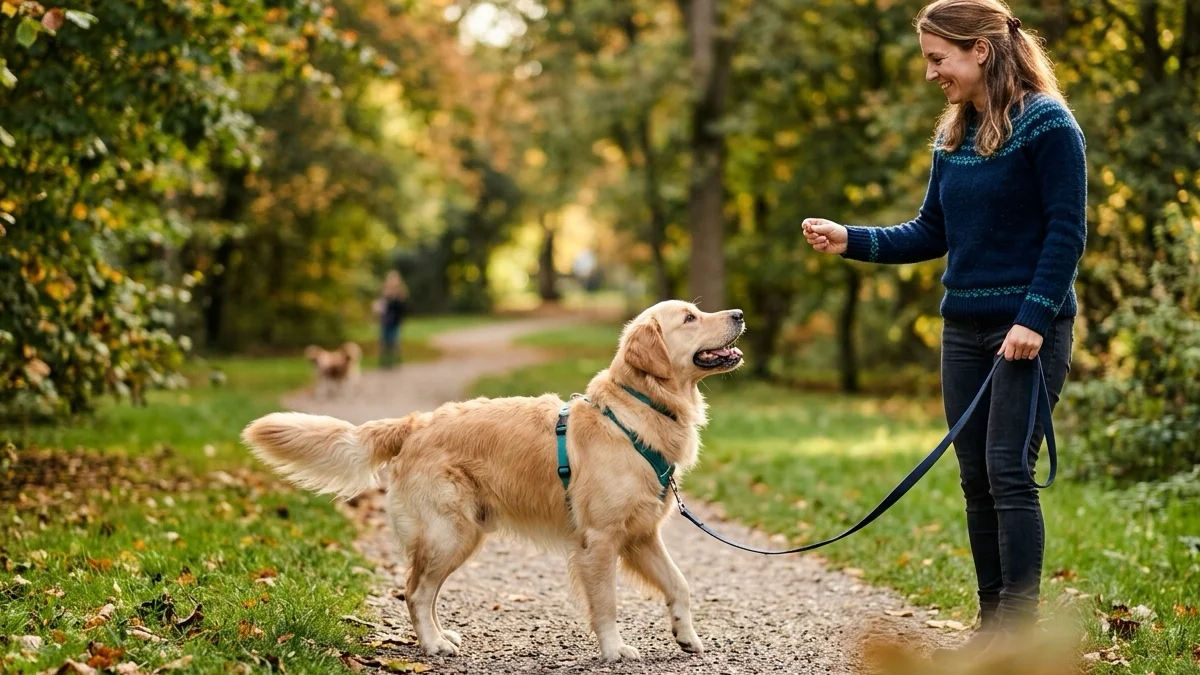
On walks, you start the game the instant your dog notices a trigger at a safe distance. As soon as you see a dog, person, or bike appear, begin marking and rewarding your dog’s glances before they can fixate. Catching the moment early keeps your dog under threshold and in the game. Timing your start is the key to smooth real-world use.
Keep your rewards high value and your distance protected. Around real triggers, use your dog’s favorite treats so the game can compete with the excitement, and be ready to add space if the trigger comes too close. My guides to the best training treats and the best no-pull harness cover the gear that helps. Good rewards and control make the game work on the street.
With enough practice, the check-in becomes automatic. Many dogs start to glance at a trigger and then look straight back at their owner on their own, expecting the treat. That voluntary check-in is the calm reflex you are building. When it appears, you know the game has genuinely changed how your dog feels.
Frequently Asked Questions About the Look at That Game
Does the Look at That game reward my dog for reacting?
No, you reward a calm glance, not a reaction, because you play the game below your dog’s threshold. At a safe distance, your dog simply notices the trigger and looks back at you, which is calm behavior worth rewarding. If your dog is barking or lunging, you are too close and need more distance. The game builds calm, not reactivity.
What if my dog won’t take treats during the game?
A dog who refuses treats is usually over their threshold and too stressed to eat. Increase your distance from the trigger until your dog can comfortably take food again. The ability to eat is your signal that your dog is calm enough to learn. Always work at a distance where treats are still appealing.
How long does it take to see results?
Many dogs learn the basic pattern within a week or two of short, consistent practice. Seeing a calmer response to real triggers takes longer, often several weeks, as the new habit builds. Practicing on neutral objects first speeds up the learning. Consistency below threshold produces the most reliable results.
Can I use the game for any trigger?
Yes, the Look at That game works for dogs, people, bikes, cars, and most visual triggers. The same look-and-check-in pattern applies regardless of what worries your dog. You simply build it separately for each trigger at a safe distance. It is a flexible tool for almost any reactivity.
Do I need a clicker for this game?
You do not strictly need a clicker, though a clear marker helps your timing. A consistent verbal “yes” works well as long as it reliably predicts a treat. The important part is marking the exact moment your dog looks and then checks back with you. Precise timing matters more than the specific marker you choose.
Turning Triggers Into a Calm, Happy Habit
The Look at That game gives your reactive dog something wonderful: a clear, rewarding thing to do when the world feels scary. Instead of spiraling into a reaction, your dog learns to glance, check in, and get paid, which slowly rewires how they feel. You are handing your dog a calm habit to replace the panic.
Start by charging a marker, practicing on a boring object, and then playing with a real trigger at a safe distance. Keep the rhythm going, protect your distance, and reward generously. With patience and practice, you will watch your dog turn toward you instead of exploding, and those hard walks will finally feel calm.