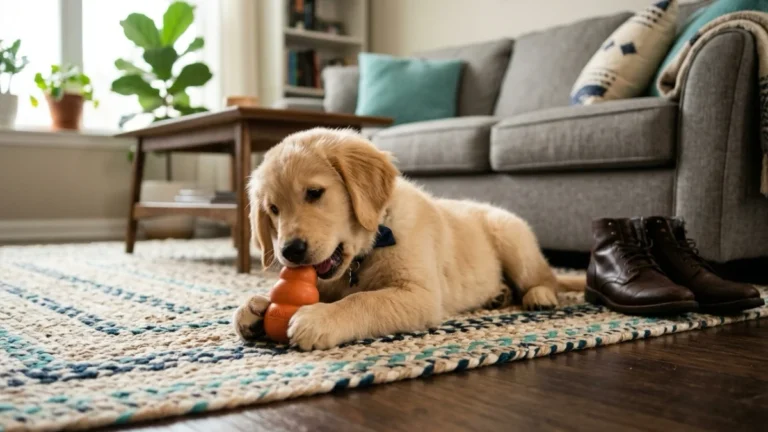
Smarter Paws Academy
Last updated: November 2026
This guide was written by the Smarter Paws team with AI help. Its sources are linked on this page.
Quick answer
Dog adolescence runs from about 6 months to 2 years of age. Puberty is considered to happen between 6 and 9 months in males and between 6 and 16 months in females, and social maturity can take until 12 to 24 months (Harvey, 2021).
Teenage dogs can listen less to their main carer. In a study of 93 young dogs being raised for a guide dog charity, the odds of a dog repeatedly ignoring “sit” from its main carer (the volunteer raising it) were about twice as high at 8 months as at 5 months. The same dogs did not get worse for a stranger (Asher et al., 2020).
It passes. In a larger group of 285 dogs, carers rated their dogs less trainable at 8 months than at 5 months, and more trainable again at 12 months (Asher et al., 2020). Keep training reward-based, make it easier for a while, and keep going.
When does the dog teenage phase start, and how long does it last?
Most dogs enter adolescence around 6 months and leave it between 1 and 2 years. A 2021 review of dog development groups dogs as puppies from birth to 6 months, juveniles from 6 to 12 months (the puberty period), and young adults from 12 to 24 months, who are fully grown but still developing (Harvey, 2021). The same review says researchers can treat 6 to 24 months as one “adolescent” stage.
Your dog’s breed and size shift the timing. The review gives puberty at 6 to 9 months for males and 6 to 16 months for females, and notes that social maturity is suspected to differ by breed. It also says plainly that data on the exact timing of puberty by breed are sparse, so treat any single “teenage age” with caution.
A rule of thumb you can use: if your dog is between 6 and 18 months and a cue it knew well has started to slip, adolescence is one possible reason. A new problem with eating, drinking, toileting, sleep or movement is a different matter: see your vet first.
What are the signs of adolescence in dogs?
The clearest sign in the research is selective hearing toward you. In the 2020 study, young Labradors, golden retrievers and German shepherds were less likely to sit for their carer at 8 months than at 5 months, while their response to a stranger improved (Asher et al., 2020). The authors call it carer-specific: the dogs had not forgotten the cue.
Clinginess and independence can show up together. In the same study, carers’ scores for separation-related behavior were 36% higher at 8 months than at 5 or 12 months. Dogs with higher scores at 8 months were also less obedient to their carer at that age. If your teenager protests more when you leave, our separation anxiety guide has a step-by-step plan.
Owners also search for biting, barking and “regression” at this age. “Adolescent dog biting”, “adolescent dog barking at everything” and “puppy adolescence regression” all appear in Google’s suggestions for the topic. The research has not measured them, so the sections below treat them as training problems with training answers.
When it is not adolescence: a sudden change in a dog’s behavior can have a medical cause. If the change is sudden, or comes with any sign that your dog is unwell or sore, see your vet before you treat it as a training problem.
Adolescent dog by age: what to practice
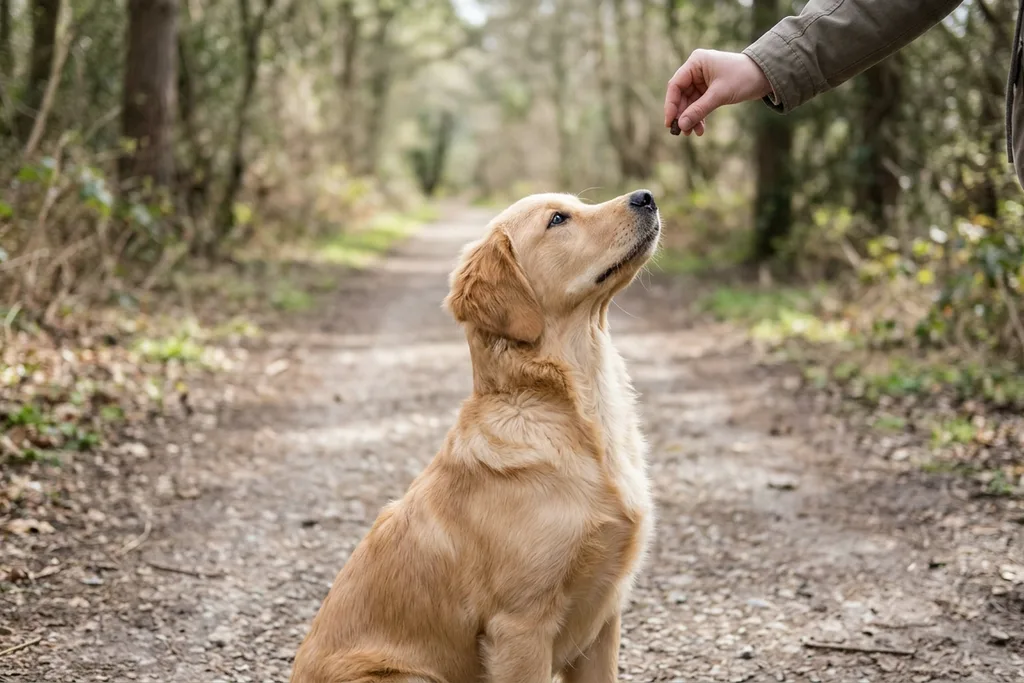
This plan follows the research ages and gives you one focus for each stage. The left column says what the sources report for that age. The right column is our training plan, built on reward-based methods.
| Age | What the research says | What to practice |
|---|---|---|
| 5 to 6 months | In the 2020 study, this is the “before” point: young dogs sat for their carer more reliably at 5 months than they would at 8 (Asher et al., 2020). | Bank the basics while they are easy. Short sessions of basic cues, paired with hand signals. Start recall practice on a long line. |
| 6 to 9 months | Puberty starts for many dogs: 6 to 9 months in males, from 6 months in females (Harvey, 2021). | Lower the difficulty when a cue slips: closer distance, quieter places, better treats. Keep recall on a long line outdoors. |
| 8 months | The dip in the study: carers saw the most ignored cues and the highest separation-related scores here (Asher et al., 2020). | Expect bad days and plan for them. Reward every response to your cues, even slow ones. Practice short absences and calm returns. |
| 9 to 12 months | Females may still be reaching puberty, up to 16 months (Harvey, 2021). By 12 months, carers in the study rated their dogs more trainable again (Asher et al., 2020). | Raise the difficulty again, one step at a time: longer stays, busier walks, recall with mild distractions. |
| 12 to 24 months | “Young adults”: fully grown, still developing socially (Harvey, 2021). | Keep the habits going. Fade the long line only when recall is reliable in the places you use it. |
Imagine a 7-month-old golden retriever who sat on the first cue at home last month and now looks straight past you at the park. That dog has not forgotten “sit”. The park is harder than it was, and in the study the person teenage dogs ignored most was their own carer. Go back to the step it can do, pay well for it, and build up again.
Why does my adolescent dog ignore me but listen to other people?
Teenage dogs in the study ignored their own carer more, and strangers less. The 93 dogs in the “sit” test were less responsive to their carer at 8 months than at 5 months, but more responsive to the same stranger (Asher et al., 2020). The effect was stronger in dogs whose behavior suggested a less secure attachment to their carer.
The researchers compare it to human teenagers testing their parents. They describe it as a passing phase of conflict-like behavior, and write that in most dogs it “does not last”. This does not mean your dog dislikes you. It means the relationship is going through a normal stage.
What helps, step by step:
- Say the cue once. If your dog does not respond, make the next try easier instead of repeating the word.
- Move closer, or move somewhere quieter, and ask again.
- Reward the response with something your dog values more than the distraction. Our training treats guide compares options.
- Add a hand signal to the spoken cue. Dogs often notice gestures well, and a signal works at a distance where your voice may not. See our hand signals guide.
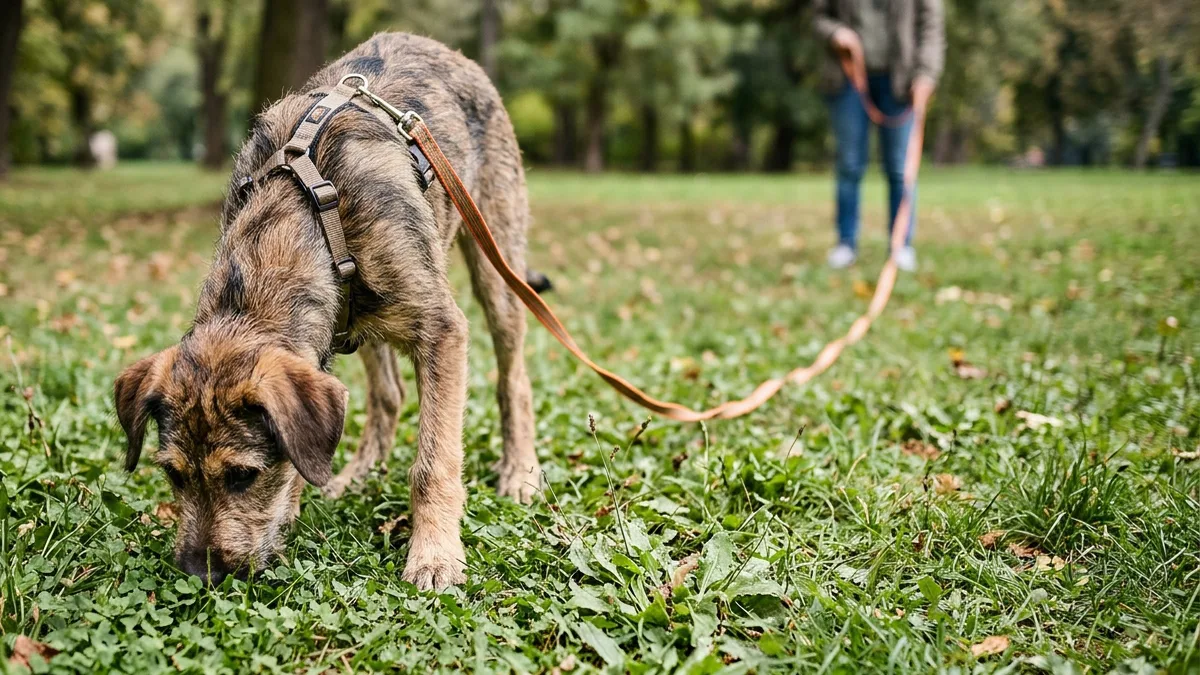
- Use a long line for recall outdoors, so your dog cannot practice running off while its response is unreliable. Our long line guide explains how to choose one.
- End each session on a success, and keep sessions short.
Is it adolescence or a training regression?
In the research, a teenage “regression” looked like a cue that was harder to get for a while, not a cue that was gone. The 2020 study found the drop in obedience at 8 months was followed by higher trainability scores at 12 months (Asher et al., 2020). Training through the phase, at an easier level, is how you keep what you built.
House training is the exception to treat with care. If a dog who was reliably house-trained starts having accidents, book a vet visit before you go back to basics, because a medical problem can look like a training setback. Once your vet has ruled that out, our potty training guide covers the restart, step by step.
Crate setbacks are common to ask about too. “Puppy regression crate training” is one of Google’s suggestions. If your teenager starts protesting the crate, our crate training guide and our page on a puppy barking in the crate take you back through the steps.
Adolescent dog biting, barking and the “witching hour”
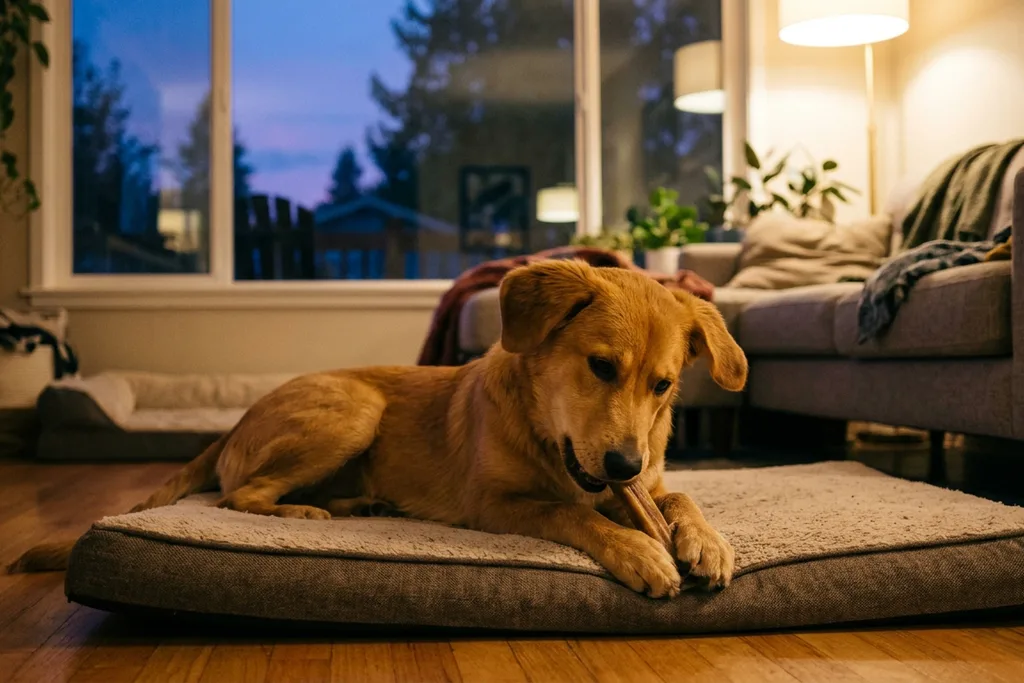
For biting, barking and evening zoomies, start with the same plan: give your dog more ways to use its brain and body, and fewer chances to rehearse the habit you don’t want.
- Mouthing and biting: redirect to a toy, pause play the moment teeth touch skin, and reward calm. Our puppy biting guide has the full method.
- Barking at everything: teach a quiet cue, and reduce what your dog can see from the window while you train.
- Jumping up: reward four paws on the floor. Our jumping guide walks through it.
- The evening “witching hour”: plan a sniff walk or a puzzle toy before the time it usually starts, then a calm rest in a quiet spot.
Never punish a growl. A growl is a warning. If you punish it away, your dog may skip the warning next time. If your teenager growls, snaps or bites, read the section on when to get help below.
Why punishment backfires in the teenage phase
The American Veterinary Society of Animal Behavior (AVSAB) recommends reward-based methods for all dog training. Its 2021 position statement says aversive methods, which rely on force, pain, or emotional or physical discomfort, “should not be used in canine training or for the treatment of behavioral disorders”. The tools it says to avoid include choke chains, prong collars and electronic shock collars, and correction techniques such as leash jerking (AVSAB, 2021).
Teenage problem behavior can push owners toward punishment. The authors of the 2020 study warn that problem behavior at this age could lead to punishment-based methods, or to owners pulling back from their dogs. They also note that this age matches the peak age at which dogs are given up to shelters (Asher et al., 2020).
Punishment is not a shortcut for recall either. AVSAB’s statement notes that even with experienced trainers, research found no difference in effectiveness between electronic shock collars and reward-based methods for teaching recall (AVSAB, 2021).
Knowing it is a phase changes how you respond. The researchers hope owners who know that teenage behavior can be “a passing phase” will avoid those outcomes. Our positive reinforcement guide explains how reward-based training works, step by step.
Sleep changes and night waking at 5 to 7 months
Many owners ask about night waking at this age, and we found no study that measures it. Owners on puppy forums describe dogs around 5 to 7 months who slept through and now wake early or at night. We could not find research on a “sleep regression” in dogs, so this section gives routine advice only.
- Keep the same bedtime, last toilet trip and wake-up time every day. Our puppy schedule has sample days by age.
- Give mental exercise in the evening, then a calm wind-down. Save fetch for earlier in the day.
- If your dog wakes and needs to go out, keep the trip short, quiet and boring, then back to bed.
- If night waking starts suddenly, or comes with any change in eating, drinking or toileting, call your vet.
When to call your vet or a behavior professional
Some teenage behavior needs more help than a guide can give. Get help if you see any of these:
- a bite that touches or breaks skin, or growling and snapping that is getting more frequent;
- guarding food, toys or places from people;
- sudden fear of things your dog used to ignore, or fear that stops it eating or going out;
- any sudden change in behavior, or a change that comes with signs of pain or illness.
Start with your vet, who can check for pain or a medical cause. Then work with a qualified behavior professional: a veterinary behaviorist, or a trainer who uses only reward-based methods. AVSAB’s guide “How to Choose a Trainer” lists the green and red flags (AVSAB).
FAQ: adolescent dogs
How long does the dog teenage phase last?
For most dogs, adolescence runs from about 6 months to between 1 and 2 years. A 2021 review places puberty at 6 to 9 months in males and 6 to 16 months in females, with social maturity at 12 to 24 months (Harvey, 2021). Breed and size shift the timing, and the review notes that breed data are sparse. In the one study that measured it, the training dip came at 8 months (Asher et al., 2020).
At what age is an adolescent dog the hardest to train?
In the main study on this, it was 8 months. Young guide dogs were more likely to ignore “sit” from their carer at 8 months than at 5 months, and carers rated them more trainable again by 12 months (Asher et al., 2020). Your dog may differ, especially if it is a small or giant breed, but the pattern of a dip and a recovery is the useful part.
Is my 5-month-old puppy an adolescent yet?
Probably not yet, but it is close. A 2021 review classes dogs as puppies up to 6 months and places the start of puberty at about 6 months (Harvey, 2021). Five months is a good time to make the basics strong, because the 2020 study found young dogs responded to their carer more reliably at 5 months than at 8 (Asher et al., 2020).
Do Labradors, golden retrievers and German shepherds have a teenage phase?
Yes, these are the breeds the main study looked at. The 2020 study followed young guide dogs that were Labradors, golden retrievers, German shepherds and crosses of these, and found a dip in obedience to their carer at 8 months (Asher et al., 2020). Other breeds have not been studied the same way, so their timing may differ. These were dogs being raised for guide work, so pet dogs may differ.
Will my dog go back to normal after adolescence?
In most dogs, yes. The authors of the 2020 study write that in most dogs this disobedient phase “does not last”, and carers in their larger group of 285 dogs rated trainability higher at 12 months than at 8 (Asher et al., 2020). Keep training kindly through the phase, so the habits you built are still there when it ends.
Should I neuter or spay my dog to stop teenage behavior?
Ask your vet. The timing of neutering and spaying is a medical decision that depends on your dog’s breed, size, sex and health, and this guide does not cover it. Whatever you decide, the training plan above still applies.
Sources
- Asher L, England GCW, Sommerville R, Harvey ND. Teenage dogs? Evidence for adolescent-phase conflict behaviour and an association between attachment to humans and pubertal timing in the domestic dog. Biology Letters. 2020;16(5):20200097. doi:10.1098/rsbl.2020.0097. Open access.
- Harvey ND. How old is my dog? Identification of rational age groupings in pet dogs based upon normative age-linked processes. Frontiers in Veterinary Science. 2021;8:643085. doi:10.3389/fvets.2021.643085. Open access.
- American Veterinary Society of Animal Behavior (AVSAB). Position Statement on Humane Dog Training. 2021. PDF on avsab.org.
- AVSAB. Position statements page, including How to Choose a Trainer. avsab.org/resources/position-statements.
Smarter Paws Academy is reader-supported. When you buy through links on our site, we may earn an affiliate commission at no extra cost to you. As an Amazon Associate, I earn from qualifying purchases. Thank you for your support!
Sandie Calloway is the pen name of the Smarter Paws Academy team. How we write