
You introduce two dogs safely by starting with a parallel walk on neutral ground, not a face-to-face meeting. A calm, gradual introduction sets the tone for the whole relationship, while a rushed one can create tension that lasts. As a certified professional dog trainer, I have introduced many dogs, and the slow way is always the fast way. This guide gives you my exact step-by-step method.
We will cover why the first meeting matters so much, the parallel-walk method, and the body language that tells you how it is going. Everything here is positive and pressure-free, so both dogs feel safe. Let us give your dogs the best possible start together.
Smarter Paws Academy is reader-supported. When you buy through links on our site, we may earn an affiliate commission at no extra cost to you. As an Amazon Associate, I earn from qualifying purchases. Thank you for your support!
Last Updated: September 2026. This guide is regularly reviewed for accuracy by Sandie Calloway, CPDT-KA.
Important Safety Note
The information in this article is for educational purposes and reflects my experience as a certified dog trainer. If either dog has a bite history or shows serious aggression, do not attempt introductions alone. Please work with a certified professional dog trainer or veterinary behaviorist for these situations.
Key Takeaways: Introducing Two Dogs
- Start on neutral ground. Meet somewhere neither dog feels territorial, never inside one dog’s home or yard.
- Walk parallel first. Let the dogs move in the same direction at a distance before any nose-to-nose contact.
- Watch the body language. Loose, wiggly bodies are good, while stiffness or a hard stare means make more space.
- Keep it short and positive. End the first meeting on a good note before either dog gets tired or overwhelmed.
Prefer to Listen? An Audio Overview
For a calm walk through introducing two dogs, press play below.
Runtime: 1:12
View Full Audio Transcript
Narrator: Welcome to the Smarter Paws Academy audio overview. Sandie, people get so nervous introducing two dogs. What is the golden rule?
Sandie Calloway: Neutral ground and no rushing. The biggest mistake is walking a new dog straight into your dog’s home or yard and letting them go nose to nose. That is a recipe for tension. We meet somewhere neither dog owns, and we start with distance, not a face-off.
Narrator: Tell me about the parallel walk.
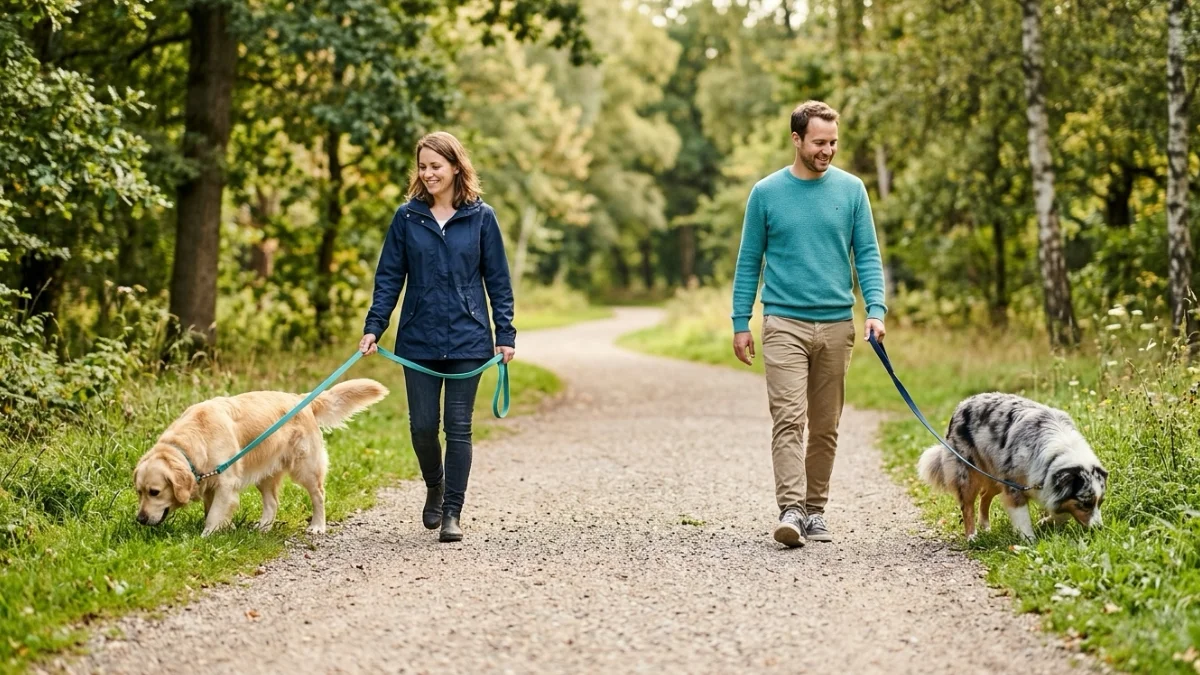
Sandie Calloway: It is my favorite tool. Two handlers, two dogs, walking in the same direction with plenty of space between them. The dogs get to exist near each other without pressure. As they relax, you slowly close the gap. They are basically making friends by doing an activity together, which is exactly how it should feel.
Narrator: How do you know it is going well?
Sandie Calloway: The bodies tell you. Loose, wiggly, curvy, that is a happy dog. Stiff, frozen, hard staring, tail high and rigid, that is a dog saying give me space. When you see the tension, you make more distance, no drama. Read the dogs and let them set the pace.
Narrator: Neutral ground, parallel walk, and read the body language.
Sandie Calloway: That is the whole method. Slow and calm gives them a friendship that lasts.
Table of Contents
Why Does the First Dog Introduction Matter So Much?
The first meeting sets the emotional tone for how two dogs feel about each other going forward. A calm, positive introduction builds a foundation of safety, while a tense or scary first meeting can create lasting wariness. Dogs remember how encounters felt, so a good start pays off for the whole relationship. Getting the first impression right is worth the extra patience.
Rushed introductions are one of the most common causes of dog-dog tension. Forcing a face-to-face greeting, meeting on one dog’s territory, or letting two leashed dogs tangle can spark conflict that could have been avoided. Many reactivity and household squabbles trace back to a bad first meeting. Slowing down prevents problems before they start.
A thoughtful introduction is also prevention for future reactivity. Positive experiences with other dogs build the confidence that keeps a dog relaxed on walks, which connects to my guide to leash reactivity. Every good meeting is a deposit in your dog’s social confidence. Careful introductions help raise a socially comfortable dog.
How Do You Introduce Two Dogs Step by Step?
You introduce two dogs by meeting on neutral ground and building from a parallel walk to a calm greeting. The method keeps both dogs under their stress threshold while they get comfortable with each other. Move at the pace of the more cautious dog, never forcing contact. Here is my step-by-step plan.
Step 1: Choose neutral ground. Pick a quiet, unfamiliar place like a park path where neither dog feels territorial. Neutral space removes the guarding instinct that fuels conflict.
Step 2: Start a parallel walk. With a handler for each dog, walk in the same direction with wide space between the dogs. Let them notice each other calmly while doing a shared, low-pressure activity.
Step 3: Slowly close the distance. As both dogs stay relaxed, gradually narrow the gap over several minutes. Reward calm behavior and back off if either dog tenses.
Step 4: Allow a brief sniff. If body language stays loose, let the dogs sniff each other briefly, then cheerfully call them apart. Short greetings prevent the tension that builds when dogs interact too long.
Step 5: End on a good note. Finish the first meeting while it is still going well, before either dog tires. A positive ending makes the next meeting easier. Carry high-value treats so you can reward calm glances and loose body language from both dogs.
What Body Language Tells You It’s Going Well?
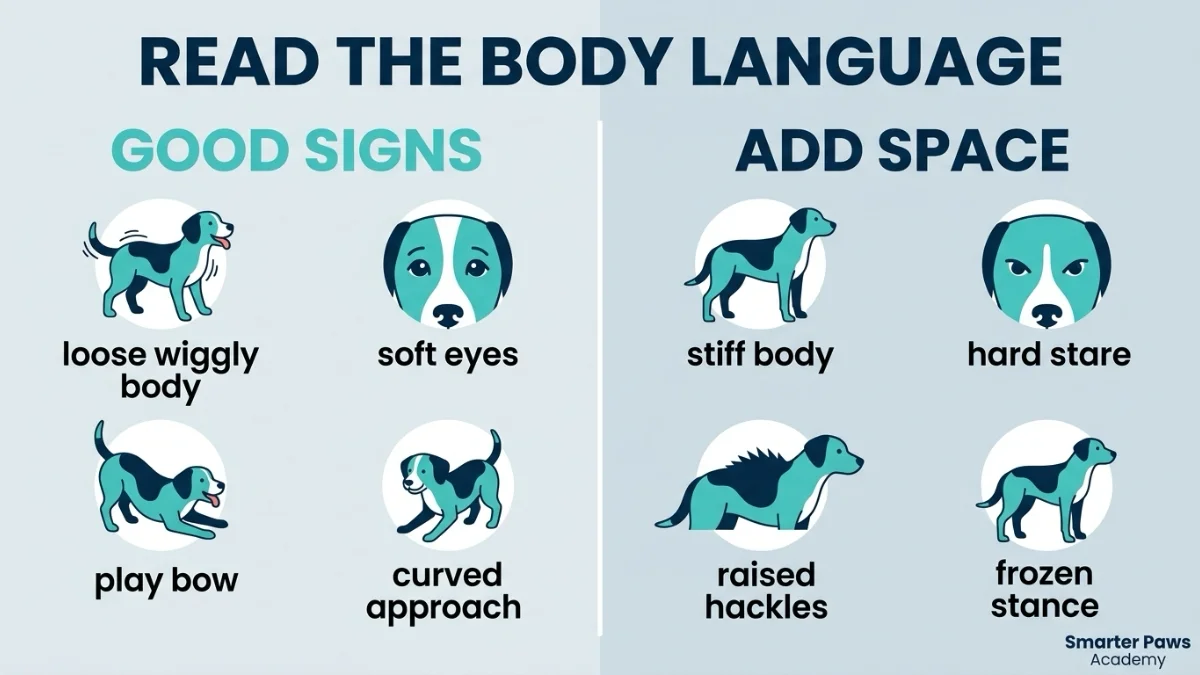
Loose, relaxed body language is the clearest sign two dogs are comfortable with each other. Look for soft, wiggly bodies, curved approaches, relaxed mouths, and a natural, waggy tail carried at a neutral height. These signals mean the dogs feel safe and social. When you see them, the introduction is on the right track.
Warning signs tell you to add distance right away. A stiff, frozen body, a hard unblinking stare, a high rigid tail, raised hackles, or a dog trying to move away all signal stress or a warning. These are requests for space, not misbehavior. Responding by backing off keeps the meeting safe and positive.
Learning to read these signals protects both dogs and prevents fights. The earlier you notice tension and make space, the easier it is to keep things calm. This same body-language awareness helps across all social situations. Reading your dog well is one of the most valuable skills you can build.
How Do You Introduce a New Dog at Home?
Bring a new dog into the home only after a successful neutral introduction, and keep early interactions managed. Once the dogs have met calmly outside, enter the home together after a walk, when both are a little tired and relaxed. Pick up toys, chews, and food bowls first to prevent guarding. A managed home introduction avoids the most common flashpoints.
Give each dog their own space and supervise closely at first. Separate resting areas, crates, and feeding spots reduce competition, and a baby gate lets the dogs share space safely while they adjust. My crate training guide covers setting up safe individual spaces. Structure and supervision make the first days smooth.
Let the relationship develop gradually over days and weeks. Short, positive shared activities like walks and calm parallel time build a bond faster than forced closeness. Do not leave new dogs alone together until you are confident they are comfortable. Patience in the early days pays off in a lasting friendship.
Frequently Asked Questions About Introducing Dogs
How long does it take for two dogs to get along?
Many dogs are comfortable together within a few days to a few weeks of careful, positive introductions. The timeline depends on each dog’s temperament, age, and social history. Some become fast friends, while others need slow, managed coexistence. Patience and good management help nearly any pair settle into a peaceful relationship.
Should dogs meet on leash or off leash?
Start introductions on loose leashes so you have control, but keep the leashes relaxed to avoid adding tension. Tight leashes can create frustration and make dogs look more confrontational than they feel. A parallel walk on loose leashes is ideal for a first meeting. Only consider off-leash once the dogs are clearly comfortable in a safe area.
What if my dog is reactive to other dogs?
If your dog is reactive, work below their threshold and consider professional help before direct introductions. Start with distance and counterconditioning rather than a close meeting, as covered in my leash reactivity guide. A reactive dog needs a slower, more careful plan. A certified trainer can guide introductions safely for reactive dogs.
Can I introduce a puppy to an adult dog?
Yes, but protect the puppy and respect the adult dog’s boundaries during introductions. Keep greetings short, give the adult dog breaks, and never force interaction. A well-socialized adult often teaches a puppy good manners, but the adult should never be overwhelmed. Supervise closely and let both dogs opt in at their own pace.
Why did my dogs fight after a good introduction?
Squabbles can happen over resources, overstimulation, or a missed stress signal even after a good start. Guarding of food, toys, or space is a common trigger, so manage those closely early on. A single scuffle does not mean the dogs cannot get along. Tighten management and, for repeated conflict, consult a professional.
A Calm Start Builds a Lasting Friendship
Introducing two dogs well is a gift you give both of them, setting up a relationship built on safety and trust. When you choose neutral ground, walk parallel, and read the body language, you let the dogs become friends at their own comfortable pace. Slow and calm is what creates a bond that lasts.
Start with a neutral-ground parallel walk, watch for loose and wiggly body language, and end the first meeting on a happy note. Manage resources at home and let the friendship grow over days, not minutes. Give your dogs a calm, positive start, and you set the stage for a peaceful life together.