
The “quiet” cue teaches your dog to stop barking on request, calmly and without any punishment. It is one of the most useful skills you can teach, turning a noisy moment into a quick, peaceful one. As a certified professional dog trainer, I teach quiet by rewarding the silence, not by scaring the bark out of a dog. This guide gives you the exact positive method that works.
We will cover why yelling “quiet” fails, the step-by-step way to teach a real quiet cue, and how to combine it with managing the barking trigger. Every step is reward-based, so your dog learns that being quiet pays off. Let us give you a calm, reliable off switch for the barking.
Smarter Paws Academy is reader-supported. When you buy through links on our site, we may earn an affiliate commission at no extra cost to you. As an Amazon Associate, I earn from qualifying purchases. Thank you for your support!
Last Updated: September 2026. This guide is regularly reviewed for accuracy by Sandie Calloway, CPDT-KA.
Important Behavior Disclaimer
The information in this article is for educational purposes and reflects my experience as a certified dog trainer. The quiet cue helps with normal nuisance barking. If your dog’s barking comes with aggression, extreme fear, or anxiety, please work with a certified professional dog trainer or veterinary behaviorist on the underlying emotion.
Key Takeaways: Teaching the Quiet Cue
- Reward the silence. Mark and treat the exact moment your dog stops barking, so quiet becomes the paid behavior.
- Do not yell. Shouting sounds like you are barking too, which can make your dog louder, not quieter.
- Some dogs learn “speak” first. Teaching bark on cue makes it easier to then teach quiet on cue.
- Manage the trigger too. A cue works best alongside reducing whatever is setting off the barking.
Prefer to Listen? An Audio Overview
For a quick guide to teaching a calm quiet cue, press play below.
Runtime: 1:10
View Full Audio Transcript
Narrator: Welcome to the Smarter Paws Academy audio overview. Sandie, everyone yells “quiet” at their barking dog. Why does that not work?
Sandie Calloway: Because to your dog, you just joined in. You are being loud, they are being loud, so from their side it feels like you are barking along with them. Some dogs even get more excited. Yelling adds energy to the exact thing we want to calm down.
Narrator: So how do you actually teach quiet?
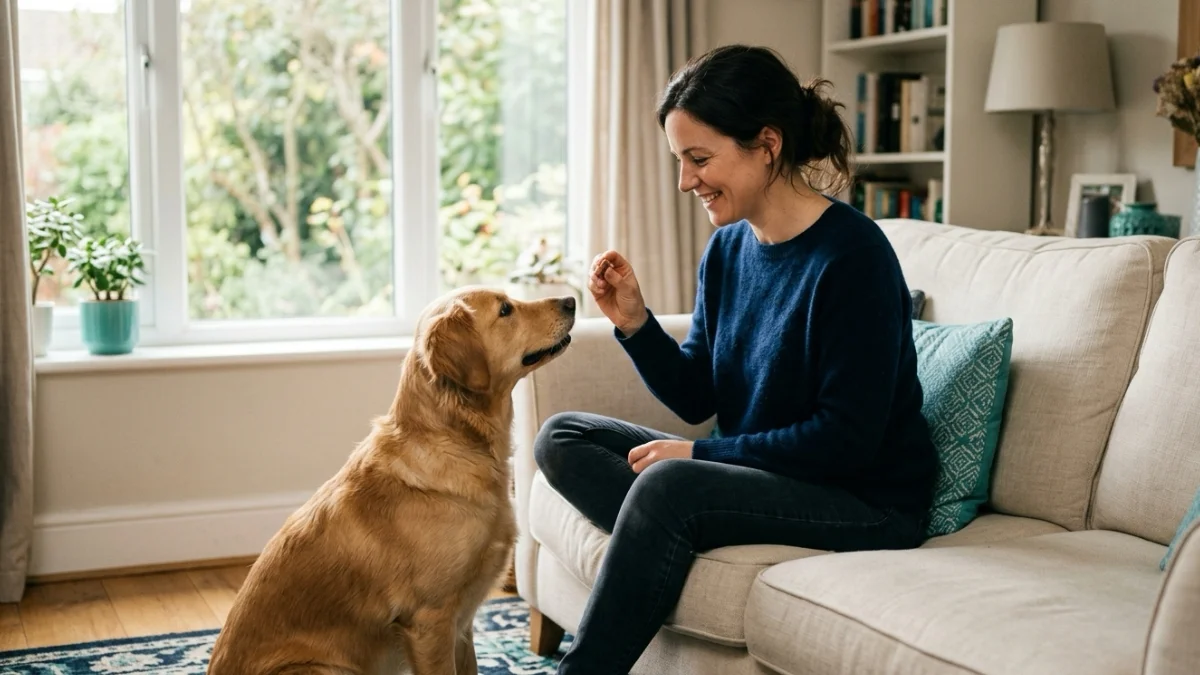
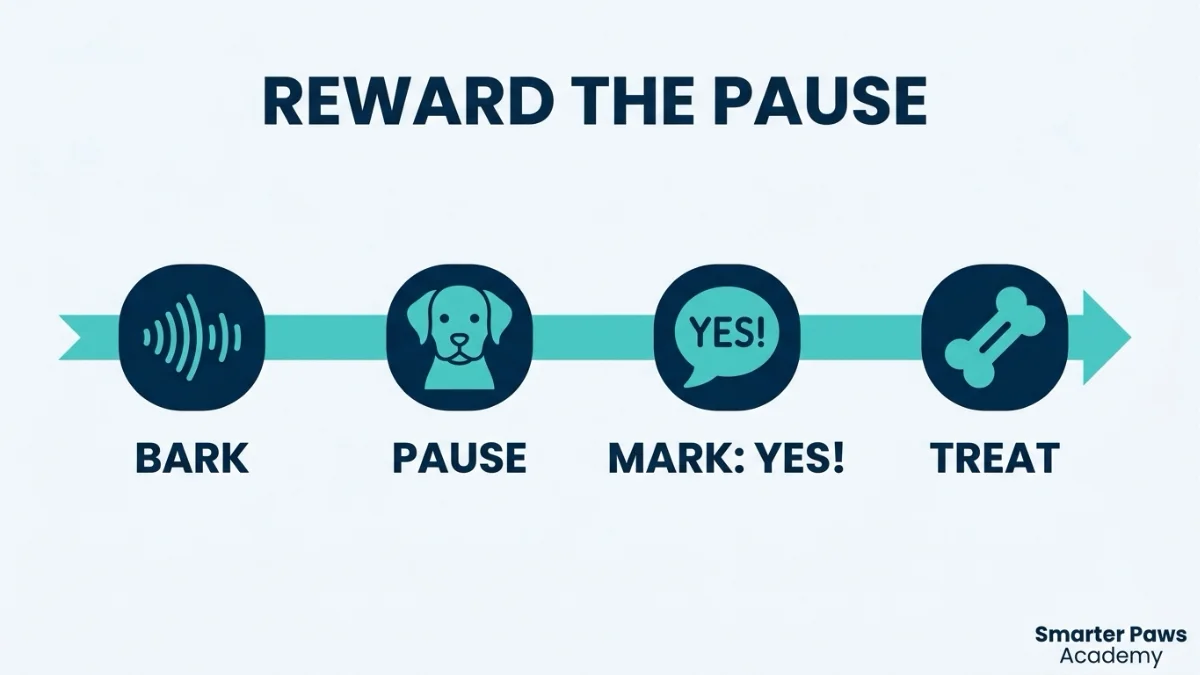
Sandie Calloway: You reward the silence. When your dog barks and then pauses, even for a second, you mark that pause with a “yes” and give a treat. You are telling your dog, that quiet moment, that is what earns you the good stuff. You are building value in silence instead of trying to punish the noise.
Narrator: Any clever trick to speed it up?
Sandie Calloway: Teach “speak” first. It sounds backwards, but if you can get your dog to bark on cue, you control the barking, and then teaching “quiet” right after is easy. You cue a bark, then cue quiet, and reward the silence. It gives you both the on and the off switch.
Narrator: Reward the pause, skip the yelling, and maybe teach speak first.
Sandie Calloway: That is the whole method. Calm and clear beats loud and frustrated every time.
Table of Contents
Why Doesn’t Yelling “Quiet” Work?
Yelling “quiet” fails because your dog often hears it as you joining the noise. From your dog’s point of view, loud sounds coming from you can look like you are barking along, which can raise their excitement rather than lower it. Instead of a calm signal, your shout becomes more energy added to the moment. This is why frustration-yelling so often backfires.
Shouting also gives an attention-seeking dog exactly what they wanted. Any reaction, even an annoyed one, can reward a dog who barks for attention, making the behavior stronger. Your dog learns that barking reliably gets a response from you. Calm teaching, not loud reacting, is what actually reduces the noise.
The productive approach is to build value in silence with rewards. When quiet earns treats and attention while barking earns nothing, your dog chooses quiet more often. This is the same positive philosophy behind all my barking guides, including my complete guide to why dogs bark. Reward the behavior you want and it grows.
How Do You Teach a Dog the “Quiet” Cue?
You teach quiet by marking and rewarding the silence right after a bark, then adding the word. The method builds value in being quiet, so your dog learns that stopping pays off. Practice in low-key setups first, before you try it during real, exciting barking. Here is my step-by-step plan.
Step 1: Let a natural bark happen. Wait for or gently prompt a small bark, such as a knock on the wall, so you have a bark to work with. You need the behavior before you can reward the pause after it.
Step 2: Mark the pause. The instant your dog stops barking, even for a second, say “yes” or click and give a treat. You are capturing and paying for the silence.
Step 3: Add the word “quiet.” Once your dog reliably pauses for the reward, say “quiet” just as they go silent, so the word predicts the calm behavior. Timing the word to the silence gives it meaning.
Step 4: Build the duration. Gradually wait a beat longer before rewarding, so your dog learns to stay quiet for a few seconds, then more. You are stretching the silence one small step at a time.
Step 5: Practice with real triggers. Once the cue is solid in calm setups, use it during mild real barking, rewarding generously. Slowly work up to more exciting triggers as your dog succeeds.
Should You Teach “Speak” Before “Quiet”?
Teaching “speak” first can make “quiet” much easier to train, because it puts barking on cue. When you can ask your dog to bark, you can also control when it starts and stops, giving you a clean setup to reward the silence. Many trainers pair the two cues for exactly this reason. It sounds backwards, but it works beautifully.
The process is simple once your dog offers a bark on cue. You ask for a “speak,” let a bark or two happen, then say “quiet” and reward the moment your dog goes silent. Practicing the on-and-off switch together builds a reliable pair of cues. Your dog learns both to bark and to hush on request.
This approach also channels your dog’s barking energy into a fun game. Turning barking into a controlled trick reduces random nuisance barking, because your dog learns there is a right time and place. Reward-based games like this fit the marker training in my clicker training guide. A dog who can bark on cue is often a quieter dog overall.
How Do You Combine the Quiet Cue With Managing Barking?
The quiet cue works best when you also reduce whatever is triggering the barking in the first place. A cue is an off switch, but management removes the reason your dog wants to bark. Blocking a window view, adding enrichment, or masking outdoor sounds all lower the barking you have to manage. Cue plus management is far stronger than either alone.
Match your management to the cause of the barking. Boredom barking needs more enrichment, watchdog barking needs the trigger blocked, and anxious barking needs a calmer environment, all covered across my barking guides. My guide on stopping nuisance barking breaks down each cause and fix. Solving the root cause makes your quiet cue do less heavy lifting.
Consistency across the household keeps the cue reliable. Everyone should use the same word and reward quiet the same way, so your dog gets a clear, unified message. Mixed responses slow the learning down. A consistent, well-managed approach is what turns “quiet” into a dependable cue.
Frequently Asked Questions About the Quiet Cue
How long does it take to teach the quiet cue?
Many dogs grasp the basics of quiet within one to two weeks of short, consistent practice. Building reliability during exciting real-life barking takes longer, often several weeks. Practicing in calm setups first speeds up the whole process. Consistency and rewarding the silence matter more than how fast you push.
Can you teach an older dog to be quiet on cue?
Yes, dogs of any age can learn the quiet cue with positive reinforcement. Older dogs often focus well and can pick it up quickly with clear, rewarded repetitions. The same mark-the-silence method works regardless of age. Patience and consistency are all your older dog needs.
What treat should I use to teach quiet?
Use small, high-value treats so the reward can compete with the excitement of barking. Soft, tasty treats delivered quickly reinforce the silent moment before your dog starts up again. For very exciting triggers, bring out your dog’s favorites. Fast, valuable rewards make the quiet behavior worth choosing.
Why does my dog bark more when I say quiet?
Your dog likely barks more because the word has become a signal for attention or excitement, often from past yelling. If “quiet” predicts a reaction from you, an attention-seeking dog may bark harder. Retrain the word by pairing it only with calm and rewards for silence. A fresh, positive association fixes this quickly.
Does the quiet cue work for barking at the doorbell?
The quiet cue can help at the doorbell, but pairing it with management and an alternative behavior works best. Teaching your dog to go to a mat when the bell rings gives them a job instead of barking. Combine that with rewarding quiet for a calm response. Door barking usually needs both a cue and a plan.
A Calm Off Switch for a Quieter Home
Teaching the quiet cue gives you a kind, reliable way to ask for peace without ever raising your voice. When your dog learns that silence earns rewards, being quiet becomes a choice they are happy to make. You are not silencing your dog, you are giving them a clear, positive way to settle.
Start today by rewarding the pauses in your dog’s barking, adding the word “quiet” as they go silent, and building the duration slowly. Pair the cue with managing the trigger and keep everyone consistent. With a little practice, you will have a calm off switch and a much more peaceful home.