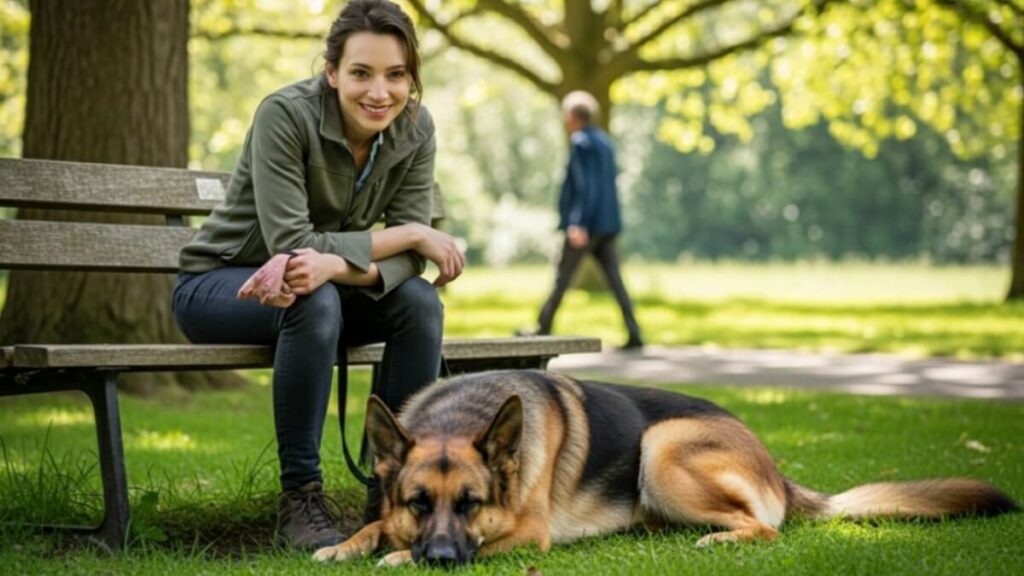
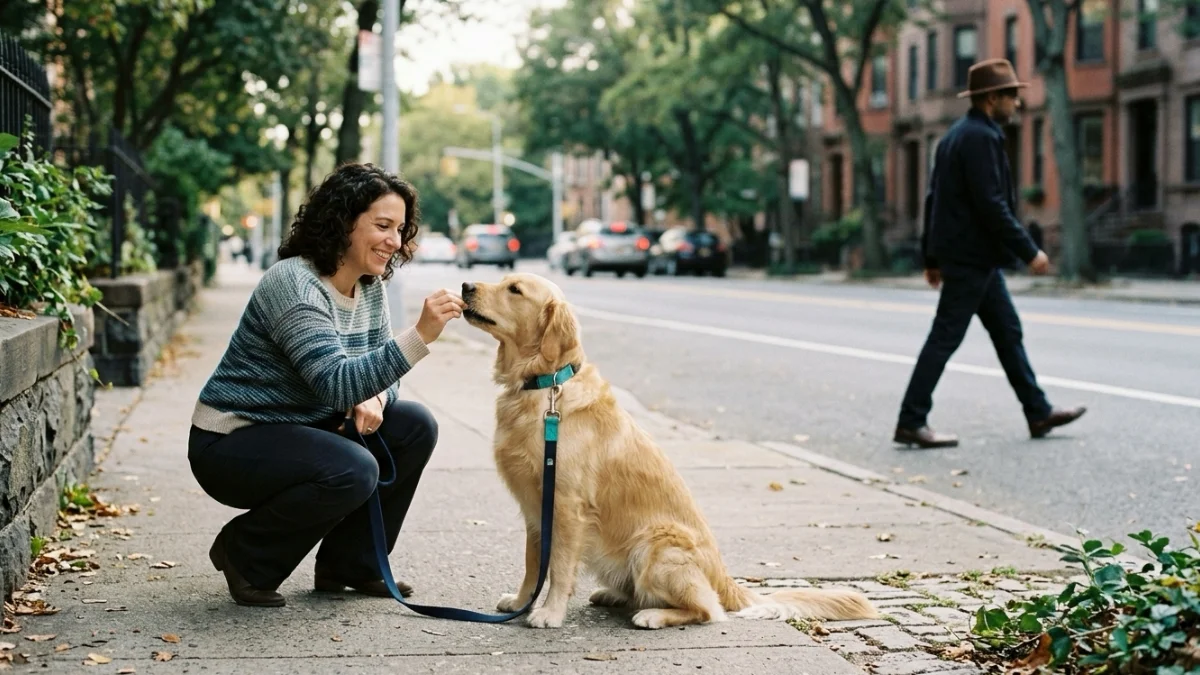

A dog who barks or lunges at people on walks is usually scared or unsure, not aggressive, and you can help them feel safe. This kind of reactivity is stressful and embarrassing, but it responds beautifully to a kind, distance-based plan. As a certified professional dog trainer, I help people-reactive dogs learn that strangers predict good things, not danger. This guide gives you the full positive method.
We will cover why dogs react to people, how to use distance and rewards to change the feeling, and how to handle a surprise encounter. There is no punishment here, because scaring a scared dog only deepens the fear. Let us help your dog walk calmly past the people who worry them.
Smarter Paws Academy is reader-supported. When you buy through links on our site, we may earn an affiliate commission at no extra cost to you. As an Amazon Associate, I earn from qualifying purchases. Thank you for your support!
Last Updated: September 2026. This guide is regularly reviewed for accuracy by Sandie Calloway, CPDT-KA.
Important Behavior Disclaimer
The information in this article is for educational purposes and reflects my experience as a certified dog trainer. If your dog has bitten a person or shows intense aggression toward people, please work with a certified professional dog trainer or veterinary behaviorist and use a properly fitted muzzle for safety while training.
Key Takeaways: Dog Reactive to People
- It is usually fear. Reacting to people is most often fear or unease, so kindness works where punishment fails.
- Distance is medicine. Give your dog enough space from people that they can stay calm and take treats.
- People predict treats. Pair the sight of a person with food so strangers start to mean good things.
- Have an escape plan. Know how to make space fast when someone approaches too closely.
Prefer to Listen? An Audio Overview
For a calm guide to helping a people-reactive dog, press play below.
Runtime: 1:14
View Full Audio Transcript
Narrator: Welcome to the Smarter Paws Academy audio overview. Sandie, a dog barking at strangers on a walk is so stressful for owners. What is behind it?
Sandie Calloway: Almost always fear. People can be scary to a dog, especially ones who look or move differently, or who come at them fast. The dog barks to say please stay back, and on a leash they cannot create space themselves, so they get loud. It is a scared dog, not a mean one.
Narrator: So how do we help them feel safe?
Sandie Calloway: Distance and treats. We find the distance where your dog can see a person but still eat and think, and we feed them the good stuff every time a person appears. Over and over, a stranger shows up and chicken happens. Slowly, people stop meaning danger and start meaning snacks.
Narrator: What about when someone walks right up?
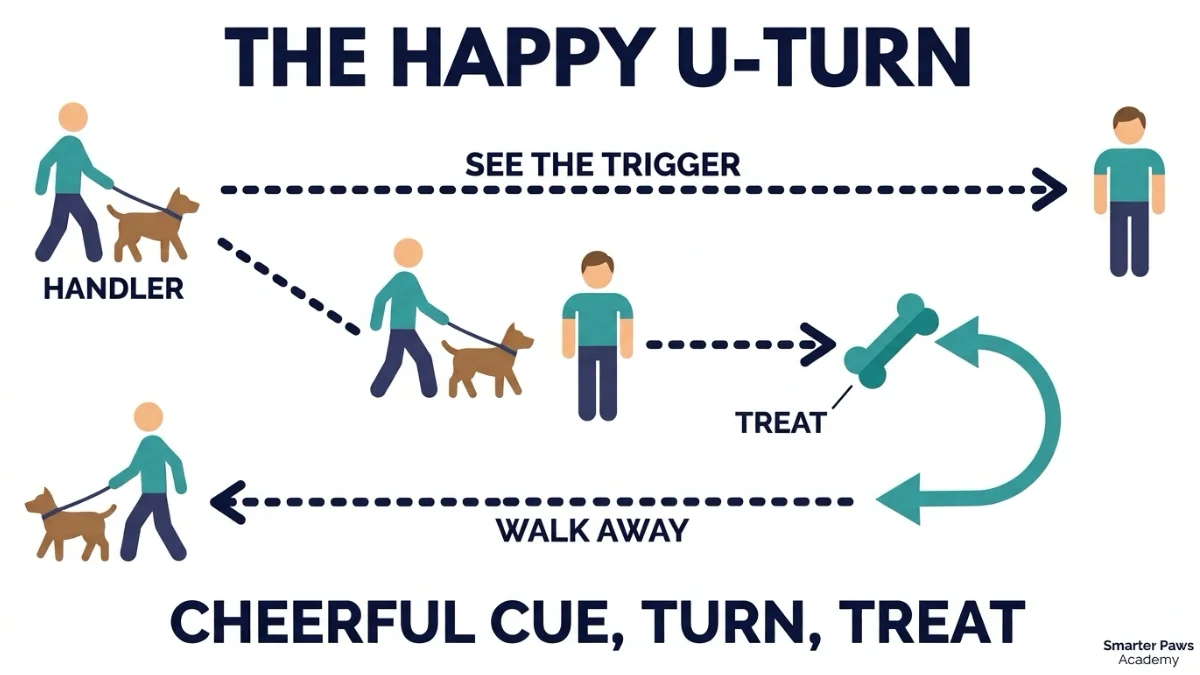
Sandie Calloway: You need an exit plan. Practice a happy U-turn so you can calmly walk your dog away before they tip over. And it is okay to advocate for your dog, to say please do not pet him, we are training. Protecting your dog’s space is part of the job.
Narrator: Fear not aggression, distance and treats, and always have an exit.
Sandie Calloway: That is the whole plan. With patience these dogs relax so much on walks.
Table of Contents
Why Is My Dog Reactive to People on Walks?
Most dogs react to people out of fear or unease, not a wish to attack. A person who looks unfamiliar, moves quickly, wears a hat, or approaches head-on can feel threatening to a dog, especially one with limited early socialization. On a leash, the dog cannot move away, so they bark or lunge to create the space they want. The behavior is a scared request, not a threat.
Frustration and past experiences can add to the reaction. Some dogs want to greet but cannot on a tight leash, while others learned that barking makes people go away, which reinforces it. Either way, the reaction is driven by emotion your dog cannot manage in the moment. Understanding the feeling behind the barking is the first step to changing it.
Reactivity to people shares its roots with other leash reactivity. The same threshold and counterconditioning principles apply, which I cover in depth in my complete leash reactivity guide. Whether the trigger is dogs or people, the kind, distance-based approach is the same. Meeting the fear with safety and rewards is what helps. If the barking happens at the window or front door too, my plan to stop your dog barking at people covers the home side of this problem.
How Do You Help a Dog That Reacts to People?
You help a people-reactive dog by working at a distance where they stay calm and pairing people with rewards. The plan keeps your dog under threshold while teaching them that strangers predict good things. Progress comes from many calm exposures, not from confronting the fear up close. Here is my step-by-step method.
Step 1: Find your calm distance. Notice how far from a person your dog can be while still eating treats and responding to you. That distance is where all your training happens.
Step 2: Feed when a person appears. The instant your dog notices a person at that safe distance, feed a steady stream of high-value treats, stopping when the person passes. Your dog learns that people make treats appear.
Step 3: Reward calm check-ins. Mark and reward your dog for glancing at a person and then looking back at you. This teaches your dog to check in with you instead of reacting.
Step 4: Practice the happy U-turn. Teach a cheerful about-face so you can calmly create space when someone gets too close. A smooth exit prevents your dog from going over threshold.
Step 5: Shrink the distance slowly. Over many sessions, let people come a little closer only when your dog stays relaxed. Patience here builds real, lasting calm. The exercise I lean on most for this is the Look at That game, which turns every passing person into a chance to earn a reward.
How Do You Handle People Who Approach Your Dog?
You handle approaching people by advocating for your dog and controlling the space. Many well-meaning strangers want to pet a dog, but a reactive dog needs distance, so it is your job to speak up. A friendly “please don’t approach, we’re training” protects your dog and your progress. Being your dog’s advocate is a key part of the plan.
Body positioning and gear help you manage close encounters. Stepping between your dog and the person, using a comfortable front-clip harness for control, and keeping high-value treats ready all make surprises easier to handle. My guide to the best no-pull harness covers gear that gives you calm control. Good management turns a scary moment into a manageable one.
Planning your walks reduces surprise encounters in the first place. Walking at quieter times, choosing routes with room to maneuver, and scanning ahead let you keep distance from people. Every avoided over-threshold moment protects your training. Smart route choices are a quietly powerful tool for a reactive dog.
What Mistakes Make People-Reactivity Worse?
The biggest mistake is punishing your dog for reacting, which adds fear to an already frightening moment. Corrections can teach your dog that people predict bad things, deepening the very fear you want to reduce. They can also suppress the warning barks that keep everyone safe. Kind counterconditioning, not punishment, is what changes the underlying emotion.
Forcing greetings is another common error. Letting or making a fearful dog approach a stranger, or allowing people to reach over your dog’s head, floods them with the thing they fear. This can trigger a reaction or even a bite. Let your dog observe people from a safe distance instead of pushing contact.
Going too fast is the quiet mistake that stalls progress. Working too close to people before your dog is ready means they rehearse panic instead of learning calm. Protecting distance and moving slowly is what builds success. With reactivity, patient and gradual truly is the fastest route.
Frequently Asked Questions About People-Reactivity
Why does my dog only bark at some people?
Dogs often react to specific features that feel unfamiliar or startling, like hats, beards, uniforms, canes, or fast movement. A person who matches something your dog finds worrying triggers the reaction, while others do not. Identifying these patterns helps you predict and manage encounters. You then build positive associations with those specific triggers.
Should I let people give my reactive dog treats?
It is usually better for you to give the treats while people keep their distance, at least early on. Having a stranger offer food can pull a nervous dog into a space they are not ready for, creating conflict. You want your dog to feel safe near people, not lured too close. Later, calm helpers can toss treats from a distance as your dog improves.
Is a muzzle a good idea for a people-reactive dog?
A properly fitted, comfortable basket muzzle can be a responsible safety tool for a dog who may bite. It keeps everyone safe while you train and can lower your own stress, which your dog senses. Introduce the muzzle positively so your dog is comfortable wearing it. A muzzle manages risk, but the training still does the real work.
Can a people-reactive dog be cured?
Many dogs improve dramatically and learn to walk calmly past people, though some remain more comfortable with distance. The realistic goal is a relaxed, manageable dog, not necessarily one who loves every stranger. Consistent, under-threshold training produces the best results. A veterinary behaviorist can help with more intense cases.
How long does it take to help a people-reactive dog?
Improvement usually takes several weeks to a few months of consistent, distance-based practice. The timeline depends on the intensity of the fear and how well you manage encounters. Progress often comes in gradual steps with occasional setbacks. Patient, positive work below threshold produces the most lasting change.
Calm Walks Past People Are Within Reach
A dog who reacts to people is asking for help feeling safe, and you can give them exactly that. When you protect their space and teach them that strangers predict treats, the fear slowly softens into calm curiosity. You are not silencing a reaction, you are healing the fear beneath it.
Start by finding your dog’s calm distance, feeding treats whenever a person appears, and practicing a happy U-turn for close calls. Advocate for your dog, plan quieter walks, and move forward slowly. With patience and kindness, you can help your dog stroll calmly past the people who once worried them.